
SYSTEMIC DIAGNOSTICS // FIDUCIARY ARCHIVE
THE FIDUCIARY REGISTRY
Independent, non-smoothable intelligence logs and systemic diagnostics compiled over more than a decade of tracing transaction metadata. This archive operates as a sovereign database built to strip away narrative seduction, exposing where portfolio assets are weaponised as pawns within private equity's opaque black box. It equips Level 1 allocators with the precise metrics required to enforce baseline accountability and cleanly separate authentic operational execution from debt-engineered luck.
Lazy Leverage and a Covenant Breach: An Anatomy of PE's Playbook Failure
The Valentino covenant breach is not a market failure; it's a critical, preventable corporate heart attack caused by lazy leverage and a failure of the PE playbook. Discover how the Organisational CT Scan reveals the systemic operational flaws behind the debt breach and uncovers over €3.7 billion in hidden Enterprise Value.

Last week, I wrote about PE's 'Illusion of Health'. And asked if the industry's standard methodology has reached its limits. Unfortunately, this week, Valentino verified my point.
News broke in Bloomberg with the article “Valentino in Talks With Banks as Luxury Drop Prompts Debt Breach” that the Kering and PE-owned Mayhoola for Investments' brand has breached its debt covenants.
This isn't just an industry downturn; it's a very preventable corporate heart attack. The symptoms started years earlier. Lazy leverage has created unhealthy companies, and the patients are now being rushed into the ER on stretchers at an increasing pace.
Has the industry's standard methodology reached its limits? You decide.
The official narrative may blame the markets, but that's taking a painkiller for a deeper, undiagnosed disease. The real cause? A systemic operational failure. My Organisational CT Scan reveals a catastrophic, decentralised "back-stage" reality where the absolute basics of a luxury transaction are failing.
The unintended consequences?
A broken returns process, often described as a "scam".
Unresponsive, rude, and incompetent support.
Quality defects inconsistent with luxury pricing.
Extreme delays forcing customer chargebacks.
Lost items, wrong orders, and delivery chaos.
The Operational Causation
These interconnected operational erosions are what have created the dangerous financial symptoms at Valentino today. Using new rulers, a diagnostic would have revealed a different path to:
Reduce the debt-to-EBITDA ratio from a problematic 4.35x down to a healthy 2.48x, placing Valentino well within any conventional covenant limit.
Make the full buyout by Kering more urgent, rather than delaying it until 2028/2029.
Add over €3.7 billion in Enterprise Value in the process.
Let's be clear: this isn't just an asset failure; it's a failure of the PE playbook. You can't financially engineer your way out of the causal inefficiencies you can't see, touch or measure '"customer emotions". Valentino is simply the latest public example.
If an 'outsider' like me can find an asset's root causes and specific actions to avert a default, why can't asset owners (PEs and GPs)? You have incredible access to the world's best tools, models, and resources. Professor Ludovic Phalippou at Saïd Business School, University of Oxford, might have some tools and views on this ;-)
Diagnostic Alpha is a data-driven exposé of the gap where the perception of value has become detached from the reality of creating it. The "Precision Playbook" in the first comment below is for those leaders who know the greatest value is found not in the light, but in the shadows.
P.S. To the current Valentino owners: Your official strategy focuses on the "front-stage". The real unseen crisis is in your "back-stage" execution. My findings from 2017 are still on the table.
The full story and the methodology used to see this crisis coming are in my guide: "A PRECISION PLAYBOOK FOR AN AGE OF DIAGNOSTIC ALPHA." It outlines the five steps that move you beyond the streetlight and find verifiable value. Download your free copy.
PRADA’S ACQUISITION CONUNDRUM: What Due Diligence Won’t Reveal
Prada’s Versace and Jimmy Choo M&A decision: Standard due diligence misses billions in unseen challenges & unrealised potential. Learn how Organisational CT Scan and diagnostics reveal their true acquisition conundrum.

“TO SEE WHAT OTHERS DO NOT, THAT IS TRUE GENIUS.”
— Morten J. Sørensen
The allure of creating a global luxury powerhouse through strategic mergers and acquisitions is undeniable. Imagine the expanded market presence, the strengthened portfolio, and the synergistic efficiencies that should be realised. Yet, even the most rigorous conventional due diligence, meticulously poring over financials and market share, can leave leaders and investors blind to critical unseen challenges—the true conundrum of Mergers & Acquisitions (M&As). This is the Streetlight Effect in action, illuminating only what’s convenient. At the same time, the most significant risks and opportunities linger unseen in the shadows.
Standard due diligence is often insufficient because it fails to penetrate the Opaque Black Box of the target’s true customer sentiment, genuine brand alignment, and underlying operational health. It focuses on easily verifiable metrics but overlooks crucial factors that dictate an asset’s real value and potential for integration. These unknown facts lead to unseen risks and missed opportunities that can silently erode value post-acquisition and are only discovered during integration.
Unveiling the Unseen Challenges & Opportunities: The Diagnostic Imperative
The Organisational CT Scan and its core metric, the Asset Efficiency Score (AES), is designed precisely to pierce this opacity. It assesses every facet of customer base, loyalty, sentiment, and operational health for each brand, quantifying the precise impact of issues like customer and emotional disconnects and operational inefficiencies. It illuminates what traditional due diligence simply won’t reveal.
Consider the Organisational CT Scan applied to Prada Group’s speculated acquisition of Versace and Jimmy Choo. The diagnostic assessment unveiled several critical but overlooked discoveries:
Limited Customer Overlap: Despite all operating in the luxury fashion space, the analysis revealed minimal customer overlap between Prada, Versace, and Jimmy Choo. This fundamentally challenges assumptions about easy cross-selling synergies and highlights the complexity of leveraging a combined customer base.
Persistent Customer Sentiment Issues: Across all three brands, significant, quantifiable customer experience challenges exist. These included recurring issues with poor customer service, product quality concerns, and delivery/returns problems. To highlight three.
Billions in Unrealised Potential: The Asset Efficiency Scores for each brand exposed vast, untapped revenue potential directly linked to these customer and emotional disconnects and operational inefficiencies:
Prada Group: €3.2 Billion in efficiency potential (due to issues like delivery problems, customer service, billing/fraud).
Versace: €717 Million in efficiency potential (driven by product quality, customer service, delivery/returns issues).
Jimmy Choo: €380 Million in efficiency potential (connected to customer service, price-value perception, defective products, repair issues).
Hidden Financial Strain: Although Prada Group may have the immediate financial capacity, proceeding without a clear plan to address the underlying inefficiencies in customer and operational areas could introduce significant financial strain and integration risk, potentially jeopardising the entire group’s health rather than strengthening it.
The Deeper Conundrum and Strategic Alternatives
Proceeding with an acquisition without truly understanding and addressing these unseen challenges carries immense financial and operational risk. The assessment reveals that acquiring brands with significant underlying problems, as quantified by the Asset Efficiency Score (AES), introduces considerable unseen and unfelt strain.
More importantly, this diagnostic deep dive also illuminates less risky, potentially more rewarding alternative strategies that standard due diligence often fails to reveal. And left unseen is a wasted opportunity. These could include focusing on organic growth within existing brands (e.g., leveraging Miu Miu’s momentum, revitalising Church’s) or pursuing acquisitions with demonstrably stronger customer alignment and fewer foundational challenges, as exposed for Versace and Jimmy Choo.
Ultimately, a truly informed M&A strategy requires understanding these deeper, often unseen, truths. The Organisational CT Scan provides the essential foresight to illuminate the clear path to make strategic decisions that lead to sustainable, verifiable value creation—moving beyond the allure of headline numbers and into the illumination of true asset health.
For a comprehensive analysis of the Prada Group acquisition, including detailed data visualisations (like Sankey diagrams) and a full exposition of the methodology and findings, download the complete report below:
A PATH FORWARD FOR FERRAGAMO: Rebuilding a Legacy by Confronting Unseen Truths
A personal anecdote reveals Ferragamo's decade-long brand decline. Discover how a diagnostic lens uncovers €900M in lost revenue, offering a path to rebuild its luxury legacy by confronting unseen truths.

On a beautiful sunny day, while enjoying an al fresco lunch, I lost the soles on one of my Ferragamo's. It was one of those moments where the world seems to slow down, and you think, "Did that really just happen?"
There I was, mid-conversation, when suddenly my foot felt a little too close to the pavement. A quick glance down confirmed my suspicions: the sole of my once-proud Ferragamo had decided to part ways with the rest of the shoe. To add a humorous twist, the Thames was practically lapping at our table, threatening to turn my footwear malfunction into a full-blown, soggy disaster. Needless to say, it wasn't my most graceful moment, but it certainly provided a memorable anecdote—and, as I would soon reflect, a striking metaphor for the state of the Ferragamo brand itself.
Publicly available information suggests that Ferragamo's declining brand presence, market share, and share price experienced over the past decade are not isolated incidents. Instead, they represent several interconnected, underlying factors that illuminate internal operational challenges and external customer dynamics that touch and shape customers emotions. These factors shed light on potential reasons for Ferragamo’s decline, and while the situation is complex and multifaceted, it can be tested, verified, or dismissed through due diligence. Ferragamo must actively seek and connect the root causes to chart a strategic growth path forward.
If I take a decade-long view, Ferragamo's current challenges can be visualised as a negative feedback loop, a classic example of an unhealthy Organisational Homeostasis. Perceived declining product quality, as experienced by customers, leads to diminished customer satisfaction and negative word-of-mouth. This, in turn, fuels poor customer service experiences, as staff are potentially ill-equipped to handle complaints or are frustrated by systemic issues and struggle to meet customer expectations. These combined issues damage the brand image and slowly erode customer trust in Ferragamo, impacting their Customer Grove. Ultimately, this results in decreased sales and a lower market valuation, directly impacting profitability and shareholder value, as evidenced by financial reports and stock performance. This pressure, in turn, often leads to cost optimisations, perpetuating the negative feedback loop – a phenomenon Henry Hazlitt would recognise as focusing on immediate gains at the expense of broader, longer-term consequences.
My due diligence, applying a diagnostic lens akin to an Organisational CT Scan to publicly available data, quantifies this corrosion. Ferragamo's 2024 Asset Efficiency Score (AES) was 11.9% for the trailing twelve months (TTM), signalling significant operational inefficiency and a struggle to translate internal efforts into customer value and revenue generation across five key interconnected categories (brand, retail, quality, delivery, and returns). This score indicates a loss of over €900 million in potential revenue—a vast Opaque Black Box of unrealised value.
Ferragamo's path to recovery requires a multi-pronged approach that tackles both internal and external factors. A true renaissance is needed, focusing on five key areas to cultivate a healthy Organisational Homeostasis:
The Foundation: Reinstating Uncompromising Quality:
Ferragamo's heritage is built on exceptional craftsmanship. Restoring this foundation requires stricter quality control throughout the entire supply chain and production process, from sourcing raw materials to the final product, ensuring consistent quality at every stage. Investing in skilled artisans and premium materials is essential to address existing defects and strive to exceed customer expectations.
The Catalyst: A Customer Service Revolution:
Exceptional products demand exceptional service. Ferragamo needs a cultural shift towards genuine empathy and proactive problem-solving, including anticipating customer needs and empowering staff to resolve issues quickly and effectively.
The Framework: Harmonised and Customer-Centric Policies:
Inconsistent policies across online and offline channels create customer frustration. Ferragamo must harmonise its policies for a seamless customer experience. A truly customer-centric approach to returns, warranties, and shipping—one that prioritises customer satisfaction over cost-cutting—is paramount. This includes streamlining processes across all in-store, online, and wholesale channels.
The Narrative: Transparent Brand Revitalisation:
Rebuilding trust requires transparency. Ferragamo must openly acknowledge shortcomings and communicate the steps being taken to improve, demonstrating measurable progress towards those goals. Genuine authenticity is key. Customers are discerning and can distinguish between genuine efforts and superficial marketing.
The Dialogue: Engaging and Listening to Customers:
Active customer engagement is essential. Ferragamo must solicit feedback, respond to reviews, and demonstrate, not just verbally but also via action, that customer voices are valued.
Several interconnected theories could explain how these internal challenges arose and persisted, acting as "bad flora" within the organisation: a loss of focus on core brand values, inadequate investment in infrastructure, failure to adapt to changing customer expectations, complacency and resistance to change, or a disconnect with evolving customer needs after periods of success. Ultimately, Ferragamo's challenges are complex and emotional. While these theories offer reasons, a diagnostic investigation is needed to define the precise root causes that fuel the negative feedback loop.
The path forward for Ferragamo in rebuilding its legacy is clear: a genuine renewed focus on quality, a customer service revolution, operational improvements, and a commitment to transparency and customer engagement. But only if the Ferragamo brand is brave enough to confront the realities reflected in the mirror of Dorian Gray—a mirror held up by customer feedback and market data. The customer has always defined the Ferragamo brand. By studying their emotional reflection, Ferragamo can illuminate its unseen troubles and chart a course towards a much brighter future.
As for me, I'll be sticking to sturdier footwear for future al fresco lunches—or maybe I'll just bring a tube of superglue, just in case.
LUXURY BRANDS & AUTHENTICATION: The True Source of Doubt Lies Within
Luxury brands face a “quality of doubt.” Discover how internal inconsistencies erode trust and how a return to genuine perfection can restore brand value and eliminate authentication concerns.
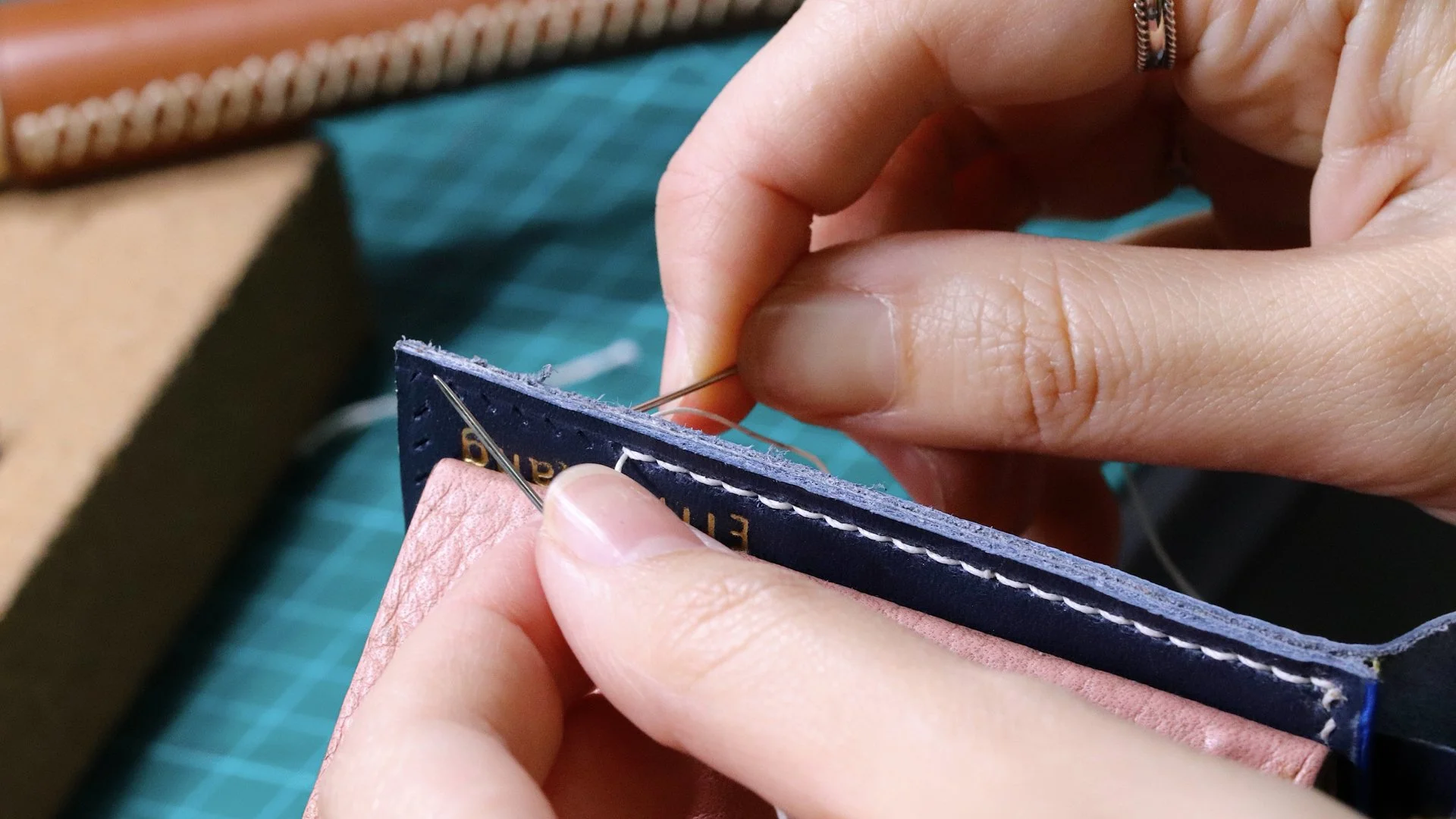
In the rarefied world of luxury, the question of authentication raises a crucial point: who is truly responsible for luxury product “genuineness”? While third-party authentication services play a role (for customers), the ultimate accountability and the true source of customer confidence (without doubt) rests squarely with the luxury brands themselves.
The perpetual debate around authentication often masks a deeper problem: Luxury’s Quality of Doubt.
This “Quality of Doubt” isn’t merely about counterfeits; it’s about the insidious erosion of trust caused by what many consider “normal accepted manufacturing inconsistencies.” This is a subtle yet powerful form of the Streetlight Effect, where brands, in their comfortable view, overlook minor flaws or perceived deviations as “acceptable,” failing to see how these quietly compromise their promise and change the emotional behaviour of their core customers. This creates an Opaque Black Box of overlooked details, where small quality shortcuts and inconsistencies lead unperceivable to significant customer mistrust. For luxury, where every detail should reflect a flawless commitment to excellence, this is unacceptable from their customers’ point of view.
Analysing a dataset of over 4,000 luxury customer buyer perceptions provides stark evidence. It shows major luxury brands consistently failing to meet minimum customer expectations regarding quality and experience: Prada Group indicates 75% efficiency improvements, Saint Laurent 86%, Gucci 73%, Burberry 96%, and Balenciaga 92%. These results are not just anecdotal; they are quantifiably measured and point to a fundamental common root causes of customers’ authentication concerns and a symptom of unhealthy Organisational Homeostasis.
The resolution is clear: brands must return to genuine perfection. It’s not about blaming authentication services; it’s about holding brands accountable for delivering an impeccable product that leaves no room for doubt. Consider saddle stitching as a prime example. You can’t fake saddle stitching. It’s a mark of meticulous craftsmanship that inherently speaks volumes about a brand’s commitment to enduring excellence. It provides a tangible, verifiable indicator of quality that no superficial imitation can replicate.
By focusing on delivering such intrinsic perfection, luxury brands can slowly restore confidence, reclaim the true meaning of “luxury”, and, in doing so, effectively eliminate the very need for external authentication to alleviate customer doubts and concerns. An Organisational CT Scan and diagnostic assessment can quantifiably locate and measure any erosion of trust customers feel and illuminate the precise pathways to re-establish trust, delivering Value & Growth by focusing on the unseen details that matter most to your customers.
The ultimate responsibility will always lie with the brands themselves. Deliver genuine perfection. Ensure every product, every stitch, and every detail lives up to the “luxury” label. That is the true path to restoring confidence and reclaiming the undisputed meaning of luxury.
THE BILLION-DOLLAR BLIND SPOT: Uncovering Hidden Free Cash Flow in Organisations
Discover the billion-dollar blind spot luxury brands miss: untapped free cash flow. Learn how the Strategic Bloodhound uncovers hidden values and transforms growth.

Every organisation holds the unquestioned potential to boost profitability, free cash flow, and pay down debt far beyond its current imagination. Yet, most remain trapped by a single question—one that, if answered, could unlock billions. Is this the billion-dollar question?
It is said that things become easier with experience. After a decade of enabling organisations to generate over €30 billion in free cash flow (which has been used to grow market share, target mergers and acquisitions, pay down debt, and much, much more), finding organisations’ hidden value has, for me, become second nature. This is due to a voracious curiosity and a relentless pursuit of answering one burning question: Why?
Why do some brands thrive while others plateau or struggle?
Consider my meeting with the executives of an organisation: their board proudly stated, “Our gross profit margin increased double-digit in the previous year, our customer base expanded in all markets, and significant progress was made in improving underlying profitability.”
As the Strategic Bloodhound who always finds hidden value within organisations, even those where everything appears rosy on the surface, it should be easy to give them quantified revenue and growth. But I can tell you firsthand that it is not. When you mix pride, hubris, reluctance, and deep internal resistance to change, it plays a significant role, creating a Streetlight Effect that blinds them to the very riches they seek.
This is precisely why my relentless pursuit to answer why some brands thrive while others plateau led to the development of a unique approach, distilled into a single question for potential clients:
“What would your organisation consider a fair fee to pay per billion in added free cash flow illuminated?”
— Morten J. Sørensen
This question is not a negotiation tactic. It neatly frames whether there will ever be a fit between what the Organisational CT Scan will reveal and the organisation’s internal acceptance. Because, on the surface, the potential value is often beyond what most brands even aspire to reach. It’s why the question remains whether the hidden value generated is one billion, one hundred million, or simply one million.
Organisations that buy and pay for services, products, and capabilities are fixing the symptoms and not the root causes. That’s always been easy. Agreeing to pay a fee on the generated free cash flow is telling. It is one of my guiding principles, helping me reveal whether an organisation is fit and ready to embrace the hidden value that will serve as the missing keys to decisively unlock and define its value creation strategy to open infinite growth.
Uncovering the Hidden Value: A Real-World Revelation
The board mentioned above shared their customer review and sentiment distribution. On the surface, very little seemed amiss. But as the Strategic Bloodhound, I’m interested in what wasn’t said and can’t be seen. It’s like asking where creativity or inspiration comes from; nobody knows. My curiosity, experience and incredible innate passion draw me to a scent.
I replied, “If you permit, allow me to show you what I can find with unfettered access”. That’s when I started to investigate. And track those scents to their sources. It’s impossible to know beforehand where or what I’ll find. I rolled up my sleeves and jumped in. In less than 48 hours, I sat back in their boardroom. Our conversation started with me sharing their brand’s customer sentiment but “re-mapped.” This new view, derived from a carefully designed customer touchpoint and timing process, re-mapped a single customer variable to reveal what the board should have been seeing. This new, previously unseen view was statistically robust, impervious to criticism, and verifiable by multiple independent methods.
This single new perspective of their brand drastically sharpened the board’s understanding. It revealed:
How their operations hid 1.6X in value (free cash flow).
And why their customers’ emotional disconnect rate was close to 70% (impacting customer loyalty and growth).
None of these insights was known, nor were they part of their existing value-creation strategy plans. Yet, both were transformative, requiring only tiny initiatives and adjustments to existing plans to generate significant net free cash flows. This is the Organisational CT Scan in action, illuminating their operational Opaque Black Box.
One of the most impactful things I’ve learned is that if you want to create different results and outcomes, you must free your mind and allow yourself to see and believe new things. As the Strategic Bloodhound, I will often find the opposite of what you are currently informed or understand to be accurate and true. But it is also why my relentless pursuit led to my unique Organisational CT Scan and methodology to deliver against that single question, consistently turning scepticism into demonstrable value.
This is who I am; this is my brand. My name is Morten J. Sørensen. I am the Strategic Bloodhound who is driven by an insatiable curiosity for true value. I constantly seek answers to why organisations thrive while others falter. Where are the clues? Where are the unseen opportunities? I pick up scents everywhere, and my bloodhound instincts kick in. They lead me to discover the root causes, enabling the simple changes and adjustments that yield extraordinary results for organisations worldwide.
It’s your call to action. If your brand is brave enough to have its own billion-dollar answers found. Connect, I’d love to talk. And let’s see if I’ll be able to hand you the keys to unlocking your organisation’s hidden billion-dollar cash flow in ways you’ve never imagined or seen before.
Unlocking Billions: How I See What Others Don't to Generate €3.5+ Billion in Annual Value
Watch this 108-second video to learn how Morten J. Sørensen generated €3.5+ billion annually for organisations by seeing hidden revenue and value loss, diagnosing the unseen with powerful insights.
In this video, I share the expertise and in-depth industry knowledge drawn from more than 180 luxury brands and organisations that led to my profound breakthrough. This knowledge, born from seeing what others did not, has collectively enabled over €3.5 billion in value created per year and over €30 billion in client value since 2015.
The challenge for many organisations lies in what Walter Bettinger called his "CEO Bubble"—a powerful manifestation of the Streetlight Effect where leadership, despite immense talent and resources, can inadvertently overlook critical truths. My process brings light to illuminate this phenomenon. The video offers a unique window into how it is truly possible to diagnose, locate, and quantify the root causes of any organisation's revenue and value loss, even when they are buried deep within the Opaque Black Box of their operations.
You'll see a visual journey through my distinctive process: from exploring complex emotional-infused data and collecting overlooked insights to bringing it all back together to illuminate previously hidden organisational value. This is the essence of an Organisational CT Scan in action, revealing precisely how I identify the customer disconnects and hidden organisational inefficiencies that erode value. It demonstrates how unseen problems can be transformed into quantifiable opportunities, ultimately leading to significant increases in Asset Efficiency Score (AES) and overall organisational performance and valuations.
This is more than just theory; it's a proven methodology for breaking through the paradox of growth and unlocking the full, untapped potential of your organisation. Press play to see the power of seeing what others don't.
Archibald London: The Uncomfortable Truth About Reaching Customer Excellence
Discover how Archibald London, a luxury brand, faced a hidden vendor quality breach with radical transparency, redefining customer excellence by confronting uncomfortable truths and rebuilding trust.

“TRANSPARENCY IS EASY WHEN YOU’VE NOTHING TO LOSE; IT’S EVERY BIT AS NECESSARY WHEN THERE’S SO MUCH ON THE LINE.”
This profound statement, taken directly from an email to their community, embodies the extraordinary ethos of Archibald London. A luxury brand defined by its commitment to honesty and masterful craftsmanship, Archibald found itself in an agonising position, revealing an uncomfortable truth about what it truly takes to reach customer excellence.
In early 2021, Archibald London received the shocking news that struck at the very foundation of their brand: one of their trusted shoemakers had, without their knowledge or consent, altered the construction method of their hand-welted shoes for recent batches. The discovery came not from internal checks but from a discerning customer, JMR928, who deconstructed his purchase and found the deviation from Archibald’s promised traditional technique. Archibald London, a brand built on lifting the curtain on production costs, artisan identity, and pricing, suddenly found its own operations compromised by an Opaque Black Box operating within its trusted supply chain.
This was more than just a quality control issue. It was a classic example of the Streetlight Effect in action – Archibald had placed their trust (their “light”) in a long-standing artisan relationship, inadvertently blinding them to the hidden “bad flora” that was silently poisoning their product. The shoemaker’s unauthorised change, made during the pandemic in pursuit of a perceived “better” technique for comfort, directly violated Archibald’s brand promise. The shoes customers received, while still positively reviewed, did not match the meticulous narrative of craftsmanship Archibald had so carefully cultivated, creating a profound customer disconnect and eroding the unspoken “gut feeling” of their Customer Grove.
What followed was an extraordinary display of integrity that defines true customer excellence. Archibald London didn’t hide; they chose radical transparency despite the personal pain and potential financial losses. Their team, though small and feeling a sense of personal betrayal from an artisan they considered family, recognised their duty to inform their community. They openly admitted their naivete, acknowledged their own need for closer oversight in changing situations, and committed to identifying and working individually with every affected customer.
This specific experience for Archibald London, while unique in its courageous transparency, perfectly illuminated a critical, often-overlooked vulnerability I had begun to sense in organisations: that even meticulous brands can unknowingly cede control to their vendors. This effectively transforms external partners into Opaque Black Boxes, harbouring risks unseen by the core leadership. This very insight, sparked by their challenging situation, sowed a crucial seed for how I later approached similar issues, allowing me to easily trace the root causes of seemingly complex problems—such as the choice of acetate in luxury eyewear like Chanel’s—to seemingly distant or disconnected vendor decisions.
Archibald London’s experience demonstrates that the path to enduring customer excellence and lasting brand value isn’t found in avoiding problems but in the willingness to illuminate and address every uncomfortable truth, even when “so much is on the line.” Their commitment to their community and their values, demonstrated in their darkest hour, is a testament to the profound strength unlocked by radical transparency.