
SYSTEMIC DIAGNOSTICS // FIDUCIARY ARCHIVE
THE FIDUCIARY REGISTRY
Independent, non-smoothable intelligence logs and systemic diagnostics compiled over more than a decade of tracing transaction metadata. This archive operates as a sovereign database built to strip away narrative seduction, exposing where portfolio assets are weaponised as pawns within private equity's opaque black box. It equips Level 1 allocators with the precise metrics required to enforce baseline accountability and cleanly separate authentic operational execution from debt-engineered luck.
A PATH FORWARD FOR FERRAGAMO: Rebuilding a Legacy by Confronting Unseen Truths
A personal anecdote reveals Ferragamo's decade-long brand decline. Discover how a diagnostic lens uncovers €900M in lost revenue, offering a path to rebuild its luxury legacy by confronting unseen truths.

On a beautiful sunny day, while enjoying an al fresco lunch, I lost the soles on one of my Ferragamo's. It was one of those moments where the world seems to slow down, and you think, "Did that really just happen?"
There I was, mid-conversation, when suddenly my foot felt a little too close to the pavement. A quick glance down confirmed my suspicions: the sole of my once-proud Ferragamo had decided to part ways with the rest of the shoe. To add a humorous twist, the Thames was practically lapping at our table, threatening to turn my footwear malfunction into a full-blown, soggy disaster. Needless to say, it wasn't my most graceful moment, but it certainly provided a memorable anecdote—and, as I would soon reflect, a striking metaphor for the state of the Ferragamo brand itself.
Publicly available information suggests that Ferragamo's declining brand presence, market share, and share price experienced over the past decade are not isolated incidents. Instead, they represent several interconnected, underlying factors that illuminate internal operational challenges and external customer dynamics that touch and shape customers emotions. These factors shed light on potential reasons for Ferragamo’s decline, and while the situation is complex and multifaceted, it can be tested, verified, or dismissed through due diligence. Ferragamo must actively seek and connect the root causes to chart a strategic growth path forward.
If I take a decade-long view, Ferragamo's current challenges can be visualised as a negative feedback loop, a classic example of an unhealthy Organisational Homeostasis. Perceived declining product quality, as experienced by customers, leads to diminished customer satisfaction and negative word-of-mouth. This, in turn, fuels poor customer service experiences, as staff are potentially ill-equipped to handle complaints or are frustrated by systemic issues and struggle to meet customer expectations. These combined issues damage the brand image and slowly erode customer trust in Ferragamo, impacting their Customer Grove. Ultimately, this results in decreased sales and a lower market valuation, directly impacting profitability and shareholder value, as evidenced by financial reports and stock performance. This pressure, in turn, often leads to cost optimisations, perpetuating the negative feedback loop – a phenomenon Henry Hazlitt would recognise as focusing on immediate gains at the expense of broader, longer-term consequences.
My due diligence, applying a diagnostic lens akin to an Organisational CT Scan to publicly available data, quantifies this corrosion. Ferragamo's 2024 Asset Efficiency Score (AES) was 11.9% for the trailing twelve months (TTM), signalling significant operational inefficiency and a struggle to translate internal efforts into customer value and revenue generation across five key interconnected categories (brand, retail, quality, delivery, and returns). This score indicates a loss of over €900 million in potential revenue—a vast Opaque Black Box of unrealised value.
Ferragamo's path to recovery requires a multi-pronged approach that tackles both internal and external factors. A true renaissance is needed, focusing on five key areas to cultivate a healthy Organisational Homeostasis:
The Foundation: Reinstating Uncompromising Quality:
Ferragamo's heritage is built on exceptional craftsmanship. Restoring this foundation requires stricter quality control throughout the entire supply chain and production process, from sourcing raw materials to the final product, ensuring consistent quality at every stage. Investing in skilled artisans and premium materials is essential to address existing defects and strive to exceed customer expectations.
The Catalyst: A Customer Service Revolution:
Exceptional products demand exceptional service. Ferragamo needs a cultural shift towards genuine empathy and proactive problem-solving, including anticipating customer needs and empowering staff to resolve issues quickly and effectively.
The Framework: Harmonised and Customer-Centric Policies:
Inconsistent policies across online and offline channels create customer frustration. Ferragamo must harmonise its policies for a seamless customer experience. A truly customer-centric approach to returns, warranties, and shipping—one that prioritises customer satisfaction over cost-cutting—is paramount. This includes streamlining processes across all in-store, online, and wholesale channels.
The Narrative: Transparent Brand Revitalisation:
Rebuilding trust requires transparency. Ferragamo must openly acknowledge shortcomings and communicate the steps being taken to improve, demonstrating measurable progress towards those goals. Genuine authenticity is key. Customers are discerning and can distinguish between genuine efforts and superficial marketing.
The Dialogue: Engaging and Listening to Customers:
Active customer engagement is essential. Ferragamo must solicit feedback, respond to reviews, and demonstrate, not just verbally but also via action, that customer voices are valued.
Several interconnected theories could explain how these internal challenges arose and persisted, acting as "bad flora" within the organisation: a loss of focus on core brand values, inadequate investment in infrastructure, failure to adapt to changing customer expectations, complacency and resistance to change, or a disconnect with evolving customer needs after periods of success. Ultimately, Ferragamo's challenges are complex and emotional. While these theories offer reasons, a diagnostic investigation is needed to define the precise root causes that fuel the negative feedback loop.
The path forward for Ferragamo in rebuilding its legacy is clear: a genuine renewed focus on quality, a customer service revolution, operational improvements, and a commitment to transparency and customer engagement. But only if the Ferragamo brand is brave enough to confront the realities reflected in the mirror of Dorian Gray—a mirror held up by customer feedback and market data. The customer has always defined the Ferragamo brand. By studying their emotional reflection, Ferragamo can illuminate its unseen troubles and chart a course towards a much brighter future.
As for me, I'll be sticking to sturdier footwear for future al fresco lunches—or maybe I'll just bring a tube of superglue, just in case.
LUXURY BRANDS & AUTHENTICATION: The True Source of Doubt Lies Within
Luxury brands face a “quality of doubt.” Discover how internal inconsistencies erode trust and how a return to genuine perfection can restore brand value and eliminate authentication concerns.
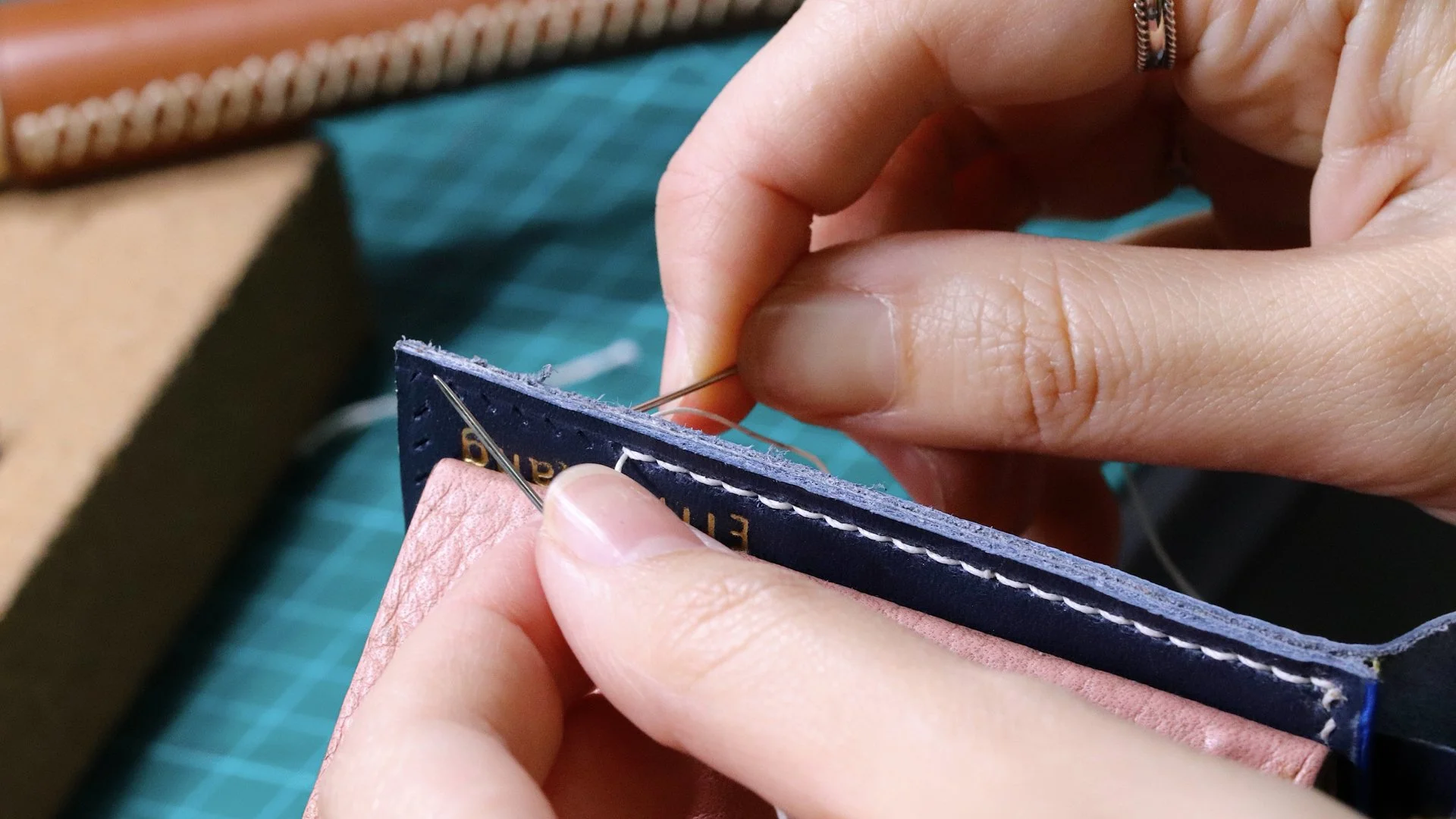
In the rarefied world of luxury, the question of authentication raises a crucial point: who is truly responsible for luxury product “genuineness”? While third-party authentication services play a role (for customers), the ultimate accountability and the true source of customer confidence (without doubt) rests squarely with the luxury brands themselves.
The perpetual debate around authentication often masks a deeper problem: Luxury’s Quality of Doubt.
This “Quality of Doubt” isn’t merely about counterfeits; it’s about the insidious erosion of trust caused by what many consider “normal accepted manufacturing inconsistencies.” This is a subtle yet powerful form of the Streetlight Effect, where brands, in their comfortable view, overlook minor flaws or perceived deviations as “acceptable,” failing to see how these quietly compromise their promise and change the emotional behaviour of their core customers. This creates an Opaque Black Box of overlooked details, where small quality shortcuts and inconsistencies lead unperceivable to significant customer mistrust. For luxury, where every detail should reflect a flawless commitment to excellence, this is unacceptable from their customers’ point of view.
Analysing a dataset of over 4,000 luxury customer buyer perceptions provides stark evidence. It shows major luxury brands consistently failing to meet minimum customer expectations regarding quality and experience: Prada Group indicates 75% efficiency improvements, Saint Laurent 86%, Gucci 73%, Burberry 96%, and Balenciaga 92%. These results are not just anecdotal; they are quantifiably measured and point to a fundamental common root causes of customers’ authentication concerns and a symptom of unhealthy Organisational Homeostasis.
The resolution is clear: brands must return to genuine perfection. It’s not about blaming authentication services; it’s about holding brands accountable for delivering an impeccable product that leaves no room for doubt. Consider saddle stitching as a prime example. You can’t fake saddle stitching. It’s a mark of meticulous craftsmanship that inherently speaks volumes about a brand’s commitment to enduring excellence. It provides a tangible, verifiable indicator of quality that no superficial imitation can replicate.
By focusing on delivering such intrinsic perfection, luxury brands can slowly restore confidence, reclaim the true meaning of “luxury”, and, in doing so, effectively eliminate the very need for external authentication to alleviate customer doubts and concerns. An Organisational CT Scan and diagnostic assessment can quantifiably locate and measure any erosion of trust customers feel and illuminate the precise pathways to re-establish trust, delivering Value & Growth by focusing on the unseen details that matter most to your customers.
The ultimate responsibility will always lie with the brands themselves. Deliver genuine perfection. Ensure every product, every stitch, and every detail lives up to the “luxury” label. That is the true path to restoring confidence and reclaiming the undisputed meaning of luxury.
If Your Brand Is What Your Customer Says It Is: The Imperative of Seeing Their Reality
Marty Neumeier famously stated: “Your brand isn’t what you say it is. It’s what they say it is.” Discover how understanding customers’ gut feelings reveals hidden value and drives customer excellence and brand value.
“YOUR BRAND ISN’T WHAT YOU SAY IT IS. IT’S WHAT THEY SAY IT IS.”
— Marty Neumeier, Author and Co-founder of Level C
This powerful declaration from Marty Neumeier cuts through conventional wisdom about branding. Contrary to popular belief, a brand is not merely a logo, a product, or even a promise a company makes. These are merely tools or intentions. A brand, in its truest sense, is a result — specifically, a customer’s gut feeling about a product, service, or company. It takes root in their heads and their hearts. Customers translate the raw materials thrown at them (every touchpoint, every interaction, every message). From these, they construct their own version of the brand. This means every customer creates a slightly different view, and collectively, these millions of individual “customer brands” shape a brand’s true reputation. That reputation, the living, evolving perception in the marketplace, is the brand.
If the brand is ultimately what they say it is, then a critical challenge emerges. How does an organisation truly measure and manage this collective “gut feeling” across millions of individual perceptions? How do you understand what’s happening within the Opaque Black Box of customer reality, especially when the Streetlight Effect tempts you to focus solely on internal metrics and controlled messaging? This profound ambiguity is directly connected to a fundamental business truth.
This is precisely where my diagnostic approach begins. My early work, including what I termed the Brand Diagnostic Assessment, evolved into the Organisational CT Scan – a refined methodology designed to bring light to organisations’ unseen. It meticulously measures an organisation’s customer experiences, touching every touchpoint from product design and messaging to overall product and service, brand culture, and employee behaviours. This in-depth diagnostic approach identifies why revenue vanishes unnoticed over time by quantifying the underlying emotional customer disconnects that traditional reporting often overlooks.
Over a decade of investigating and leading organisations to create brand value, delivering customer excellence. Experience consistently shows customers powerfully communicate this truth daily: “Your brand isn’t what you say it is. It’s what we say it is.” Understanding these intricate, often hidden, customer perceptions is the key to identifying where and how a company’s true, often uncaptured (upside) value—the “unknown unknowns” sits hidden in plain sight. This approach highlights fresh insights that profoundly strengthen and boost brand performance and revenue growth, breaking down what often seem like impossible-to-solve challenges for global industry leaders.
Ultimately, true brand value and customer excellence stem not from internal pronouncements or polished marketing but from diligently understanding and actively shaping the customer’s reality through verifiable, diagnostic insight. The imperative is clear: pay closer attention to what they truly feel and dare to look where others don’t.