
SYSTEMIC DIAGNOSTICS // FIDUCIARY ARCHIVE
THE FIDUCIARY REGISTRY
Independent, non-smoothable intelligence logs and systemic diagnostics compiled over more than a decade of tracing transaction metadata. This archive operates as a sovereign database built to strip away narrative seduction, exposing where portfolio assets are weaponised as pawns within private equity's opaque black box. It equips Level 1 allocators with the precise metrics required to enforce baseline accountability and cleanly separate authentic operational execution from debt-engineered luck.
The Invisible Gorilla: The Human Cost of Correlation
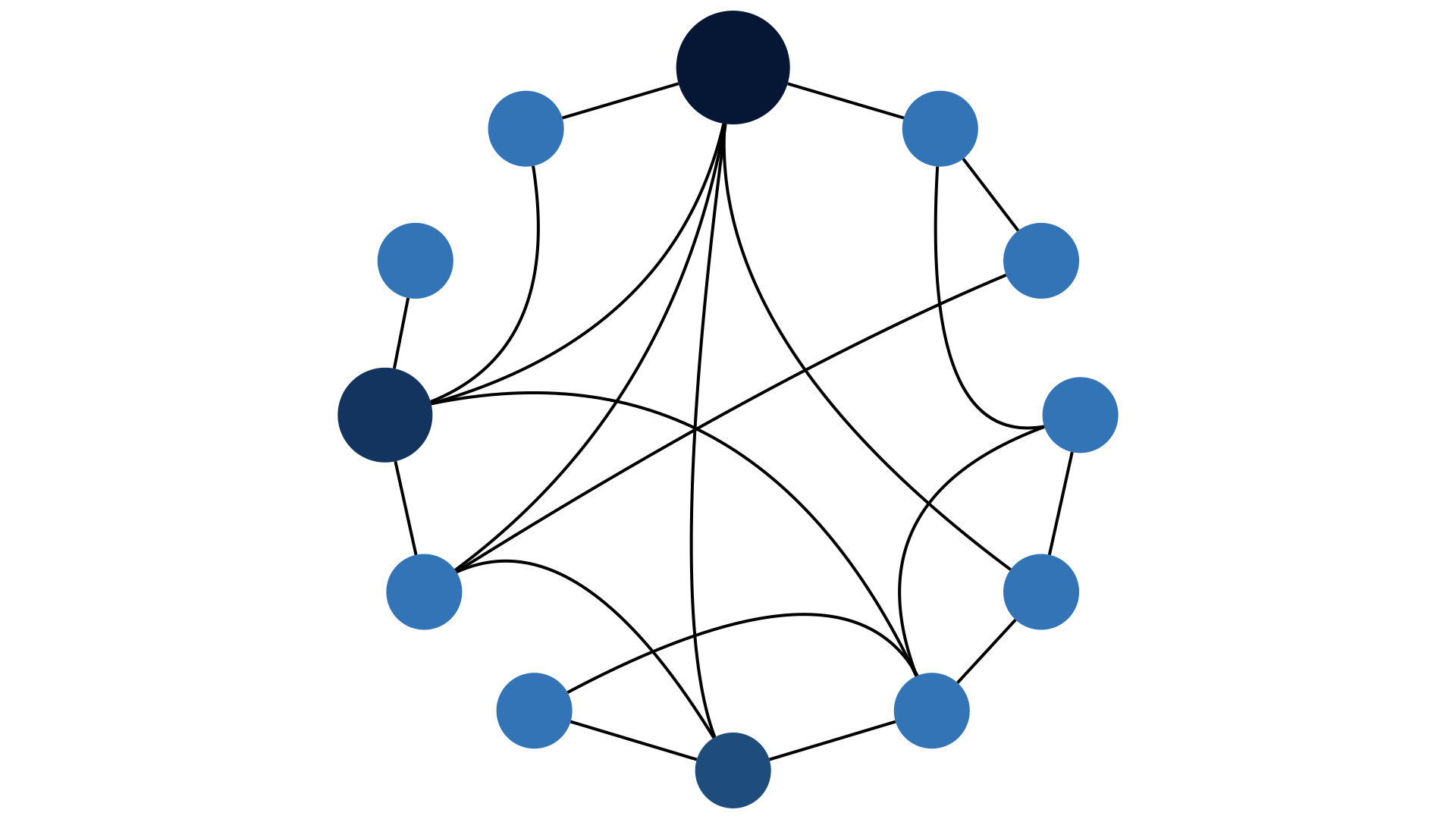
Why does a loved brand suffer a 20-year net loss? This workshop exposes the costly trap of “Relative Wins” and “The Invisible Gorilla”. Learn how the Organisational CT Scan finds the causation, and the Small-World Network graph maps how they flow into the Absolute Reality—the sustained inattentional blindness that costs Paul Smith £14.26 million.

Moving from Relative Wins to Absolute Reality
Let’s run a 2-hour diagnostic workshop. It’s a leadership exercise. Our subject: Paul Smith, a top-quartile brand, loved by a global following and loyal customers, with exceptional creative consistency.
The class assignment:
Deconstruct the public data and find the “irrefutable facts” you’d bring to the boardroom.
Here’s what the class finds:
Fact 1 (The Acute): The principal trading company, Paul Smith Limited (PSL), reported an operating loss of £14.26 million in 2024.
Fact 2 (The Chronic): Public filings show PSL’s total consolidated profit over the last 20 years (2005-2024) is a negative £11.25 million.
Critical thinking:
Discuss how a top-quartile “Loved Brand” and “Net Loss” can coexist for two decades.
The discussion isolates the most expensive trap in modern business: Mistaking Relative “Wins” for Absolute Progress (Correlation ≠ Causation).
This is the Relative Risk Reduction (RRR) trap. Leadership, sold “solutions” that “improve a symptom by 20%” (Relative Win), ends up just masking the symptoms. The long shadows cast by the real causes—the invisible “emotional” frictions—remain absolute:
“Consistently atrocious” in-store service
An “expensive suitcase fail[ing] after one flight”
A “30-day refund delay”
The Organisational CT Scan locates the “Root Cause Contagions”. The Small-World Network graph maps how they flow into the Absolute Reality—the £14.26 million 2024 operating loss. These methods further reveal how these masked symptoms, amassed over 20 years, result in Fact 2: a consolidated net loss of £11.25 million.
This is the “holy grail”: It shows causation.
The workshop notes (The Alpha Key™ Report) serve as a blueprint. It traces a single “gut feeling” (like “Staff on their mobiles”) to its exact weighted financial impact: a £4.45 million brand loss—a powerful driver of the 2024 operating loss.
PSL’s 20-year accumulated loss is the Absolute financial price of operating on “correlation” (opinions, guesswork).
It’s the infamous invisible gorilla. Sustained inattentional blindness. It’s an innate human-born blind spot—and a costly vulnerability.
“Virtually anything that has an effect can be observed, and its impact understood, even if not with old rulers.”
It opens the dialogue: If the “solutions” are merely masks, which current projects need to be stopped? The resource savings alone could fund the Absolute Wins.
The antidote:
Don’t chase shadows. Find the breadcrumbs.
The report further outlines a path to salvage an additional £6.55 million, directly slashing the £14.26 million operating loss by over 75% to book a £22.32 million increase in group Enterprise Value.
It’s no longer theoretical. It’s verifiable alpha, commercially validated with a 10X ROI Guarantee.
The workshop ends.
Now, ask yourself: What would your 2-hour workshop reveal about your company?
Case Story: The Returns Dilemma That Unlocked 4% Net Margin
A successful consumer brand battled rising product returns until a diagnostic revealed the company itself was the problem. Discover how addressing hidden communication gaps and process flaws transformed returns into a 4% net operating margin gain and enhanced customer trust.
The Challenge
For many businesses, product returns are simply a “cost of doing business.” A successful consumer brand was grappling with a familiar problem: a high and rising volume of customer returns that relentlessly eroded its profitability. Their streetlight, fixed firmly on financial reports, clearly showed the escalating costs of return shipping, restocking, and administration. The conventional wisdom was that this was just an inevitable part of online retail, a loss to be absorbed or mitigated by tightening return policies. But what if those returns were actually a signal of something more profound?
The Investigation Beyond the Streetlight
We recognised that simply managing returns was treating a symptom, not curing the disease. Our approach was to reframe the challenge: instead of viewing returns as a logistical problem, we saw them as the final, painful symptom of a flawed customer journey. We deployed the Organisational CT Scan not to count returns but to understand and eliminate the root causes that prompted them in the first place. Crucially, this diagnostic didn’t rely on expensive software or complex predictive models; the initial hypothesis was developed and validated using a simple spreadsheet, demonstrating the power of observation and curiosity.
The Revelation
The Brand Was Driving Its Own Returns: The truth was profound: the company itself, unintentionally, was the most significant driver of its own returns. The Organisational CT Scan meticulously identified several critical, yet previously unseen, points of friction – pieces of “bad flora” poisoning the Customer Grove before customers even considered a return. Alluring website descriptions created a subtle, unnoticed expectation gap regarding material, fit, or colour that the actual product couldn’t meet. Sizing charts were wildly inconsistent across different product lines, leading to predictable customer frustration and “bracketing” (ordering multiple sizes with the intention of returning some). Furthermore, the returns process itself, designed for the company’s cost efficiency, was confusing and time-consuming for the customer, adding a final negative experience to an already disappointing purchase.
The Solution
Improving the Customer’s Reality: Once these verifiable truths were illuminated, the path to a healthier Organisational Homeostasis became clear. A set of simple, targeted steps was implemented: clarifying product descriptions with more realistic photography, creating a unified and easy-to-understand sizing guide (the problem wasn’t the customer; it was the product), and streamlining the returns process to make it genuinely user-friendly.
The Verifiable Impact
The results were immediate and transformative:
48% Reduction in Returns: Customer returns were dramatically reduced by 48%.
4% Increase in Net Operating Margin: This directly added 4% to the group’s net operating margin through dramatically reduced distribution and management costs.
This was achieved not through negative interventions that punished the customer but by fundamentally improving their overall experience and rebuilding trust.
This case powerfully illustrates a key Maxim of the Maze: Patching Symptoms Keeps the Real Sickness Hidden in the Dark.
A product return is rarely the end of a transaction; it is often the most honest feedback a customer will ever give you about the disconnect between your promise and their reality. By daring to look where others don’t, we can transform a “cost of doing business” into a significant source of verifiable value.
THE FIVE STAGES OF BRAND GRIEF: Why Vans Left Me Barefoot (and What It Means for Your Brand)
Morten J. Sørensen’s Vans experience reveals the “Five Stages of Brand Grief”. Discover how the Organisational CT Scan illuminates emotional customer disconnect to unlock billions in unseen revenue for organisations and VP Corp..

I wanted to give Vans my money, but they wouldn’t let me.
As someone whose instincts and policy have been to help every organisation unlock its hidden billions and thrive, I’m acutely aware of the forces that connect and disconnect brands from their customers and alter the emotional connection one has to a particular brand.
A few weeks ago, while packing light for a London trip with only a pair of Converse Chuck 70s, I ended up with blisters after walking over 30 miles (50 km) along the River Thames. Mental note to self: Vans Old Skool low tops (suede/canvas) are more comfortable for long walks than Converse Chuck 70s. At that moment, I had a single desire: I wanted desperately to buy a new pair of Vans canvas. Staying in Central London, I was confident I could easily find a Vans store, so I set out to make a purchase. The Vans website listed four stores. I embarked on an unintentional odyssey, visiting three locations and finding no directly operated stores. Zero. Nada. This was disappointing in so many different ways.
The flagship store on Oxford Street was closed for renovations (unannounced on their website), another was mysteriously absent from Neal Street, and the third was nowhere to be found within Westfield Shopping Centre. I even searched the big touch screens present to guide you to your brand. “No Results.” was all the display informed me.
This frustrating and now personal inconvenience was more than just a bad customer experience; it was a stark, tangible reminder of the invisible, powerful emotional forces that disconnect brands from their customers fast—It just happens to be a core specialism of mine.
It also sparked a realisation: this customer journey, marred by unmet expectations, mirrors the emotional stages of grief outlined by Dr. Elisabeth Kübler-Ross. And, as Rory Sutherland of Ogilvy UK often highlights, context matters powerfully.
Let’s explore the Five Stages of Brand Grief looking through the lens of Vans:
Denial: Brands, much like individuals, often enter denial about their problems. In Vans’ case, this might manifest as underestimating the impact that inaccurate website information and unannounced store closures have on customer’s emotional experience and Van’s revenue model. “It’s just a website glitch,” they might say, operating under the Streetlight Effect, blinded by inaccurate assumptions. When “Absolutely abysmal, I ordered hi-tops for my son over a week ago...after a week, I checked Vans website, and my order was still processing...” you know something more is going on. For a customer eager to purchase, it’s a significant, preventable obstacle, creating real pain. So, I did a quick breakdown analysis, and it shows a staggering 74% of Vans’ online customer reviews are 1-star, with an average rating of just 1.6 stars. To me, that was unsurprising and almost anticipated. To me, this points to a significant organisational customer disconnect and a brand in denial (context matters).
Anger: My own frustration with the situation and my mental mind-map of that odyssey reflect the anger customers may also feel when a brand fails to meet expectations. “They totally cheated me. Ordered shoes several weeks ago but have not received anything yet. Have emailed but received no answer.” This unnecessary and preventable customer anger, born from wasted time and unfulfilled desires, quantifiably leads to lost sales and damage to brand loyalty. As Sutherland might say, Vans is failing to understand the “why” behind my behaviour. Why was I frustrated? Because the context of my experience—inaccurate information, closed stores, wasted time—created a negative emotional response. The result is billions of dollars wiped from VF Corporation’s share price valuation.
Bargaining: At this stage, a brand might try to rationalise the issues, downplaying their significance or seeking quick fixes instead of addressing the root causes. “We’re working on it,” they might say, perhaps selling off corporate aircraft and aircraft hangars to please shareholders. “After being told to take them to a store for exchange and a 50-mile round trip, the store refused and diverted me back to customer services. After going around in circles with their customer service, I gave up. £65 wasted.” This outcome may appear to please shareholders in the short term, but it’s just misdirection. Bargaining with themselves, hoping to avoid the real work of transformation. The organisation is failing to ask the fundamental why this happened.
Depression: This stage represents the realisation of missed opportunities and the potential consequences of inaction. “Will never purchase from them again. 3 months later I still didn’t receive my order, only thing I received was ignorance from this company.” It’s a critical point where brands must acknowledge the need for change and seek genuine solutions or risk falling further behind. This is where a brand’s plan might not be a truestrategy but rather “solving problems with plasters for wounds that do not exist,” as Roger Martin might observe.
Acceptance: Finally, acceptance involves embracing the need for true transformation and committing to a new (untrodden) path, even if it challenges existing playbooks and ventures deep into the dark unknown. It’s not accepting the first answer, such as blaming “Yodel delivery.” This is where true growth and revitalisation occur. As someone with decades of experience in investigating customer disconnects, I’ve helped organisations illuminate their unseen revenue streams and successfully taught them to unlock billions.
My proprietary Organisation CT Scan, combines quantitative analysis, behavioural science, and a deep understanding of customer psychology to illuminate the untrodden pathways to extraordinary growth. It’s unthinkable to turn back once you truly see the unseen.
This is the area where brands can truly “behavioralize” their approach, as Sutherland suggests, by understanding and monetising their customers’ psychological and emotional drivers.
My experience with the Vans brand highlights a critical need for VF Corporation to move through and beyond these stages of grief to unlock its unseen, hidden internal revenue destruction.
My background, investigative drive and ethics revolve around teaching organisations like VF Corporation to be unpretentious and examine their portfolio’s naked truth. Taking that first step can be difficult; I know, I’ve been there myself. But remember, every journey begins with a single question. Your comfort is knowing I’ll share what I’ve learned and help you and your portfolio brands quickly unlock their unseen potential.
The new pathway plotted beats any strategy plan or plane. My humble offer is simple: I will help VF and Vans find, locate and reveal the keys to your missed revenue. I’ve publicly shared two lost keys. One with a US$0.10 solution and the other with a US$0.00 solution. Each key holds billions in locked revenue for Vans. The Organisational CT Scant may enable you to also see Vans’ invisible revenue, drive customer experiences, and, in the process, transform your broader portfolio of brands faster and much more efficiently.
The only question that remains is, how much growth do you desire VF Corp.?
Archibald London: The Uncomfortable Truth About Reaching Customer Excellence
Discover how Archibald London, a luxury brand, faced a hidden vendor quality breach with radical transparency, redefining customer excellence by confronting uncomfortable truths and rebuilding trust.
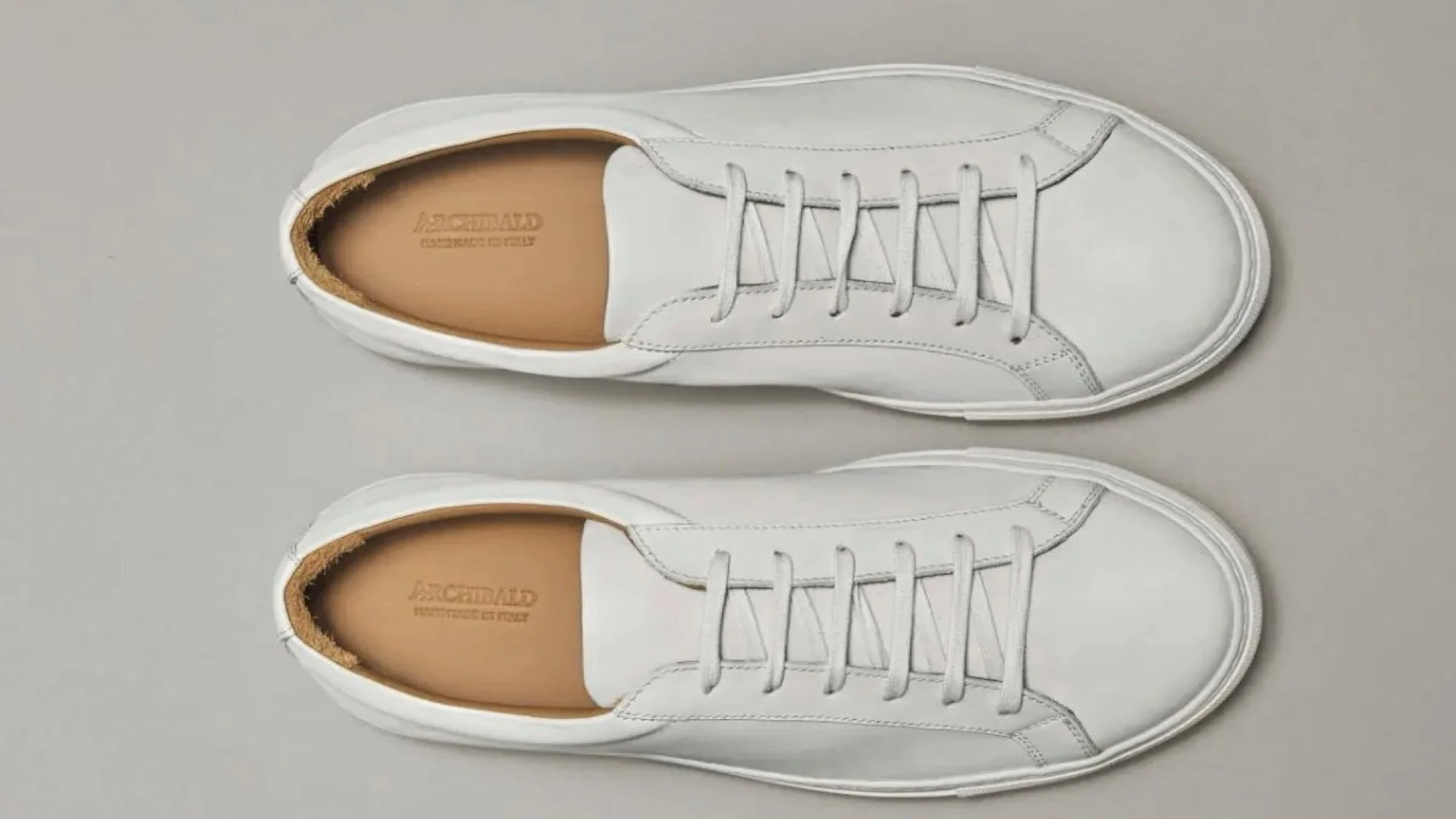
“TRANSPARENCY IS EASY WHEN YOU’VE NOTHING TO LOSE; IT’S EVERY BIT AS NECESSARY WHEN THERE’S SO MUCH ON THE LINE.”
This profound statement, taken directly from an email to their community, embodies the extraordinary ethos of Archibald London. A luxury brand defined by its commitment to honesty and masterful craftsmanship, Archibald found itself in an agonising position, revealing an uncomfortable truth about what it truly takes to reach customer excellence.
In early 2021, Archibald London received the shocking news that struck at the very foundation of their brand: one of their trusted shoemakers had, without their knowledge or consent, altered the construction method of their hand-welted shoes for recent batches. The discovery came not from internal checks but from a discerning customer, JMR928, who deconstructed his purchase and found the deviation from Archibald’s promised traditional technique. Archibald London, a brand built on lifting the curtain on production costs, artisan identity, and pricing, suddenly found its own operations compromised by an Opaque Black Box operating within its trusted supply chain.
This was more than just a quality control issue. It was a classic example of the Streetlight Effect in action – Archibald had placed their trust (their “light”) in a long-standing artisan relationship, inadvertently blinding them to the hidden “bad flora” that was silently poisoning their product. The shoemaker’s unauthorised change, made during the pandemic in pursuit of a perceived “better” technique for comfort, directly violated Archibald’s brand promise. The shoes customers received, while still positively reviewed, did not match the meticulous narrative of craftsmanship Archibald had so carefully cultivated, creating a profound customer disconnect and eroding the unspoken “gut feeling” of their Customer Grove.
What followed was an extraordinary display of integrity that defines true customer excellence. Archibald London didn’t hide; they chose radical transparency despite the personal pain and potential financial losses. Their team, though small and feeling a sense of personal betrayal from an artisan they considered family, recognised their duty to inform their community. They openly admitted their naivete, acknowledged their own need for closer oversight in changing situations, and committed to identifying and working individually with every affected customer.
This specific experience for Archibald London, while unique in its courageous transparency, perfectly illuminated a critical, often-overlooked vulnerability I had begun to sense in organisations: that even meticulous brands can unknowingly cede control to their vendors. This effectively transforms external partners into Opaque Black Boxes, harbouring risks unseen by the core leadership. This very insight, sparked by their challenging situation, sowed a crucial seed for how I later approached similar issues, allowing me to easily trace the root causes of seemingly complex problems—such as the choice of acetate in luxury eyewear like Chanel’s—to seemingly distant or disconnected vendor decisions.
Archibald London’s experience demonstrates that the path to enduring customer excellence and lasting brand value isn’t found in avoiding problems but in the willingness to illuminate and address every uncomfortable truth, even when “so much is on the line.” Their commitment to their community and their values, demonstrated in their darkest hour, is a testament to the profound strength unlocked by radical transparency.
THE SERIAL RETURNER PARADOX: Unmasking the Hidden Costs Driving Up Online Prices
“Serial returners” are driving up online prices. Discover how illuminating the unseen operational flaws, not blaming shoppers, transforms this retail paradox into significant profit and growth.

For many online retailers, the “serial returner” has become a pervasive and costly figure. Research from Barclaycard highlights the immense pressure this places on businesses, revealing that six in ten (60%) retailers are negatively impacted by consumers’ propensity to return unwanted items. Online-only businesses are particularly hard hit, with three in ten (33%) stating that managing returns directly affects their profit margins, leading one in five (20%) to increase prices to cover these mounting costs. Sharon Manikon, Director of Customer Solutions at Barclaycard, notes that today’s time-pressed shoppers expect fast, easy, and free processes for both purchasing and returning goods, contributing to the emergence of this new breed of online shopper.
This phenomenon, however, often distracts from the true underlying issue. Are these shoppers genuinely “serial returners,” simply taking advantage of free returns? Or are they, in fact, simply responding to an Opaque Black Boxwithin the retail operation that is consistently generating conditions for returns? This is a classic case of the Streetlight Effect: focusing intently on the visible symptom (the returned item, the “serial returner”) rather than illuminating the less obvious, internal root causes that are poisoning the Customer Grove long before the return even happens.
The accepted wisdom often suggests solutions like standardising clothing and shoe sizes, as four in ten (40%) shoppers believe this could be beneficial. Yet, relying on customer input—be it body scans, personal avatars, or manual measurements—has historically failed to provide engaging, efficient, or sustainable long-term solutions. These approaches merely shift the burden to the customer, adding friction and custoimer disconnects before a sale is even made.
From my perspective, having worked extensively with global retailers, the true path to improvement lies not in blaming the shopper or adding more hurdles for them. It lies in understanding the fundamental “Why?” behind their behaviour. The core issue driving “serial returners” is often rooted in the retailer’s own internal ecosystem—inconsistent product communication, misaligned sizing data, or frustrating post-purchase processes. These are the unseen inefficiencies that silently drive up returns and hinder growth.
My unique ability lies in illuminating these unseen links, enabling online apparel, fashion, and footwear retailers to dramatically improve all return metrics without requiring shopper intervention. By proactively addressing these internal issues, brands can transform a perceived problem into a competitive advantage, reduce baseline returns, increase profit, and significantly accelerate customer satisfaction and growth.
If you sit in the six in ten retailers negatively impacted by “serial returners,” it’s time to look beyond your existing Streetlight’s glow. It’s time to turn this situation into a verifiable competitive brand advantage and see your organisation’s profits grow.
THE $1.75 TRILLION RETAIL GHOST ECONOMY: Unmasking Unseen Value Loss
Retailers globally lose $1.75 trillion annually to a "Ghost Economy" of returns, overstocks, and out-of-stocks. Discover how understanding the "Why?" can unmask this unseen revenue loss and reclaim profound value.

Hidden in plain sight, obscured by accepted norms, the retail industry grapples with an invisible drain on its vitality: The Retail Ghost Economy. This phenomenon, where immense value dissipates outside the narrow beam of conventional metrics, represents a staggering $1.75 trillion in lost annual revenue opportunities for retailers worldwide. These are the "hidden" activities within a retail enterprise that wreak havoc with sales and profitability—two critical components every retailer constantly holds as strategic priorities.
Industry research meticulously breaks down these annual losses: Returns contribute $642.6 billion, Out-of-Stocks account for $634.1 billion, and Overstocks add another $471.9 billion. For a typical retailer, these combined losses are equivalent to sacrificing 11.7 per cent of their potential revenue. Imagine the impact: adding $117 million for every $1 billion in retail sales if these preventable issues were addressed. This isn't just about statistics; it's the Opaque Black Box of retail, where enormous value silently slips away. Every single day.
However, for me, these staggering numbers were not a cause for concern; instead, they begged a more fundamental question: Why? Having had the personal pleasure and experience of working with global retailers, particularly in tackling returns and overstocks, it became clear very early on that many of the contributing issues leading to this Retail Ghost Economy can be aggressively addressed by connecting the relevant data points, finding the root causes, and understand their "Why?"
The prevailing wisdom, often operating under the Streetlight Effect, tends to quantify these problems, treat symptoms, or accept them as an unavoidable "cost of doing business." Yet, this perspective misses the profound truth: these aren't inevitable losses. They are unseen inefficiencies, internal disconnects, and unaddressed "bad flora" within the organisational ecosystem. They represent tangible, recoverable value if one dares to look deeper, beyond the obvious.
In the face of a $1.75 trillion problem, this clarity is not just welcome news; it's a powerful call to action. Retailers today have the opportunity to transform this invisible drain into quantifiable profit, turning data into real, accessible value.
What is stopping you from illuminating your own Ghost Economy and reclaiming what's truly yours?
My First Enigma: How a 20-Year Returns Problem Ignited My Purpose
A personal journey into retail's 20-year returns enigma. Discover the "why" behind Morten J. Sørensen's quest to prove that seemingly unsolvable problems yield to new perspectives and verifiable insights.

For decades, the online fashion industry simply accepted a perplexing reality: return rates soaring between 15-50%, often attributed to "poor fit." Reports would lament the massive costs – the shipping, restocking, lost sales, the drain on cash flow – all quantified in percentages that shaved precious margin from every shopping basket. Solutions emerged, indeed: personal avatars, body scanning, and detailed measurement input, to name but a few. But year after year, none proved truly effective, efficient, or scalable. They all relied on asking customers to jump through hoops, creating friction and disconnects before purchase, which ultimately resulted in a negative customer experience, all before any actual sales were made.
I observed these "solutions" with a persistent sense of perplexity. They felt like they attempted to fix a leak by constantly bailing out the water rather than finding the crack in the pipe. They were operating squarely under the Streetlight Effect, looking for answers only where the data was easiest to collect – directly from the customer at the point of perceived fit. The prevailing wisdom became: "This is just the cost of doing business online. It's an enigma we manage, not solve."
But what if it wasn't an enigma? What if this wasn't an unsolvable problem but simply one that no one had dared to look at differently?
This question became my personal challenge. To avoid following others, I added a crucial constraint: no additional disruptive steps should be taken during the end-to-end shopping experience for the customer. The solution had to be invisible to them. It must remain seamless.
This was my "Why moment."
I instinctively felt this problem could be solved, that the answer lay not in more customer input but in understanding the Opaque Black Box of the retailer's own operations. It meant discarding the standard playbooks and daring to search where others didn't. It was about trusting my curiosity to illuminate the unseen links.
I found my opportunity to work with a globally recognized American fashion, apparel, design, and retail company. I dove into a full season (12 months) of their online eCommerce shopping history, not in cleaned reports, but in its raw, unfiltered format. My approach wasn't about applying pre-conceived models; it was about thinking laterally, seeking patterns where others saw noise, and asking the fundamental "why" behind every return.
The breakthrough was profound. By dissecting their internal ecosystem—their processes, supply chain, data flows, and even their assumptions about "returns"—I proved it was possible. Without requiring a single measurement or scan from their customers before checkout, I drastically reduced returns by 48 per cent, improved their margins, and significantly enhanced customer satisfaction. It was a tangible validation that the most persistent problems often yield to a new perspective and a willingness to challenge the "comfortable normal".
This initial quest, born from a deep personal curiosity, laid the foundational principles of what would become the Organisational CT Scan and my approach to illuminating the invisible. It taught me that true value is found not in managing symptoms but in courageously diagnosing and transforming the unseen operational realities that shape a customer's experience.
The profound results of that very first enigma became a powerful testament to this approach. For the detailed insights and the quantifiable impact of how we achieved those breakthroughs, explore the full case study here: