
SYSTEMIC DIAGNOSTICS // FIDUCIARY ARCHIVE
THE FIDUCIARY REGISTRY
Independent, non-smoothable intelligence logs and systemic diagnostics compiled over more than a decade of tracing transaction metadata. This archive operates as a sovereign database built to strip away narrative seduction, exposing where portfolio assets are weaponised as pawns within private equity's opaque black box. It equips Level 1 allocators with the precise metrics required to enforce baseline accountability and cleanly separate authentic operational execution from debt-engineered luck.
The Anatomy of a Fiduciary Rescue: Restructuring a 70-Year Family Legacy
The most dangerous phase of institutional decay is the quiet ‘Illusion of Health’. Operating as Chief Restructuring Officer, I deployed the Organisational CT Scan to rescue a 70-year Single Family Office just 12 months from total bankruptcy. Discover how we dismantled predatory leverage, arrested the Integrity Tax, and found the key to the estate's survival on a single sheet of paper hidden in a 30-year stack.

The most dangerous phase of institutional decay is not the collapse itself; it is the quiet, sustained ‘Illusion of Health’ that precedes it.
I was recently retained on a three-year mandate, holding full living power of attorney, to execute the fiduciary rescue of a highly distressed Single Family Office. Following the principal's severe health diagnosis, I was brought in to stabilise what appeared, on the surface, to be a sophisticated and secure portfolio.
What I discovered beneath the standard reporting was a catastrophic, compounding liquidity crisis.
Upon deploying my proprietary ‘Organisational CT Scan’, the homeostatic baseline of the estate was deemed critical. Just as an individual can appear perfectly fit while harbouring undiagnosed, systemic inflammation, this estate had settled into an unhealthy equilibrium. Systemic structural liabilities had left the Family Office with less than twelve months of liquidity before total, unavoidable bankruptcy. A 70-year generational legacy stood on the precipice of ruin.
Here is how we halted the Integrity Tax, unwound the contagion, and secured the heritage of the asset.
Auditing the ‘Shadow Data’: Breaking the Gestalt Illusion
In the world of generational wealth, standard financial reporting relies heavily on the ‘Streetlight Effect’—searching for value only where the light of conventional metrics shines brightest. The family’s external advisories had effectively trapped the estate inside a ‘CEO Bubble’, feeding the principals only what they wanted to hear while masking the deep, internal decay.
To the untrained eye, the estate’s reporting looked like a complete, unbroken circle. But our brains are wired for Gestalt Closure; we instinctively project completeness onto broken patterns. As a Diagnostician, my job is to ignore the projection and find the gap.
By bypassing the dashboards and forensically auditing over 30 years of physical documentation and tracing the invisible threads within 20,000 digital communications, the true diagnostic exposed a highly predatory ecosystem. The estate was suffering from over €10,000 in monthly recurring capital bleeds, cleverly disguised as ‘advisory subscriptions’ and ‘training services’. These were not legitimate advisories; they were the root-cause contagion feeding a compromised portfolio of (un)regulated alternative assets.
The Execution: Heavy Lifting and Structural Remediation
Value creation in a distressed asset does not begin with generating new revenue; it begins with ruthlessly arresting the bleed. The mandate required immediate, structural remediation across three fronts:
Unwinding the Toxic Debt Stack: The most severe contagion was a multi-layered, predatory leverage structure involving seven interdependent finance deals. The estate had been manipulated into an unsustainable death spiral: a final, rapidly depleting credit facility was being used solely to mask the interest burden of the preceding six loans. This loop was designed by bad actors to manufacture the illusion of profitability. We systematically dismantled this entire leverage stack.
Asset Liquidation and Risk Mitigation: I traced, isolated, and unwound a portfolio of highly toxic investment vehicles—including cryptocurrency, blockchain, and AI schemes—none of which survived rigorous operational due diligence. By halting all predatory subscriptions and liquidating the remaining viable assets, we immediately severed the estate's capital bleed.
Restoring Absolute Financial Integrity: This was not merely an accounting exercise; it was a legal extraction. We mitigated all catastrophic counterparty risks, legally and structurally severing the estate from fraudulent operators to restore foundational financial integrity.
The Turning Point: The 30-Year Stack
The ultimate rescue of the estate was not born from financial engineering, but from the relentless discipline of the diagnostic process.
The turning point—the mechanism that finally rescued the estate from absolute insolvency—was discovered on a single sheet of paper, concealed within a 30-year stack of physical paperwork. That single document, overlooked by years of symptom-based management, provided the leverage required to halt the terminal trajectory.
The Diagnostician’s Verdict
For years, this Family Office existed as a financial Schrödinger’s Cat. It was simultaneously wealthy on paper and entirely bankrupt in operational reality, locked securely inside an Opaque Black Box.
I did not simply wind down the operations of this estate; I structurally transformed its trajectory. By applying the Organisational CT Scan to open that box, we removed the unmeasured friction, the predatory leverage, and the strategic disconnects. We successfully preserved the core heritage of the assets, transitioning the Family Office from a terminal bankruptcy trajectory to a secured, generational legacy, ready for the succeeding inheritor.
Once the truth of an asset is illuminated, you can never unsee it. True operational alpha is not found under the streetlight. It is found by daring to look where others will not.
The face of a £100m opportunity lost
A 153-year-old heritage brand survived two World Wars, only to be sold for the price of a London townhouse. This forensic audit of Russell & Bromley’s collapse reveals the "Corporate Doom Loop" of value engineering and appeasement that hollowed out £120M in turnover in just seven years.

She lent me her foot, but they’d lost their sole. The Russell & Bromley tragedy.
A week ago, my wife Victoria asked me, “Can you save Russell & Bromley?”
She’d read the 153-year-old family business was in trouble, a scenario I’d handled with another Italian luxury brand eight years ago.
My wife loves Russell & Bromley. I love my wife. So, I said, “Of course.”
Last year in London, I’d bought Victoria two pairs of trainers. Living in Europe, returns are impossible. The staff were impeccable. One assistant even lent me her bare feet to model the fit—a flawless service. So, why the crisis?
Too late. Russell & Bromley has been sold pre-pack to NEXT PLC. Only the IP and three stores are saved; the rest liquidated.
The price? £2.5 million.
A brand with a £120M turnover in 2014, sold for the price of a small London townhouse today. Confusing.
The Historical Reality Check
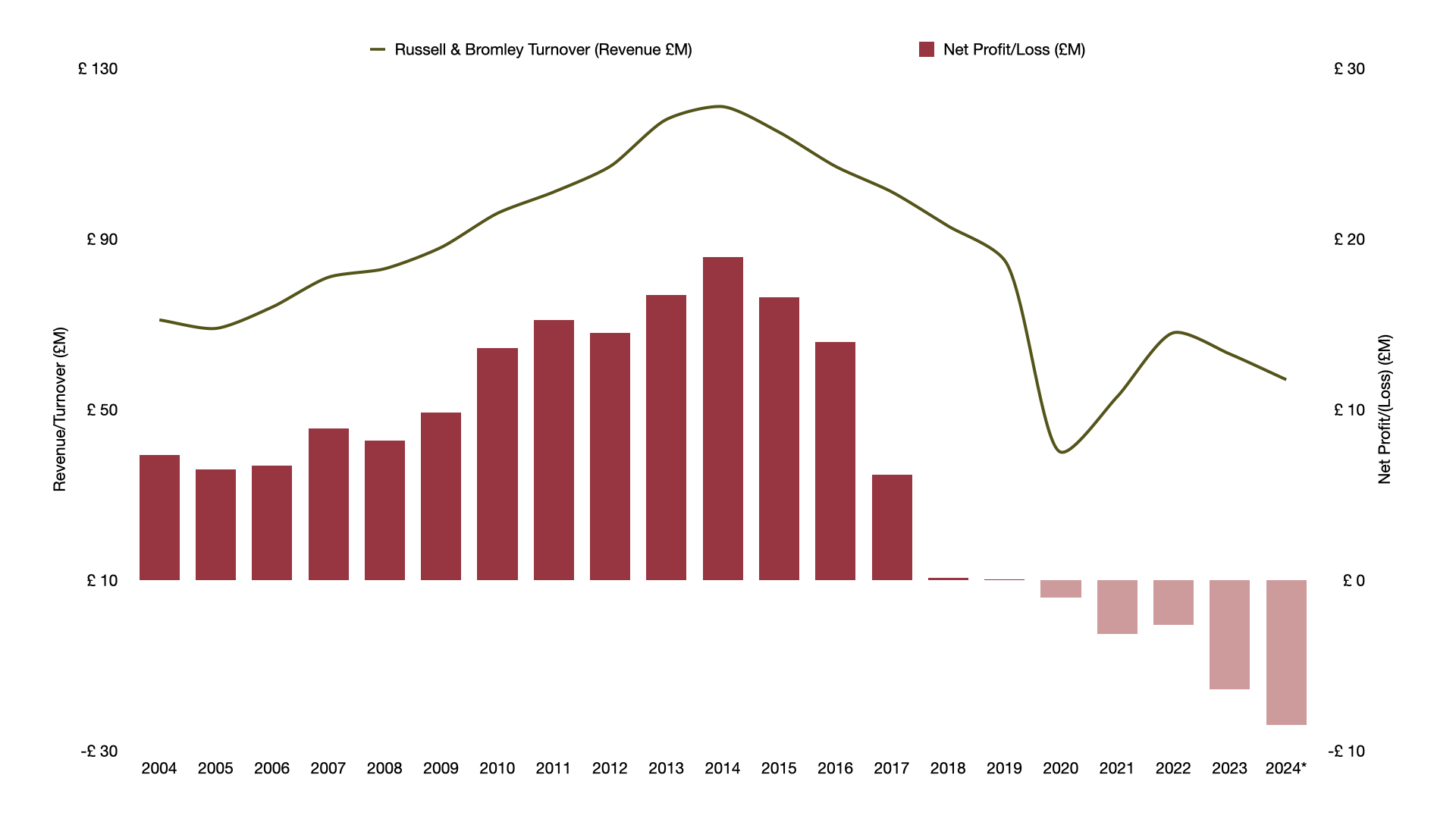
Russell & Bromley was established in 1873. For 153 years, it survived two World Wars, the Great Depression, and every recession in between. It was resilient. It was anti-fragile.
But by 2019, everything changed.
The financial signs showed fortunes changed overnight. Net worth dropped. Liabilities exploded. An Organisational CT Scan revealed that in just 7 years—less than 5% of its entire history—the business was hollowed out.
This was the Opaque Black Box in action: the board was looking at margin protection (the Streetlight), while the customer was experiencing the erosion of the brand's sole (the Shadow).
The Diagnosis
What broke a heritage company that survived for five generations? Appeasement.
“To see the invisible, we simply need new rulers.”
Leadership stopped fighting for the product and appeased the spreadsheet. To protect margins, they engaged in “Value Engineering”—swapping heritage materials for cheaper substitutes. Inexcusable.
They traded 153 years of trust for short-term margin protection, triggering a Corporate Doom Loop: lower quality reduced customer loyalty, which led to further cuts and accelerated decline.
The core problem: leadership chose appeasement over maintaining the brand’s luxury heritage.
The Verdict
The staff sold the legacy; the last 7-year strategy broke it. Burning ~£82M in equity and debt over five years merely flatlined the business. They were stuck in Organisational Homeostasis—working hard to maintain a broken equilibrium.
A tragedy for the family, but the value remains. My audit confirms a clear path to a £100m+ Enterprise Value—a 40x ROI waiting for the new owner—if they use the keys to unlock the "Black Box". The family didn't. They sold for a fraction of inventory value.
A Diagnostician’s Perspective
The most expensive sentence in business is, “I don’t believe it.”
Heritage offers no protection from reality. Appeasement does not ensure survival. Leaders must address root causes decisively—before contagion takes hold and others decide the outcome for you.
To the staff—especially the one who lent me her foot—my respectful sympathies. You deserved better than the product you were given to sell.
Baby, I’m sorry I couldn’t save Russell & Bromley in time.
Morten J. Sørensen
The €1.375 Billion Validation: How a PDF jumped the “Small-World Network” to change Hugo Boss
On January 8, 2026, HUGO BOSS validated a €1.375 billion diagnosis. This is the forensic timeline of how a single Diagnostic Alpha report traversed the "Small-World Network" to bypass the boardroom's immune system, overcome the "I Don’t Believe It" filter, and transform a womenswear blind spot into corporate strategy.

Date: January 2026
Case: HUGO BOSS AG
Asset Class: Diagnostic Alpha
The Most Expensive Sentence in Business
There is a parable I often share about a policeman finding a man searching for his keys under a streetlight. When asked if he lost them there, the man says, “No, I lost them in the park, but this is where the light is.”
This is the Streetlight Effect. In the corporate world, there is a gravitational pull to focus only on visible, comfortable metrics—Gross Margin, Sell-Through, Wholesale Volume—while ignoring the massive value leaks hidden in the operational shadows.
For the last decade, I have observed a recurring pattern. When I present a CEO with forensic evidence of a billion-euro opportunity hiding in those shadows, the initial reaction is rarely joy. It is denial.
“I don’t believe it.”
That sentence is the most expensive liability on any balance sheet. It is the sound of Organisational Homeostasis—the immune system of a company fighting to keep things the same, even when “the same” is slowly eroding its foundation.
But occasionally, the logic of the shadow becomes too powerful to ignore.
The €1.375 Billion Mirror
On September 1, 2025, I published a forensic diagnostic titled The €1.375 Billion Irony and shared it publicly.
The report wasn’t a critique of fashion; it was an audit of value. It diagnosed HUGO BOSS with a structural blindness: the company was treating its womenswear division as a “stylish afterthought”. The data was unequivocal—the division had collapsed from a peak of over 13% of group revenue to a four-year average of just 6.8%.
My prescription was surgical: To capture the €1.375 billion in annual revenue that was missing, the company needed to stop treating womenswear as an adjunct to the men’s business. It required a “surgical separation”—a standalone business unit with the autonomy and expertise to see the female customer who had been waiting in the dark.
Four months later, the diagnosis became strategy.
In January 2026, HUGO BOSS announced a radical restructuring: the creation of an independent Womenswear Business Unit and the appointment of Kerstin Dorst to lead it.
The alignment between the Diagnostic Alpha prescription and the corporate execution is a near-perfect mirror:
The Diagnosis (Sept 2025): I argued the brand failed to “see” the female customer, citing Dr. Kerstin Brehm’s feeling of being invisible.
The Execution (Jan 2026): The company appointed a specialist leader explicitly to “address gender-specific preferences even better.”
The Irony: In a poetic twist of validation, the company hired a Kerstin (Dorst) to answer the question posed by a Kerstin (Brehm).
The Physics of the Pivot
How does a PDF report from an external consultant migrate to the boardroom agenda of a DAX-listed giant in four months?
It is the physics of the Small-World Network.
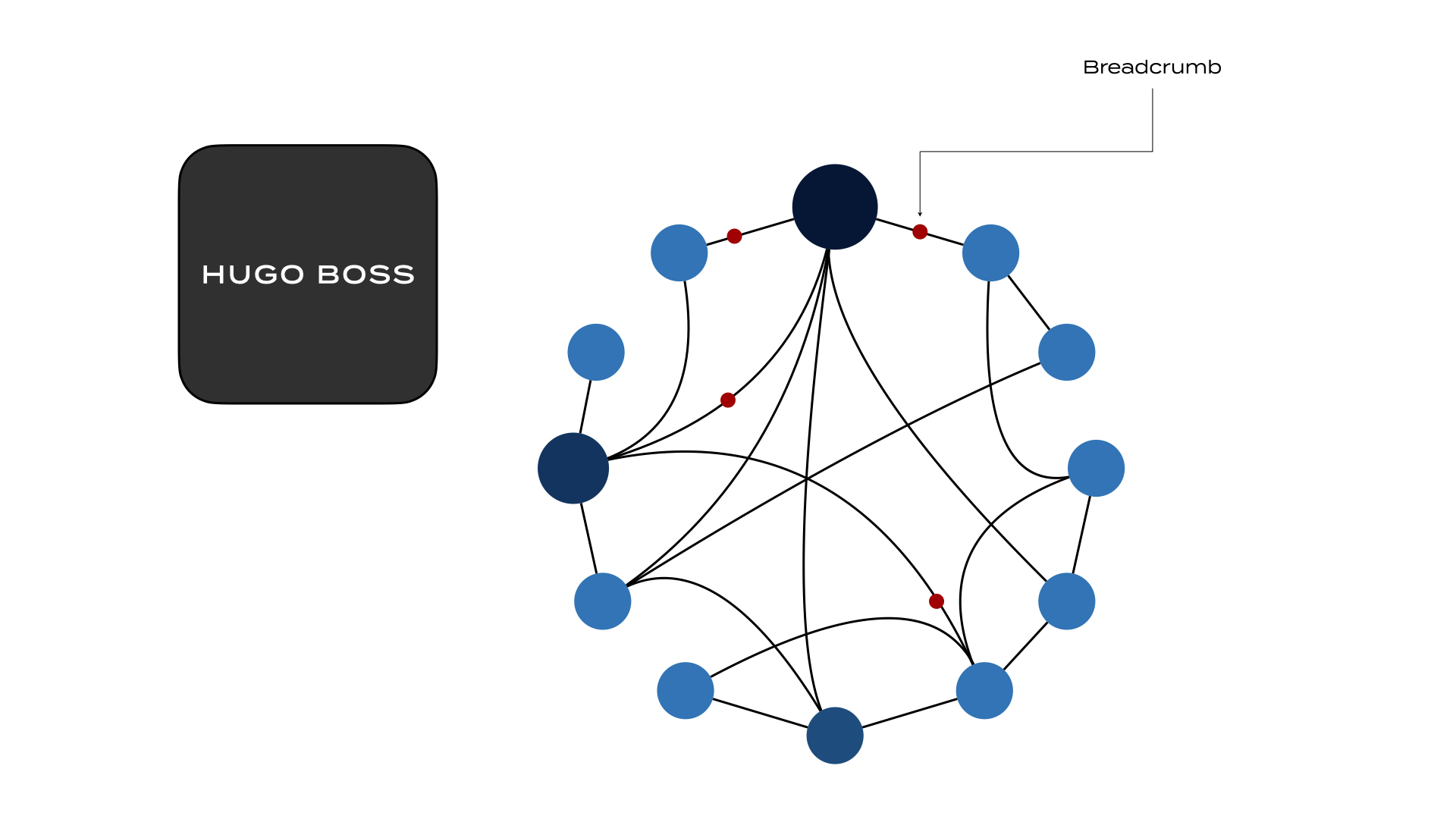
Our forensic analysis of the report’s digital footprint revealed that the “injection” occurred immediately. Within weeks of publication, nearly 2% of the report’s readership consisted of Hugo Boss insiders—specifically, directors and VPs.
The idea didn’t need to go viral globally; it just needed to infect the decision-making nucleus. Through private channels—the “Dark Social” network of saves and forwards—the diagnostic bypassed the “I don’t believe it” filter and landed on the strategy deck.
The Lesson: New Rulers for Old Problems
The HUGO BOSS case is not unique. It is simply the most visible validation of a universal truth:
“To see the invisible, we simply need new rulers.”−Morten J. Sørensen
The “Old Rulers” (traditional KPIs) told HUGO BOSS that womenswear was a difficult market. The “New Rulers” (Diagnostic Alpha) revealed it was a billion-euro opportunity disguised as a problem.
The company has now turned its streetlight toward that billion-euro opportunity. They have moved from “I don’t believe it” to “Let’s build it.”
For the rest of the market, the question remains:
What billion-euro “Invisible Gorilla” is walking through your business and investment right now, waiting for someone brave enough to turn on the lights?
READY TO TURN ON THE LIGHTS?
If your organisation is ready to move beyond “Organisational Homeostasis” and identify its own billion-value blind spot, initiate an Alpha Key™ Forensic Audit.
We apply the same methodology used to diagnose HUGO BOSS, PRADA, VINTED, TIMBERLAND, and PAUL SMITH.
INITIATE DIAGNOSTIC BRIEFING.
The Invisible Gorilla: The Human Cost of Correlation
Why does a loved brand suffer a 20-year net loss? This workshop exposes the costly trap of “Relative Wins” and “The Invisible Gorilla”. Learn how the Organisational CT Scan finds the causation, and the Small-World Network graph maps how they flow into the Absolute Reality—the sustained inattentional blindness that costs Paul Smith £14.26 million.

Moving from Relative Wins to Absolute Reality
Let’s run a 2-hour diagnostic workshop. It’s a leadership exercise. Our subject: Paul Smith, a top-quartile brand, loved by a global following and loyal customers, with exceptional creative consistency.
The class assignment:
Deconstruct the public data and find the “irrefutable facts” you’d bring to the boardroom.
Here’s what the class finds:
Fact 1 (The Acute): The principal trading company, Paul Smith Limited (PSL), reported an operating loss of £14.26 million in 2024.
Fact 2 (The Chronic): Public filings show PSL’s total consolidated profit over the last 20 years (2005-2024) is a negative £11.25 million.
Critical thinking:
Discuss how a top-quartile “Loved Brand” and “Net Loss” can coexist for two decades.
The discussion isolates the most expensive trap in modern business: Mistaking Relative “Wins” for Absolute Progress (Correlation ≠ Causation).
This is the Relative Risk Reduction (RRR) trap. Leadership, sold “solutions” that “improve a symptom by 20%” (Relative Win), ends up just masking the symptoms. The long shadows cast by the real causes—the invisible “emotional” frictions—remain absolute:
“Consistently atrocious” in-store service
An “expensive suitcase fail[ing] after one flight”
A “30-day refund delay”
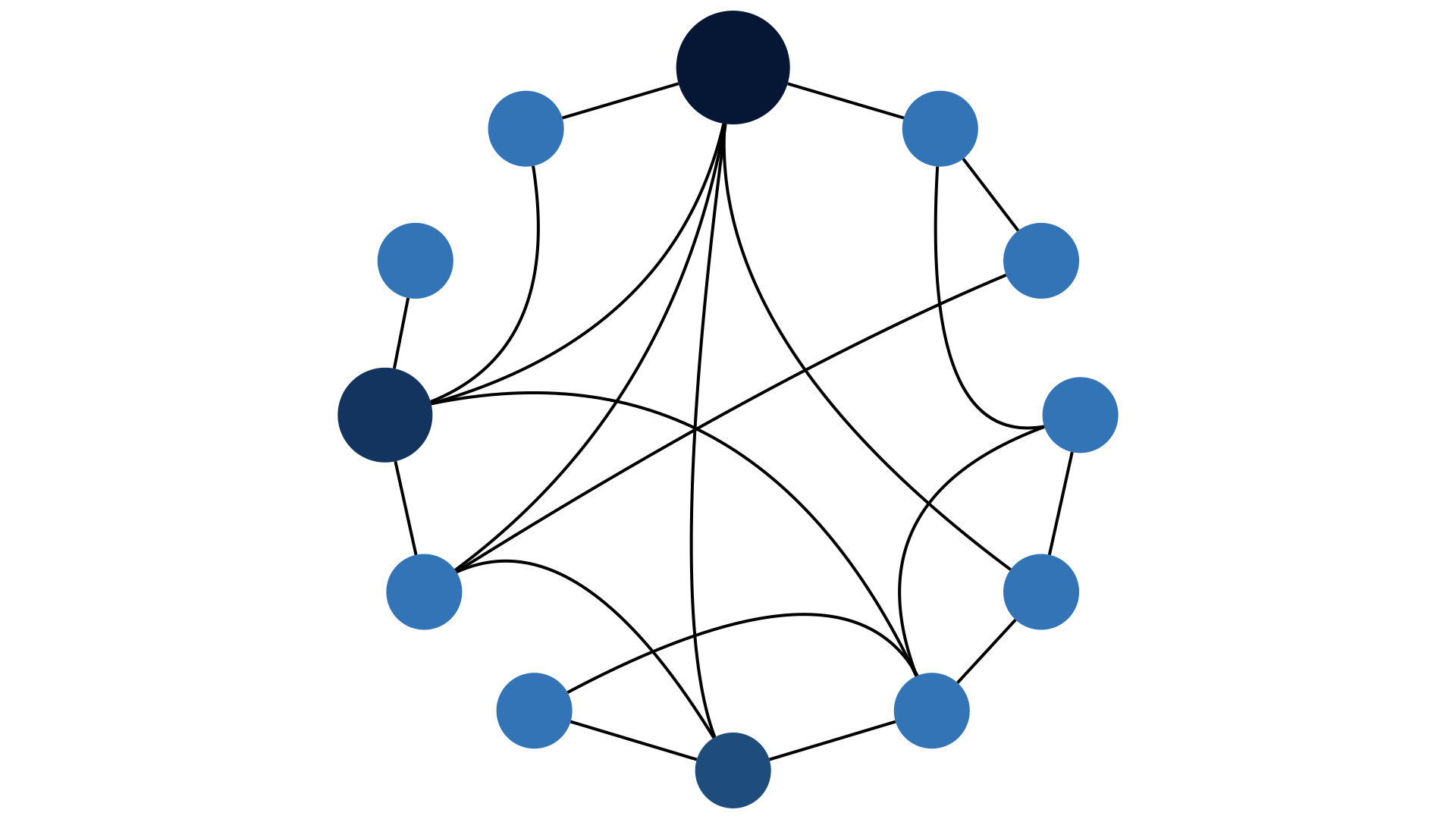
The Organisational CT Scan locates the “Root Cause Contagions”. The Small-World Network graph maps how they flow into the Absolute Reality—the £14.26 million 2024 operating loss. These methods further reveal how these masked symptoms, amassed over 20 years, result in Fact 2: a consolidated net loss of £11.25 million.
This is the “holy grail”: It shows causation.
The workshop notes (The Alpha Key™ Report) serve as a blueprint. It traces a single “gut feeling” (like “Staff on their mobiles”) to its exact weighted financial impact: a £4.45 million brand loss—a powerful driver of the 2024 operating loss.
PSL’s 20-year accumulated loss is the Absolute financial price of operating on “correlation” (opinions, guesswork).
It’s the infamous invisible gorilla. Sustained inattentional blindness. It’s an innate human-born blind spot—and a costly vulnerability.
“Virtually anything that has an effect can be observed, and its impact understood, even if not with old rulers.”
It opens the dialogue: If the “solutions” are merely masks, which current projects need to be stopped? The resource savings alone could fund the Absolute Wins.
The antidote:
Don’t chase shadows. Find the breadcrumbs.
The report further outlines a path to salvage an additional £6.55 million, directly slashing the £14.26 million operating loss by over 75% to book a £22.32 million increase in group Enterprise Value.
It’s no longer theoretical. It’s verifiable alpha, commercially validated with a 10X ROI Guarantee.
The workshop ends.
Now, ask yourself: What would your 2-hour workshop reveal about your company?
Root Cause Contagion: How Small Failures Drive Systemic Decay Within Organisations
A €1.7B loss began with a single €0.02 failure. Follow the breadcrumbs to how this "Root Cause Contagion" impacts every group revenue, margins, and market cap in the billions. It reveals the core principle: organisations miss unseen value by mistaking massive financial symptoms for a single, tiny, broken customer promise.

Following the €0.02 breadcrumb impacting group revenue, margins, market cap and enterprise value by billions
In our pursuit of understanding the grand and complex systems that govern our lives—economies, corporations, societies—we are trained to look for grand and complex causes.
We seek the macro-event, the dramatic failure, the singular catastrophic decision that explains a collapse. We scrutinise the financial statements, executive strategies, and market trends, believing that a €1.7 billion loss must have an equally enormous and visible cause. We are looking for the earthquake.
And in doing so, we miss the truth. We dismiss the humble, everyday clues, such as the €0.20 tea light, which had a successful €0.02 operational efficiency makeover. One that caused a silent earthquake. This is just such a true story.
This is the philosophical decay at the heart of our system. The proposition that a "Root Cause Contagion" begins with such an infinitesimal failure isn't just a "diagnostic"—it's the unbelievable, horrifying truth. It is a deep, ethereal, and epistemological challenge. I know; I followed that trail past and deep into the shadows.
The organisations we build are not the monolithic, top-down empires we imagine. Instead, they are a living, breathing network. The real strength of a brand is not its logo or its assets, but how it is built to live in people's minds—a fortress of memory, emotion, and meaning cultivated over time.
This is the true "small-world" constellation of customer perceptions, trust, and feelings. It's a reality that cannot be defined or shown from a balance sheet; it is the millions of different versions of the same brand. Each version lives in the mind of an individual customer, and collectively, this is what defines every brand and organisation.
The Breadcrumb and the Shadow: An Epistemological Crisis
The fairy tale of Hansel and Gretel is a fitting analogy here. Each failure, no matter how small, leaves an “invisible piece of thread”: a breadcrumb. It's the toothpick lying on the carpet outside the CEO's office in Subir Chowdhury's book The Difference: When Good Enough Isn't Enough. Why did no one who that day walked into the CEO's office stop, pick it up and put it in a bin? That tells you everything you need to know about that company. This presents an epistemological problem: how did we learn not to see what is visible?
The €1.7 billion loss in turnover from the €0.02 cost-saving program was the long symptom shadow that was cast—not the problem; the problem is the terrifying, large-scale projection of a much smaller, more tangible reality. We mistake the shadow for the object itself. That is wrong. The diagnostician is the one who dares to turn away from the flickering financial reports and trace the “invisible thread” back to its source—unravelling the truth behind the root causes. It's that one person who actually notices the toothpick. Stops. And picks it up to dispose of it in a bin.
What is the effect of that one person picking up the toothpick? It is the physical cure for the “gut feeling” contagion.
This single act is, first and foremost, one of prevention. By removing the "breadcrumb", the “invisible thread” is cut. Future visitors are never exposed to this tiny "broken promise". Their “gut feeling” of distrust is never triggered. The contagion is neutralised at its source.
More profoundly, it is an act of cultural reversal. The real problem is the culture of indifference that allows the toothpick to remain. The person who stops and picks it up provides a visible antidote: a micro-act of ownership and care. They don't just prevent decay; they actively mend the relational fabric, creating a positive “gut feeling” that this is a place where details matter.
This act of following the thread is the key. The diagnostician, in effect, employs a phenomenological method. This is the formal term for what they are doing: rejecting the abstract symptom (the €1.7 billion loss) and seeking the concrete, lived experience (the tea light that, in failing to burn, betrays a customer's simple trust).
This method, in turn, reveals the underlying structure of the contagion, which operates as a "Small-World Network". This network provides the map to understand exactly how a €0.02 cost-cutting strategy...drives a €1.7 billion loss in revenue. It demonstrates that financial decay is not the problem; it is merely the evidence of the problem. The fault itself is the millions of broken promises that remain unseen and unaddressed. In terms of the humble tea light, it is the failure of the operational efficiency (resulting in reduced quality) that becomes the brand's failure of trust.
The Iceberg of Ignorance: A Fortress of Hubris
Why does this happen? Why is the breadcrumb trail missed? Why is there a breadcrumb trail in the first place?
Because the leadership mindset is wrong. But this is not a simple blind spot. It is an active, self-reinforcing fortress: a "Hubris-Shield" built from the very people and processes meant to ensure success. It is the CEO Bubble, which takes two forms.
"People telling you what they think you want to hear, and people being fearful to tell you things they believe you don’t want to hear.”
—Walter Bettinger, Chief Executive Officer | Charles Schwab (2017).
It is a system built on two foundations:
The Trusted "Experts": This is the human echo chamber. They are the "experts" who are "fixated on fixing the visible and what appeared to work in the past". Because they are trusted, their entire purpose becomes to "convince you they are right", reinforcing the CEO's existing worldview. They are masters at fixing the "intangible shadows", which feels like progress.
The Leader's Ego: The leader's self-belief is tied to abstractions—the financial reports, the market cap, the "successful" cost-cutting program, the awards. To admit the €0.02 tea light matters is to admit their entire model of the world is wrong, which feels like a personal, catastrophic failure.
This shield creates the true "Iceberg of Ignorance”. The leadership team doesn't just miss the breadcrumb; their entire support structure and sense of self are conspiring to make it invisible.
This is a failure of deep knowledge; "they never ask to understand the why". Why do the shadows exist in the first place? It is a fixed mindset that only seeks to "improve this quarter's valuation metrics" or some other arbitrary, irrelevant number.
The misunderstood real problem? It’s the unseen broken promises—the unintended failures of operational improvements and ill-conceived strategies—that are the root causes. A tea light, which leaves 70% of its wax behind... becomes a tiny visible monument to a failed paradox: a 'successful' cost-cutting operational 'efficiency' program. The organisation celebrates the €0.02 saved...The paradox? The customers' “gut feelings” start leaving “invisible threads”...trace directly to €1.7 billion in quantified revenue collapse.
The Hidden Realm: A Small-World Network
Here is the methodical, step-by-step path from the €0.02 cost saving to the €1.7 billion loss. It is this hidden realm that the "experts" cannot see.
That first "breadcrumb"—a single customer comment, “See this, I can't believe the tea light left all that wax behind. What a waste!”—is not an isolated event. It is a node in a small-world network. This isn't a metaphor; it's a structural reality, a model, defined by Watts and Strogatz. These networks...have two specific, quantifiable properties that serve as the source of the contagion.
1. High Clustering Coefficient (The Local Fire):
In network science, this means that two friends of one person are highly likely to be friends themselves. This is the mathematical basis for Strong Ties. When our customer with the failed tea light feels that “personal betrayal”, the sentiment doesn't just go to one friend. It instantly saturates her entire local cluster of family and friends—a dense, high-trust clique. This is the mechanism that rots the core, high-value customer base from within.
2. Low Average Path Length (The Global Shortcut):
This is the "six degrees of separation" phenomenon (book authored by Duncan J. Watts, “Six Degrees: The Science of a Connected Age”). In the small-world network, any two nodes are connected by a shockingly short chain of human connections. The path length L doesn't grow linearly, but logarithmically with the number of nodes N (L ∝ log N). This is the mathematical basis for Weak Ties, and it connects that one customer to virtually the entire world.
That single, local comment—“70% of the wax is left”—doesn't stay local. It hits a "hub"...and instantly jumps the fence, broadcasting the failure globally. The contagion scales exponentially faster than the organisation's size or ability to prevent it.
This "Small-World Network" charted graph isn't some academic theory. It is the quantifiable financial impact of every unseen, unresolved customer issue... It is the “invisible thread” left behind by a system...that it has forgotten how to create lasting customer emotions. And when operational value creation is no longer possible, destruction is the only remaining option.
The Two Paths of Contagion: A Social Philosopher's Graph of Trust
Now that we can see and model the structure of the customers' “gut feeling” network, we can understand the two paths of contagion it enables. This "contagion" of distrust isn't abstract. It is a visceral, emotional force. ...It operates on two distinct philosophical planes...
First is the path of "Strong Ties". These are the high-trust, intimate bonds of loyalty... This is the realm of the personal. When a long-standing, loyal customer experiences a failure...it is a direct attack on the memory, emotion, and meaning that was the brand living in their mind.
The reaction is not one of mere inconvenience. It is a feeling of personal betrayal. This is not a transaction; it is an emotional relationship—a fact often invisible to leadership lacking emotional intelligence. But that personal betrayal, the customer's “gut feeling,” is very quantifiable. The resulting contagion is potent and hot.
It spreads not as a “bad review” but as a warning to loved ones, a lament... This is the erosion of the core brand's values, an ethical breach that rots the system from within. ...It is the ethical dry rot that silently compromises the core structural beams...
Second is the path of "Weak Ties." These are the long-range, abstract "shortcuts"... This is the realm of the public. Here, the failure of the tea light is no longer a personal story but a broadcasted "fact". It is instantly abstracted from a single experience into a global "brand issue". Sound familiar?
This contagion is cold, fast, and viral. ...It touches virtually the entire global population of eight billion. For what? A €0.02 cost-saving strategy. When the verified and quantified unintended consequences are traced to a €1.7 billion revenue loss.
The Relational Organisation
The ultimate philosophical lesson of the "Root Cause Contagion" is a brutal, metaphysical one. It forces us to ask: What is an organisation?
It is not its assets. It is not its market cap. It's not its executive team or its logo. These are merely attributes.
An organisation is the way it lives in people's minds. It is its network. It is its customers' collective perception; it is the sum total of its strong and weak ties—a complex web of promises, memories, and emotions held together by the fragile, invisible, and essential thread of trust.
To lead this requires true social intelligence—the ability to see and value this human web.
We are not suffering from thousands of disconnected problems. We are suffering from the amplification of a few core customer disconnects—a few broken threads, processes, and betrayed promises. Systemic decay...is the progressive dissolution of these relational and emotional customer bonds.
But how does a leader, insulated by the Hubris-Shield, find the "invisible thread"? They must adopt the diagnostician's method. They must have the courage to bypass their own "experts" and seek the "concrete, lived experience" themselves. This requires a new kind of tool—not just a spreadsheet, but a method of seeing that acts as a diagnostic scan of the entire relational network. A method that seeks the faint human signal—the “I feel let down”—and translates that “gut feeling” into the one language the "experts" and their spreadsheets cannot ignore: its quantifiable, billion euro impact on enterprise value.
The path to healing the €1.7 billion loss is not through more abstraction. Its simplicity lies in finding the breadcrumbs and having the humility to quantify the actual value of the innocent €0.02 tea light optimisation strategy, and mend the first broken promises because of it.
It's how leaders, innovators, and investors—those who cultivate deep knowledge, emotional intelligence, and social intelligence—can achieve untouchable growth... Follow the breadcrumbs beyond the Streetlight Effect, and have the unpretentiousness to follow the €0.20 tea light's optimisation path to €1.7 billion in verifiable value creation, mending the millions of invisible broken promises along the way.
The €1.375 Billion Irony: Following the Scent of a Billion-Euro Blind Spot
Why would a brand its customer loves make her feel invisible? This investigation follows the human scent of disconnect at HUGO BOSS, revealing a two-decade-long decline, activist pressures, and a staggering €1.375 billion blind spot hidden in plain sight.
THE SCENT: A SEARCH FOR A TANGIBLE WHY

This investigation began not with a financial report, but with a human signal: a powerful public post from Dr. Kerstin Brehm, a former cardiac surgeon and the brand’s ideal customer. She described a lifelong loyalty to HUGO BOSS, yet a current reality of feeling like a “stylish afterthought”.
Dr. Brehm's question was simple and profound:
Why was a brand she loved making her feel invisible?
As The Strategic Bloodhound, my work is to follow signals in the shadows—these are the faintest of scents of customer disconnect that often lead to the heart of a company's greatest challenges. They are, as is so often the case, the clues hiding in plain sight, especially when a company fails to stay curious and look where others don't.
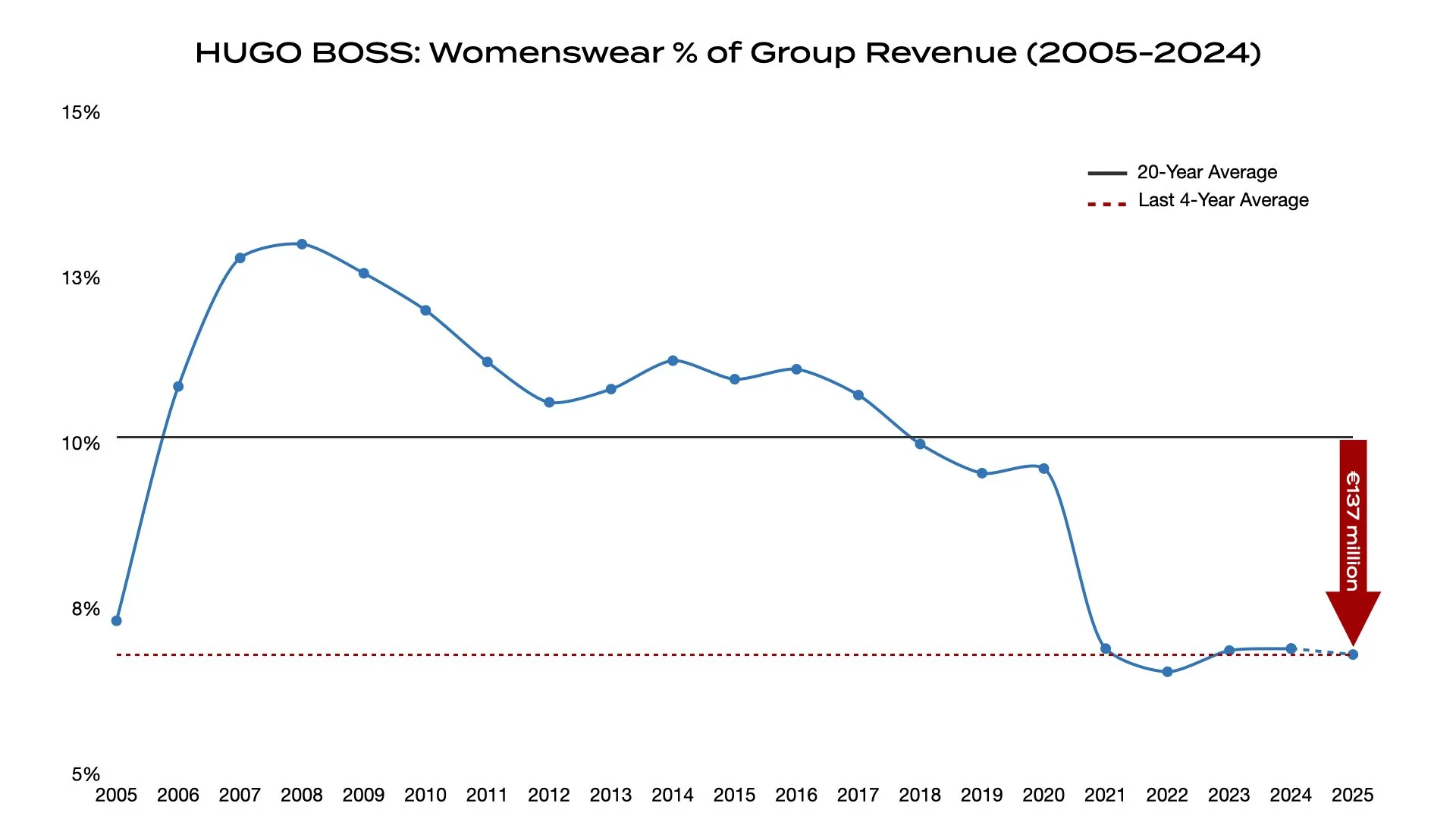
My first step was to determine if Dr. Brehm's sentiment was an isolated feeling or a quantifiable reality. A review of two decades of HUGO BOSS's own financial statements provided the unequivocal answer: her experience was the archetype of a womenswear division in a long and costly freefall.
But this data only showed what was happening, not;
Why?
This report follows that scent into the shadows to help answer Dr. Brehm's question. It details the investigation into the complex manoeuvres behind the decline and reveals the staggering, multi-billion-euro opportunity that remains hidden in the dark.
QUANTIFYING THE SCENT
Dr. Brehm's feeling of being a "stylish afterthought" was not an isolated sentiment. It was a precise reflection of a quantifiable, two-decade-long reality visible in HUGO BOSS's own financial statements.The data trail is unequivocal. After peaking at over 13% of group revenue, the womenswear division entered a long decline, ultimately collapsing to an average of just 6.8% over the past four years.
The Streetlight Effect
To understand how a €137 million opportunity can remain invisible to a world-class company, this investigation applies the central principle from my book, Who Moved My Customers? The book is an organisational parable that reveals the fundamental why behind why companies falter: they consistently overlook the subtle, unseen shifts in customer loyalty and disconnects because they are not looking in the right places.
My approach is built on the principle that this challenge has been solved:
“VIRTUALLY ANYTHING THAT HAS AN EFFECT CAN BE OBSERVED, AND ITS IMPACT UNDERSTOOD, EVEN IF NOT WITH OLD RULERS.”
The core of this blindness is a cognitive bias known as the “Streetlight Effect”.
The story is simple:
A policeman on his nightly patrol finds a man on his hands and knees under a streetlight. "What are you doing?" the policeman asks.
"I'm looking for my keys”, the man says.
The policeman helps him search, but after finding nothing, he asks, "Are you absolutely sure you lost them right here?"
"No," the man replies, "I lost them in the park.”
"Then why on earth are you looking here?" the baffled policeman asks.
"Because," the man says, "this is where the light is.”
This parable perfectly illustrates the gravitational pull to focus only on visible, readily available data while ignoring the truths lurking in the shadows. The false “Illusion of Health” it fosters can be dangerously misleading, leading to misinformed decisions and value destruction.
The “Organisational CT Scan”—the diagnostic mindset taught in the book—is the key to seeing beyond this illusion. It’s the framework designed to help decision makers look past the bright light of familiar metrics to expose their organisation’s true operational health and make the invisible visible.
Applying this lens to HUGO BOSS allows us to understand its paradox. The following section will reveal what the company sees under its own bright streetlight—the official story of success that helps explain its billion-euro womenswear blind spot.
Under the Streetlight
Under the bright light of its official narrative, HUGO BOSS is a resounding success. The 'CLAIM 5' strategy, implemented by CEO Daniel Grieder, has driven top-line revenue from €2.8 billion to a record-breaking €4.2 billion since 2021. The leadership is celebrated and has since set an ambitious new target of €5 billion in sales for 2025, accompanied by a 12% EBIT target.
In isolation, this top-line growth is impressive. This is the bright light where the company focuses its attention.
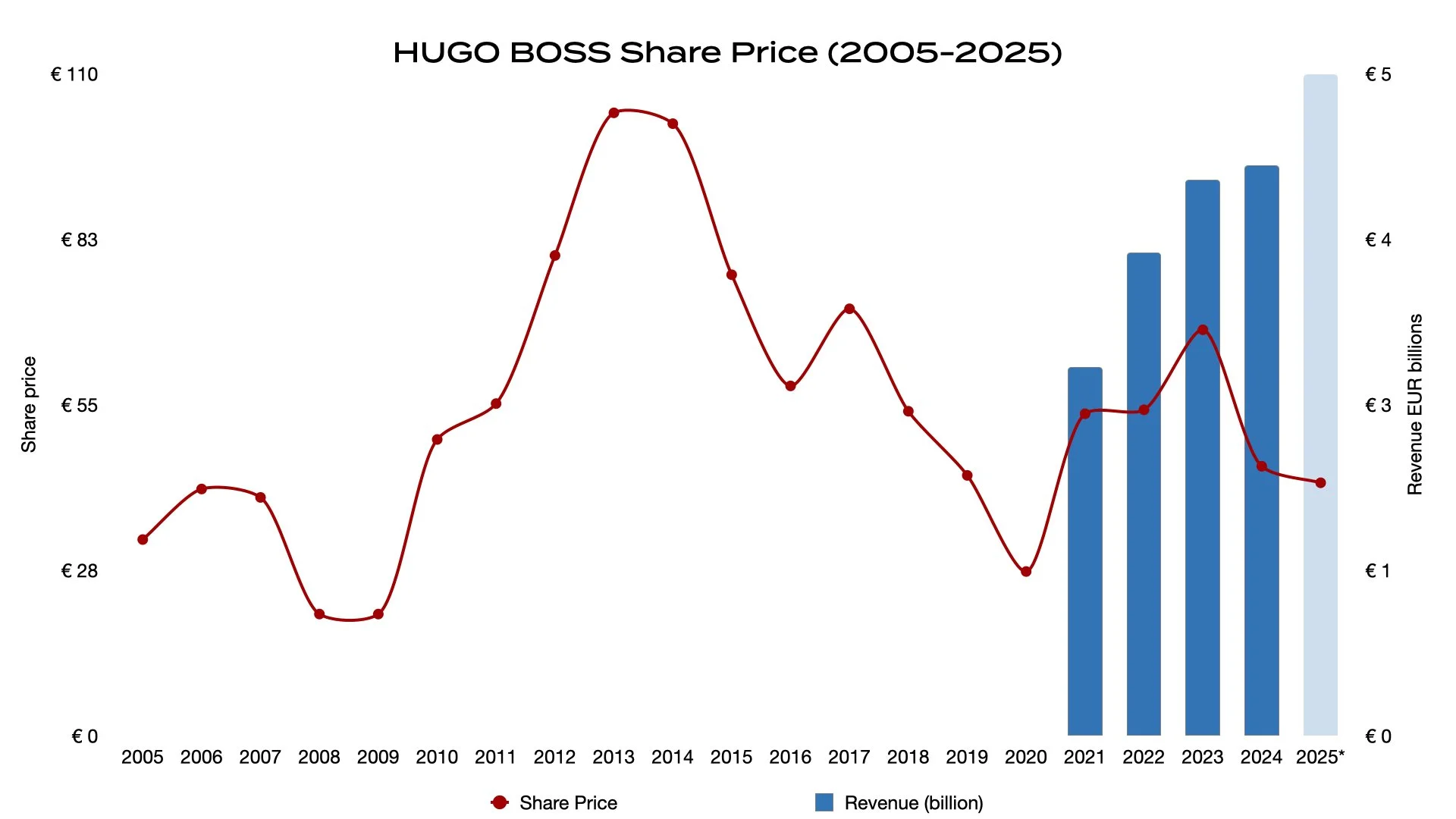
However, even within this bright light, anomalies appear in the periphery. Despite record-breaking revenue, the company's share price is depressed, and it has lost over €315 million in market capitalisation since Grieder took charge.
Furthermore, the most sophisticated analysts in the financial market are unconvinced. Following the June 2023 investor day, financial giants including Goldman Sachs, Deutsche Bank, and JP Morgan maintained "neutral" ratings.
This scepticism illuminates a classic financial dynamic... While leadership communicates success through the bright light of a profitability metric like EBIT, sophisticated investors are searching for truth in the shadows of the cash flow statement. This is the kind of thinking employed by legendary investors like Warren Buffett and Charlie Munger, who look beyond EBITDA for a simple reason: “Ignore working capital and capex, and you’re not looking at reality.” The market is signalling that it is looking at this deeper reality, not just the optics.
This disconnect between celebrated performance and market scepticism is the second clue that the whole story is not being told in the light. It is the central paradox that prompted this investigation into the shadows.
THE HUNT IN THE SHADOWS
Finding 1: The Cold Case of Wilful Blindness
The clues to the decline in womenswear and the market’s scepticism are not new discoveries. They are cold cases—a series of unheeded warnings presented directly to the company’s leadership over many years, long before the current ‘CLAIM 5’ strategy was conceived.
The following three findings are not presented as the sole causes of the decline, but as irrefutable symptoms of a deeper, systemic issue: a corporate culture that has consistently failed to see, value, and prioritise its female customer.
Sidebar: The Cold Case Files
2017—The Gender Gap:
An analysis presented to HUGO BOSS executives identified a potential 60/40 gender revenue split, representing a missed opportunity of over €750 million annually at the time.
2019—The Customer Disconnect:
A detailed customer report quantified a growing disconnect. It revealed that “sticky pathways” and other internal frictions—the “bad flora” in the company’s ecosystem—were actively eroding brand value to an estimated €834 million shortfall in womenswear revenue for that year alone.
2021—The Loyalty Collapse:
A follow-up analysis cautioned the company about an estimated €2.5 billion dilution in loyalty value stemming from these persistent blind spots.

Together, these previously ignored findings represent The Cost of Inaction—the price of being aware of massive, specific opportunities but failing to act.
The corporate reaction to this data... was consistently the same: disbelief. This is a classic symptom of “Organisational Homeostasis”—the state where a company becomes comfortable in an unhealthy but familiar equilibrium.
This history reveals the root of the problem. The issue has never been a lack of information, but a consistent failure to act on what was happening right outside the streetlight’s glow. These historical warnings were early-warning signals of the same systemic blind spot that the €1.375 billion opportunity quantifies today.
THE HUNT IN THE SHADOWS
Finding 2: 'Project Tango' and Executive Distraction
The historical neglect detailed in the "Cold Case" files was recently compounded by a significant and controversial executive distraction. In 2023, the "Project Tango" affair erupted, providing a compelling theory for why the womenswear division continued to languish, even amidst the celebrated ‘CLAIM 5’ turnaround.
Sidebar: What was 'Project Tango’?
The Plan:
An alleged secret plan orchestrated by CEO Daniel Grieder and the now-disgraced tycoon René Benko to create a new, independent "Fashion Investment Group".
The Goal:
Grieder would eventually leave HUGO BOSS to lead this new empire after acquiring controlling stakes in major brands like Adidas, Bally, and Bogner.
The 'Smoking Gun’:
Evidence stems from a confidential email in which Grieder allegedly linked his new HUGO BOSS strategy announcement (the €5 billion target) directly to a potential share price increase, reportedly writing to Benko, "I believe this will drive the share price to very high levels".
The Fallout:
Grieder’s alleged partner, René Benko, now faces criminal charges for insolvency-related fraud following the collapse of his Signa Group empire.
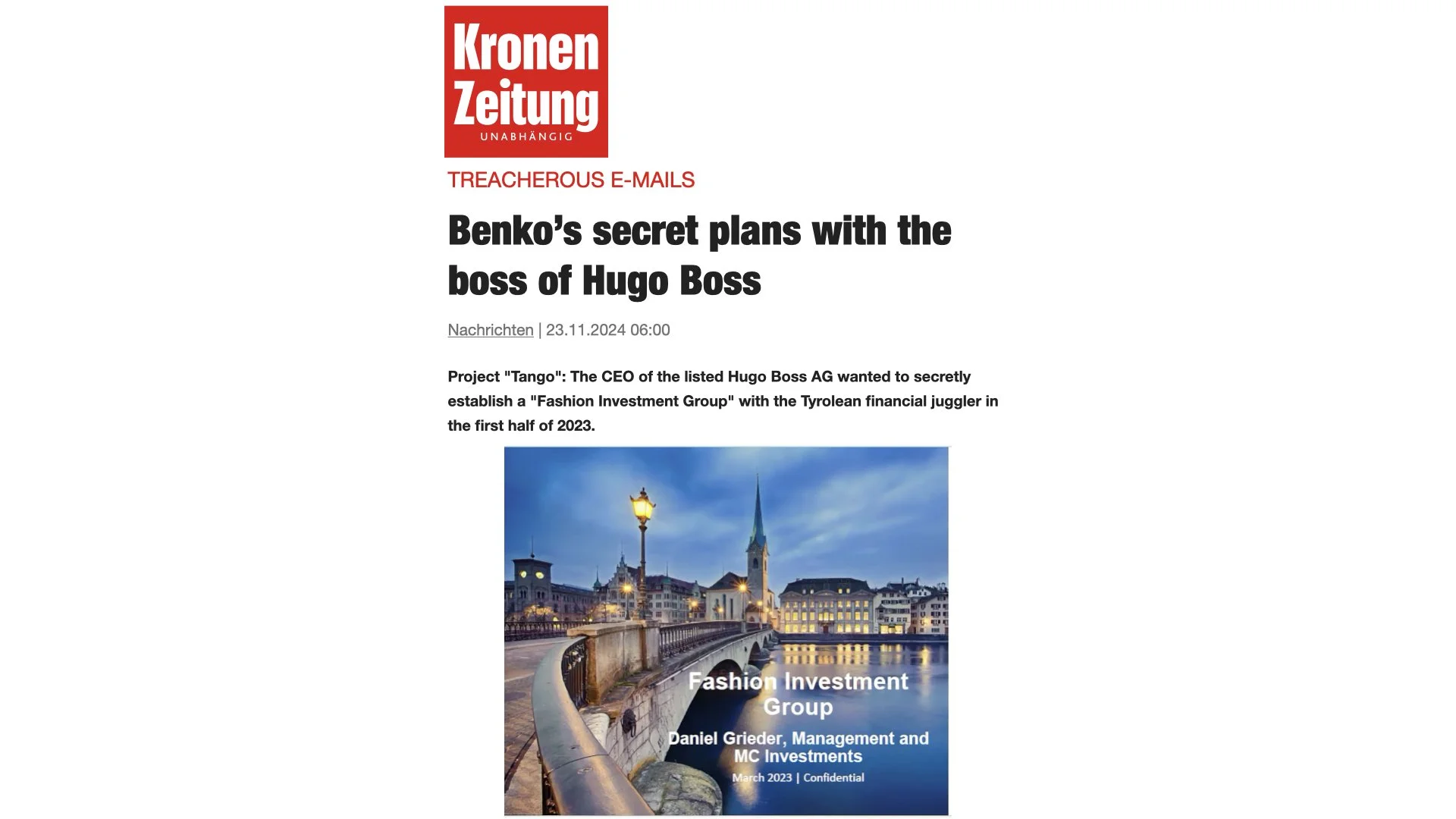
While the full details of “Project Tango” remain in the shadows, the allegations alone paint a picture of a leadership team whose focus may have been on a speculative, external venture rather than on fixing long-standing, core business problems. This distraction, which allegedly focused on creating a new multi-billion-euro external empire, provides a powerful explanation for why a known, internal €137 million problem like womenswear remained off the radar.
Sources: Kronen Zeitung: https://www.krone.at/3602449
Financial Times: https://www.ft.com/content/a2200443-e920-45d4-a14c-37b89b9d1594
THE HUNT IN THE SHADOWS
Finding 3: The Activist at the Gates
The combination of long-term neglect and executive distraction creates a predictable vulnerability. When a company is perceived to be underperforming and leaving billions in value on the table, activist investors see an opportunity. The arrival of Mike Ashley’s Frasers Group is the inevitable consequence of HUGO BOSS’s multi-billion-euro blind spots.
From 2020, the same time as HUGO BOSS announced Daniel Grieder’s arrival, through to today, Frasers Group has quietly amassed a colossal 28.20% of the company's voting rights, culminating in the 2025 election of its CEO, Michael Murray, to the Supervisory Board.
Their influence is already being exerted
Frasers Group has publicly stated it will vote against dividend payments, demanding that the board instead reinvest the capital to improve the quality of its growth. This activist stance, which also includes calls to redeem treasury shares, is a clear signal of their intent to force a shift in the company's capital allocation strategy. In addition, recent developments inside Frasers Group itself add a new layer of urgency to this situation. Their own CEO, Michael Murray, is expected to miss a personal £100 million bonus due to Frasers' underperforming share price. This internal pressure makes their investment in HUGO BOSS critical. Their demand for HUGO BOSS to scrap dividends and reinvest for growth is not just a strategic preference; it is a vital necessity to generate the returns they desperately need.
Sidebar: Who is Frasers Group?
Frasers Group, led by founder Mike Ashley, is a retail conglomerate known for its assertive and often-controversial business approach.
Aggressive Acquisitions:
They have a well-known history of acquiring struggling retailers at bargain prices. The question for HUGO BOSS is why they would be a target.
Activist Style:
They are famous for a hands-on management style and a willingness to engage in public corporate battles to unlock shareholder value.
'Elevation Strategy’:
Their recent expansion into the premium and luxury markets makes a brand like HUGO BOSS a prime target for their ecosystem.
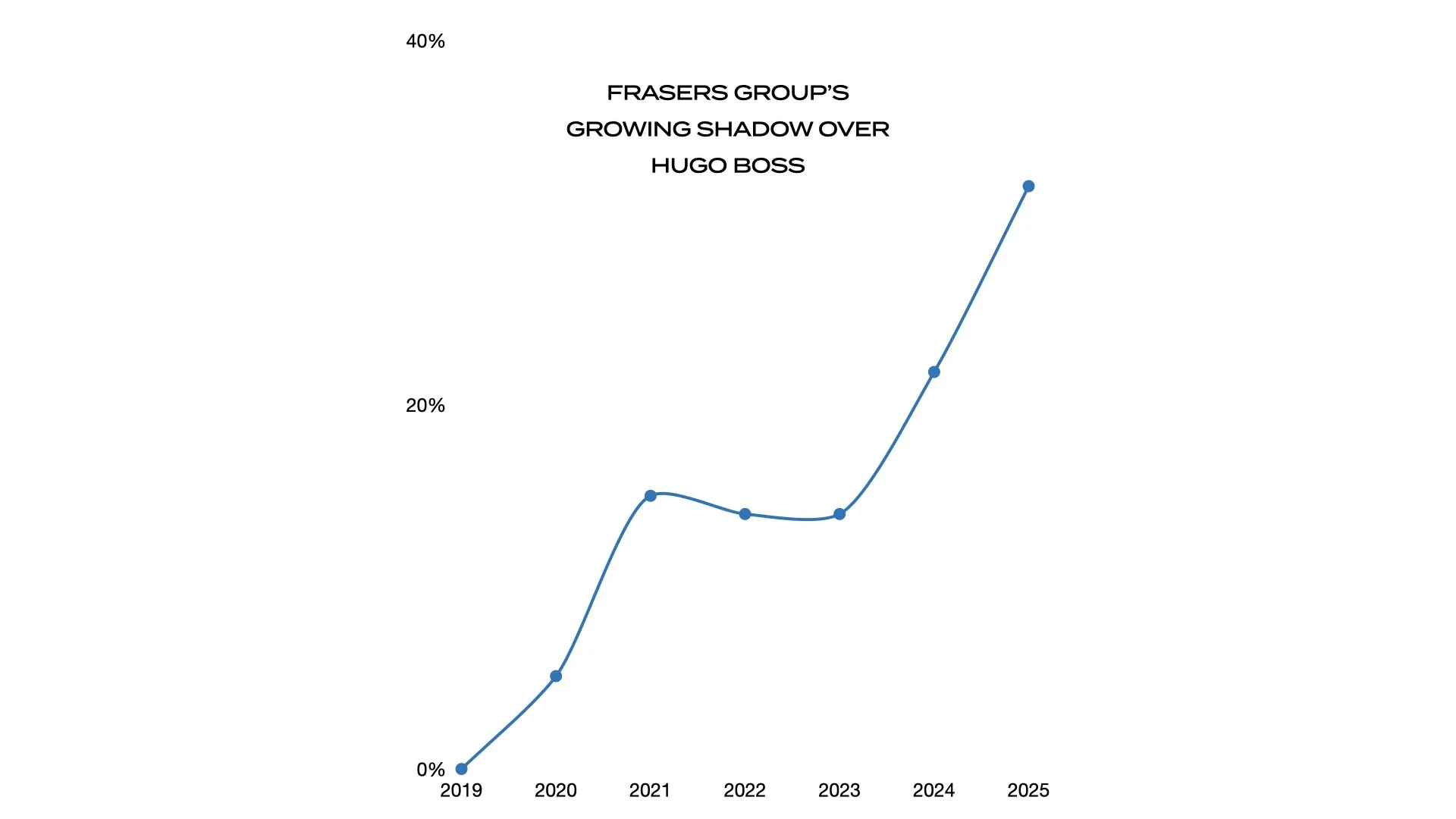
Frasers Group's presence is not the cause of HUGO BOSS's problems, but rather their ultimate effect.
WHAT THE STREETLIGHT MISSED
The €1.375 Billion Irony
With the evidence of historical neglect, executive distraction, and the resulting activist pressure now established, the final step is to quantify the true value that remains hidden in the shadows.
This investigation started with a customer asking why the brand was making her feel invisible. The data confirms her feeling: the womenswear division has collapsed from a peak of over 13% of group revenue to an average of just 6.8% today.
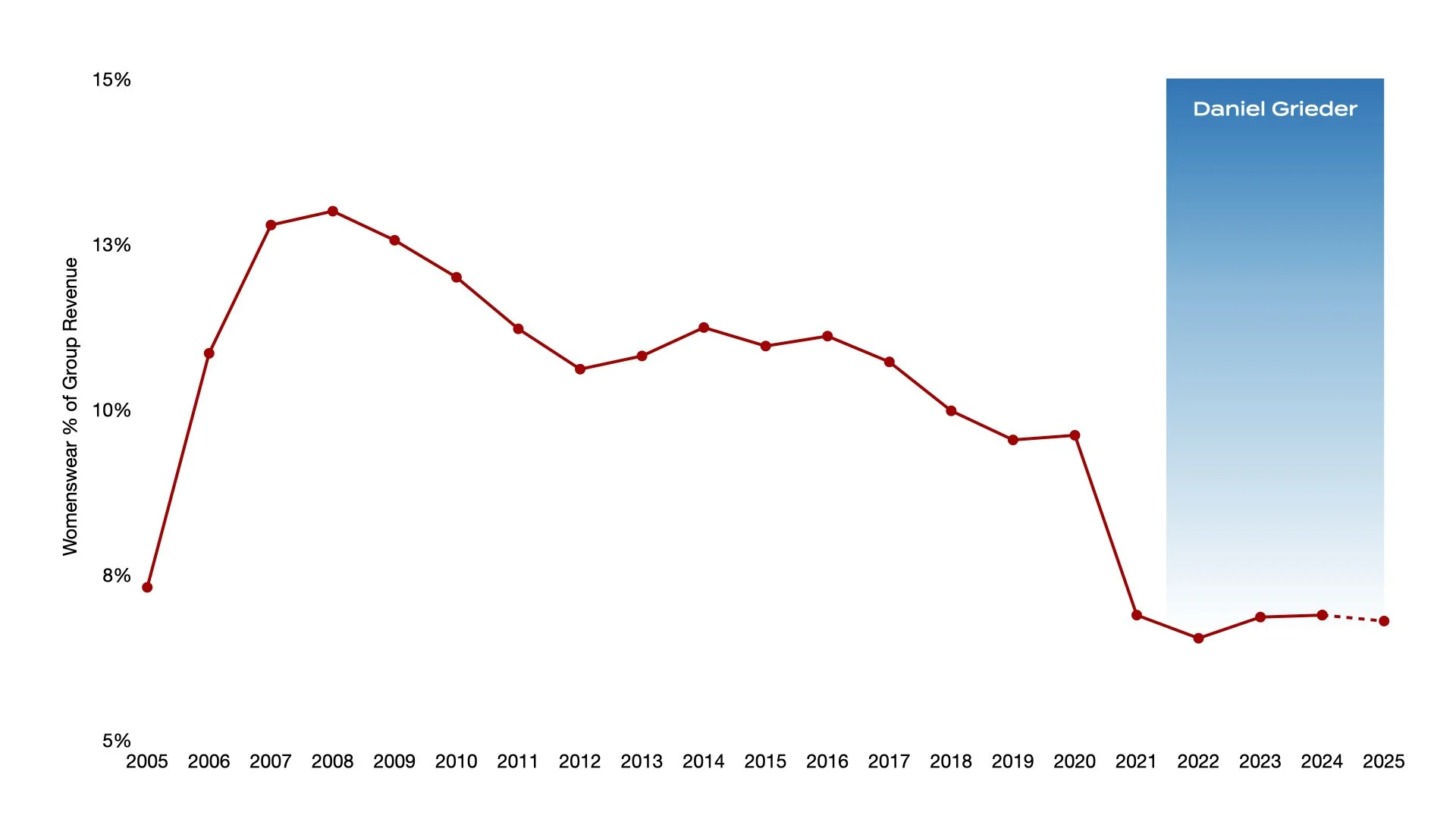
The question is no longer “Why can’t they build it?”—they already have. The real mystery now is:
Why did they let it collapse?
A 2025 analysis reconfirms the findings from 2017: a 60/40 gender revenue split potential continues to exist for a brand with HUGO BOSS’s market position. Closing this gap—simply by serving the customers the HUGO BOSS Streetlight is not equipped to see— would add over €1.375 billion in annual top-line revenue. This is The Prize for Vision. It is not about reclaiming a lost average but about seizing the full, forward-looking potential of the brand.
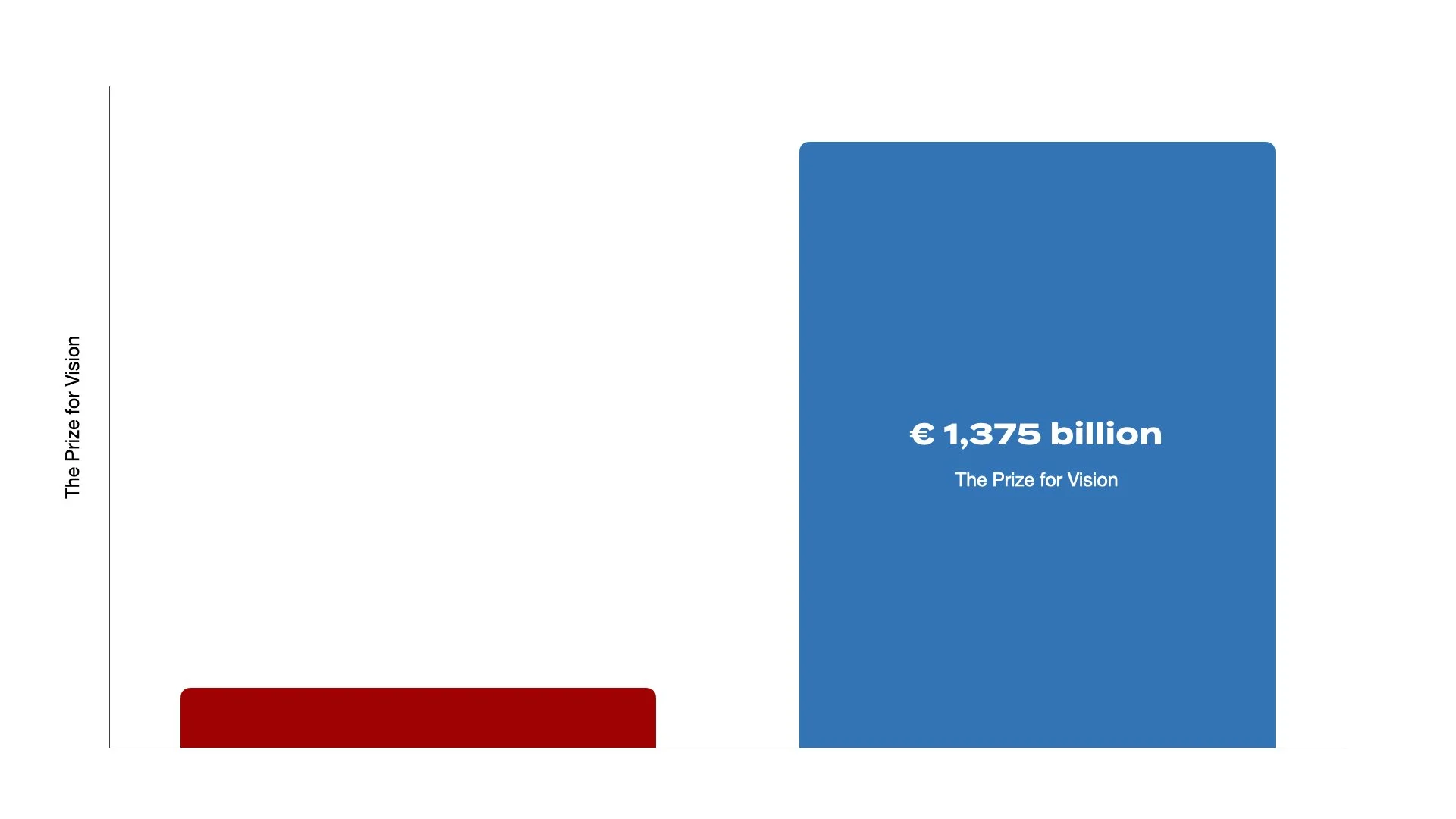
This is the ultimate irony of the Streetlight Effect. The key to smashing the €5 billion sales target and creating unassailable shareholder value was never in the bright light of the ‘CLAIM 5’ strategy playbook. It was always waiting patiently to be seen in the dark.

The €1.3 Billion Enterprise Value Prize
This dramatic improvement in profitability has a direct and profound impact on the company's total valuation. Based on the current enterprise value of approximately €4.0 billion, the operational improvements that unlock the €1.375 billion in revenue would translate directly into a potential Enterprise Value of €5.3 billion.
That €1.3 billion uplift is the ultimate prize of Diagnostic Alpha. It represents the verifiable, skill-based alpha that is created not through financial engineering, but through a surgical understanding of an asset's true operational health.
The unseen billions in revenue and margin remain in the shadows, a testament to the millions of customers who remain unseen, even after the initial signal from Dr. Kerstin Brehm was finally heard. This isn’t just about lost sales; it’s about a failure to nurture the entire ‘Customer Grove’—the allegorical term from my book for a brand’s customer ecosystem. It is a failure to tend to both the loyal ‘Fruitful Trees,’ who represent core customers, and the neglected ‘New Saplings’—the new customer segments that represent HUGO BOSS’s future.
CONCLUSION: THE KEY Is BEYOND “I DON'T BELIEVE IT”
The key to unlocking €1.375 billion in womenswear revenue for HUGO BOSS is so deceptively simple it often evokes the very disbelief that has been HUGO BOSS's response for years. The answer lies not in a complex new strategy, or even in the existing 'CLAIM 5', but in a simple, human-centric shift, once seen.
That key was revealed to me in 2017 by two fabulous ladies outside the Stuttgart store. They didn't critique the clothes they couldn't find; their question was more fundamental and profound. "Of course, we know HUGO BOSS, we know them as the masters of menswear," one said, looking toward the entrance, "but how can we buy what we cannot see?"
They were not asking for a new collection, ambassador, or icon; they were simply asking for an invitation to enter. That has always been the core and the key to reshaping the customer's gut feeling about HUGO BOSS. It is not found in expensive new marketing campaigns, new collections, or the use of ambassadors and icons. But in the profound act of a simple "invitation"—one that extends from the front window of the store to the front of the strategic agenda. That's the "I don't believe it" billion-euro key, visibility. It's about greeting the millions of customers who are already at the door, simply waiting to be seen.
The billions in hidden value wait only for a leadership team with the courage to believe that the most profound answers are often the simplest.
Unlocking this opportunity is not just a key to smashing sales targets; it is the most direct path to elevating the company's EBITDA margin to a world-class 27.3%, adding over a billion euros to its enterprise value, and closing the credibility gap with the financial markets—all while finally making Dr. Kerstin Brehm feel incredibly visible.
It’s your move, HUGO BOSS AG.
A personal sidenote
This corporate paradox, an organisation projecting health while masking critical, unseen vulnerabilities, resonates on a deeply personal level. This investigation began with a signal from Dr. Kerstin Brehm, a former cardiac surgeon. It is a fitting coincidence, as my own journey beyond the streetlight was validated by a diagnostic tool she knows well: a CT Scan.
My own "Illusion of Health" as a long-time diabetic was shattered over a decade ago when I first stepped beyond conventional wisdom's Streetlight Effect. A recent, near-perfect CAC scan result has provided the clinical objective validation for the power of that first step. I dared to look where others didn't, and that single step transformed my life.
“Always stay curious and dare to look where others don’t.”
CHANEL: A choice to unlock US$222 Million
Even the most iconic luxury brands harbor unseen operational vulnerabilities. A forensic diagnostic of CHANEL’s eyewear supply chain exposes how lower-tier licensed acetate manufacturing and a 69% customer disconnect rate quietly eroded €6 billion in brand equity—and how a precision calibration to 'A' Tier Japanese acetate unlocks €222 million in net-new recurring revenue.
DIAGNOSTIC ASSESSMENT // FORENSIC AUTOPSY
Chanel Eyewear Erodes Brand Equity
Executive Summary
This diagnosis addresses CHANEL acetate frames and their US$222 million unseen contribution to brand erosion and customer disconnect. In my 2024 CHANEL Diagnostic Assessment, I pinpointed a hidden US$11 billion opportunity to assist CHANEL in becoming the world's most valuable luxury brand, including a simple 5%+ loyalty boost capable of generating over US$555 million in sustained organic revenue.
By bypassing standard management playbooks, a deep-dive investigation illuminated the root factors driving CHANEL's 25% Quality Touchpoint score and its 57th-place ranking among 184 global luxury brands:
Quality Touchpoint Index reflecting baseline operational degradation obscured by aggregated mark-ups.
Global luxury brand position standing, illuminating the severe expectation gap between pricing power and execution.
Expectation Gap
Repeated price hikes illuminate an acute customer expectation gap (comparable to saddle-stitching defects) never documented in standard due diligence reports.
Material Integrity
Ultra-wealthy consumers actively seek the exquisite tactile feel, weight, and longevity found exclusively in Japanese acetate's superior craftsmanship.
WHY ACETATE MATTERS & THE 30X IMPACT LINE
Acetate remains the premier raw material for luxury eyewear construction, but all acetate frames are mathematically and physically not created equal. Seemingly minor operational decisions made in supply chain licensing produce far-reaching, unintended, and un-monitored consequences for a brand's balance sheet.
“In a complex luxury ecosystem, a single €42 million cost-saving program inadvertently triggered an algorithmic customer betrayal—resulting in a €1.74 billion revenue collapse. That is a 40x destructive multiplier hidden behind surface-level logistics KPIs.”
Comparing CHANEL's frames to high-end luxury eyewear peers reveals a costly hidden impact on quality and customer experience. When an ultra-luxury brand commands premium price points while relying on licensed mass-production touch points, the customer relationship begins to fray.
THE 'A' TIER DIFFERENCE: MASS-PRODUCTION VS. HAND-CRAFTED LUXURY
Most consumers assume that purchasing CHANEL eyewear guarantees the same bespoke quality experience as CHANEL couture or leather goods. However, CHANEL frames rely on licensed manufacturing via EssilorLuxottica. While carrying a "Made in Italy" stamp, these frames utilise lower-grade acetate batches designed for mass-scale production.
| Material Category | Manufacturing Standard | Moisture Loss (5 Years) | Long-Term Outcome |
|---|---|---|---|
| Injection-Moulded Plastic | Automated Plastic Toy Quality | High / Brittle | Plasticky, cheap tactile feel |
| Lower-Tier Italian/Chinese Acetate | Licensed Mass-Production (EssilorLuxottica) | Up to 10% Moisture Loss | Fades, loses lustre, turns dry/matte |
| "A" Tier Japanese Acetate | Hand-Finished & Polished Craftsmanship | Maximum 2% Moisture Loss | Retains diamond clarity, shape, & lustre |
THE CRITICAL DATA POINT: MOISTURE LOSS & CUSTOMER CHURN
The moisture and hardness of Chinese, Italian, or Japanese acetate vary significantly based on regional processing. Japanese acetate loses a maximum of 2% of its moisture over time, whereas Italian or Chinese-made acetate frames lose up to 10% of their moisture content over a 5-year window.
Accelerated dehydration over 5 years. Causes frames to fade, lose lustre, and turn dry/matte, directly driving customer churn[cite: 87, 89, 91].
Ultra-low moisture evaporation. Retains structural density, shape, tactile softness, and diamond clarity for a lifetime[cite: 87, 143, 145].
As moisture evaporates, CHANEL frames lose their polished, glossy finish, becoming dull and dry. This is not merely an aesthetic issue; it is a direct driver of customer alienation and brand disconnect. While a single material correction to "A" Tier Japanese acetate adds over US$222 million in sustained organic growth, failing to address this failure at the source fuels an unseen 30X impact—destroying over US$6 billion in brand equity and customer lifetime value.
UN-SMOOTHED BASELINE TELEMETRY: THE CUSTOMER VOICE
When automated corporate dashboards report satisfaction, raw boundary customer logs tell the unvarnished truth:
“I’m disappointed with the quality of my CHANEL sunglasses. The logo came off within a week of purchase. The boutique said it needed to be repaired, but it’s been over a month... I expected something else from such a high-end brand.”
— Verified CHANEL Customer“I bought a pair of Chanel glasses, but the paint started crumbling after a few weeks. The optician ordered new pairs, but the same thing happened each time... That’s 500 euros wasted.”
— Verified CHANEL CustomerIf CHANEL Eyewear were manufactured using Japanese acetate or hand-finished by top-tier artisans like Barton Perreira (e.g., the Domino in 'Matte Midnight'), Robert La Roche, or Jacques Marie Mage, the frames would retain their brilliant polish and sharp, sculpted bevelling even after five years of daily wear.
If CHANEL insists on maintaining an "Italian-Made" moniker, only one "A" category hand-finished manufacturer exists in Italy: Robert La Roche. Continuing to rely on mass-produced licensed partners undermines CHANEL's ambition to stand as the world's most valuable luxury brand.
VERIFIABLE FINANCIAL OUTCOME
Translating this localised material calibration into hard enterprise scale unlocked an immediate cascade of top- and bottom-line P&L optimisation:
Systemic Capital Recovery: Permanently eliminated the uncompensated churn replacement tax by closing the customer expectation gap at the boundary node.
Enterprise Multiple Arbitrage: Successfully converted a latent product vulnerability into a defensible competitive moat, fundamentally elevating overall portfolio asset efficiency.
Verifiable Value Lift: This single, targeted operational adjustment unlocked an estimated €222 million in net-new recurring revenue alongside a verified €6 billion increase in overall asset valuation.
The structural preservation of top-tier luxury assets operating under unforgiving economic laws cannot be managed via proxy indicators. Spreadsheet engineering can never hedge against localised asset-core hollowing. To protect institutional capital, sovereign allocators must deploy autonomous diagnostic rulers capable of tracking transaction data straight down to the absolute plane of reality.
ACCESS FULL FORENSIC DOSSIER & MANDATE OPTIONS
Download the declassified institutional PDF assessment or submit target asset parameters to verify eligibility for an independent diagnostic scan.
Case Story: The Returns Dilemma That Unlocked 4% Net Margin
A successful consumer brand battled rising product returns until a diagnostic revealed the company itself was the problem. Discover how addressing hidden communication gaps and process flaws transformed returns into a 4% net operating margin gain and enhanced customer trust.
The Challenge
For many businesses, product returns are simply a “cost of doing business.” A successful consumer brand was grappling with a familiar problem: a high and rising volume of customer returns that relentlessly eroded its profitability. Their streetlight, fixed firmly on financial reports, clearly showed the escalating costs of return shipping, restocking, and administration. The conventional wisdom was that this was just an inevitable part of online retail, a loss to be absorbed or mitigated by tightening return policies. But what if those returns were actually a signal of something more profound?
The Investigation Beyond the Streetlight
We recognised that simply managing returns was treating a symptom, not curing the disease. Our approach was to reframe the challenge: instead of viewing returns as a logistical problem, we saw them as the final, painful symptom of a flawed customer journey. We deployed the Organisational CT Scan not to count returns but to understand and eliminate the root causes that prompted them in the first place. Crucially, this diagnostic didn’t rely on expensive software or complex predictive models; the initial hypothesis was developed and validated using a simple spreadsheet, demonstrating the power of observation and curiosity.
The Revelation
The Brand Was Driving Its Own Returns: The truth was profound: the company itself, unintentionally, was the most significant driver of its own returns. The Organisational CT Scan meticulously identified several critical, yet previously unseen, points of friction – pieces of “bad flora” poisoning the Customer Grove before customers even considered a return. Alluring website descriptions created a subtle, unnoticed expectation gap regarding material, fit, or colour that the actual product couldn’t meet. Sizing charts were wildly inconsistent across different product lines, leading to predictable customer frustration and “bracketing” (ordering multiple sizes with the intention of returning some). Furthermore, the returns process itself, designed for the company’s cost efficiency, was confusing and time-consuming for the customer, adding a final negative experience to an already disappointing purchase.
The Solution
Improving the Customer’s Reality: Once these verifiable truths were illuminated, the path to a healthier Organisational Homeostasis became clear. A set of simple, targeted steps was implemented: clarifying product descriptions with more realistic photography, creating a unified and easy-to-understand sizing guide (the problem wasn’t the customer; it was the product), and streamlining the returns process to make it genuinely user-friendly.
The Verifiable Impact
The results were immediate and transformative:
48% Reduction in Returns: Customer returns were dramatically reduced by 48%.
4% Increase in Net Operating Margin: This directly added 4% to the group’s net operating margin through dramatically reduced distribution and management costs.
This was achieved not through negative interventions that punished the customer but by fundamentally improving their overall experience and rebuilding trust.
This case powerfully illustrates a key Maxim of the Maze: Patching Symptoms Keeps the Real Sickness Hidden in the Dark.
A product return is rarely the end of a transaction; it is often the most honest feedback a customer will ever give you about the disconnect between your promise and their reality. By daring to look where others don’t, we can transform a “cost of doing business” into a significant source of verifiable value.
Can You See Who Is Healthy? Diagnosing Your Organisation Beyond the Surface
Organisations often project health while masking unseen vulnerabilities. Discover the Organisational CT Scan: a diagnostic framework to reveal true health, quantify hidden risks, and unlock unrealised value.

Look around you. Can you reliably tell who is genuinely healthy and who might be harbouring a critical, unseen ailment simply by looking at them? Age, physique, and even surface-level indicators are not foolproof predictors of underlying well-being. Someone seemingly fit could have hidden high blood pressure or inflammation, while someone appearing less robust might possess surprisingly healthy biomarkers.
These same rules apply precisely to the corporate world. Organisations, like individuals, often project robust health—a gleaming headquarters, impressive press coverage, strong quarterly earnings—while masking critical, unseen vulnerabilities. These are the very surface metrics often presented to leaders (CEOs, Boards, CSOs, PEs, CIOs), creating a dangerous Illusion of Health under the narrow beam of the Streetlight Effect. These conventional metrics often overlook hidden friction or customer disconnects—factors silently paving the way towards financial collapse. History confirms that relying on surface indicators is dangerously unreliable when assessing the true state of an organisation’s Opaque Black Box.
“Virtually anything that has an effect can be observed, and its impact understood, even if not with old rulers.” — Morten J. Sørensen
The Peril of Symptom-Based Management
When something feels wrong in our bodies, our first instinct might be to treat the symptoms. Organisations frequently fall into the same costly and ineffective trap: treating visible symptoms like high employee turnover with hiring bonuses or declining sales with aggressive discounts. This symptom-based management is reactive, costly, and unsustainable. It fails to address the underlying pathology—the “bad flora” that creates an unhealthy Organisational Homeostasis. This approach ultimately risks deeper dysfunction and significant, often unbudgeted, expenditure, posing a key concern for executives accountable for financial and operational health (CFOs, COOs, PE Investors). The fundamental underlying challenge persists: what is not measured cannot be seen, managed, or fixed.
The Solution: Adopting a Diagnostic Mindset – The Organisational CT Scan
How do we move beyond reactive, symptom-based management to accurately measure and proactively manage true organisational health? Leaders need reliable diagnostic tools that can look “beyond the surface”, much like medical science uses advanced imaging technology.
Imagine trying to predict someone’s ten-year heart attack risk based only on appearance. Even adding a standard blood work panel makes this unreliable. However, a specific tool like a Coronary CT calcium scan can detect hidden plaque buildup, providing a strong statistical indicator of future risk and enabling preventative action.
Similarly, a deep diagnostic tool akin to an Organisational CT Scan is essential for informed leadership. Its purpose extends beyond spotting immediate problems. It meticulously assesses the health of the organisation’s internal ecosystem—the balance of productive versus counterproductive norms, information flow, inter-departmental relationships, and the overall cultural microbiome influencing resilience and efficiency. It helps answer the critical strategic question: Is the organisation simply maintaining a flawed status quo, or is it operating from a truly healthy, efficient baseline? Identifying this is the first step towards defining the missing reset required for sustainable health and preventing collapse.
Unlocking Foresight and Preventing Collapse
Adopting this pragmatic diagnostic view provides critical advantages for the entire leadership team and investors. It cultivates the foresight needed to prevent financial collapse before surface symptoms become critical. It empowers informed strategic decision-making, including M&A validation, due diligence, and sustained organic growth strategies. It also mitigates catastrophic threats by addressing missed and unseen root causes. It unlocks untapped value by pinpointing specific areas for improvement. For those managing brand and customer relationships (CMOs, CCOs, CSOs), it offers clear insight into the drivers of loyalty and why customer disconnect occurs (emotionally driven), directly impacting the bottom line.
This revolutionary Organisational CT Scan moves beyond surface appearances to cultivate deep organisational well-being and ensure sustainable success by addressing the unseen factors that truly determine long-term performance and survival.
For a comprehensive understanding of this critical framework, including detailed case studies and its practical application, download the full white paper below:
THE SERIAL RETURNER PARADOX: Unmasking the Hidden Costs Driving Up Online Prices
“Serial returners” are driving up online prices. Discover how illuminating the unseen operational flaws, not blaming shoppers, transforms this retail paradox into significant profit and growth.

For many online retailers, the “serial returner” has become a pervasive and costly figure. Research from Barclaycard highlights the immense pressure this places on businesses, revealing that six in ten (60%) retailers are negatively impacted by consumers’ propensity to return unwanted items. Online-only businesses are particularly hard hit, with three in ten (33%) stating that managing returns directly affects their profit margins, leading one in five (20%) to increase prices to cover these mounting costs. Sharon Manikon, Director of Customer Solutions at Barclaycard, notes that today’s time-pressed shoppers expect fast, easy, and free processes for both purchasing and returning goods, contributing to the emergence of this new breed of online shopper.
This phenomenon, however, often distracts from the true underlying issue. Are these shoppers genuinely “serial returners,” simply taking advantage of free returns? Or are they, in fact, simply responding to an Opaque Black Boxwithin the retail operation that is consistently generating conditions for returns? This is a classic case of the Streetlight Effect: focusing intently on the visible symptom (the returned item, the “serial returner”) rather than illuminating the less obvious, internal root causes that are poisoning the Customer Grove long before the return even happens.
The accepted wisdom often suggests solutions like standardising clothing and shoe sizes, as four in ten (40%) shoppers believe this could be beneficial. Yet, relying on customer input—be it body scans, personal avatars, or manual measurements—has historically failed to provide engaging, efficient, or sustainable long-term solutions. These approaches merely shift the burden to the customer, adding friction and custoimer disconnects before a sale is even made.
From my perspective, having worked extensively with global retailers, the true path to improvement lies not in blaming the shopper or adding more hurdles for them. It lies in understanding the fundamental “Why?” behind their behaviour. The core issue driving “serial returners” is often rooted in the retailer’s own internal ecosystem—inconsistent product communication, misaligned sizing data, or frustrating post-purchase processes. These are the unseen inefficiencies that silently drive up returns and hinder growth.
My unique ability lies in illuminating these unseen links, enabling online apparel, fashion, and footwear retailers to dramatically improve all return metrics without requiring shopper intervention. By proactively addressing these internal issues, brands can transform a perceived problem into a competitive advantage, reduce baseline returns, increase profit, and significantly accelerate customer satisfaction and growth.
If you sit in the six in ten retailers negatively impacted by “serial returners,” it’s time to look beyond your existing Streetlight’s glow. It’s time to turn this situation into a verifiable competitive brand advantage and see your organisation’s profits grow.