
SYSTEMIC DIAGNOSTICS // FIDUCIARY ARCHIVE
THE FIDUCIARY REGISTRY
Independent, non-smoothable intelligence logs and systemic diagnostics compiled over more than a decade of tracing transaction metadata. This archive operates as a sovereign database built to strip away narrative seduction, exposing where portfolio assets are weaponised as pawns within private equity's opaque black box. It equips Level 1 allocators with the precise metrics required to enforce baseline accountability and cleanly separate authentic operational execution from debt-engineered luck.
The Invisible Gorilla: The Human Cost of Correlation
Why does a loved brand suffer a 20-year net loss? This workshop exposes the costly trap of “Relative Wins” and “The Invisible Gorilla”. Learn how the Organisational CT Scan finds the causation, and the Small-World Network graph maps how they flow into the Absolute Reality—the sustained inattentional blindness that costs Paul Smith £14.26 million.

Moving from Relative Wins to Absolute Reality
Let’s run a 2-hour diagnostic workshop. It’s a leadership exercise. Our subject: Paul Smith, a top-quartile brand, loved by a global following and loyal customers, with exceptional creative consistency.
The class assignment:
Deconstruct the public data and find the “irrefutable facts” you’d bring to the boardroom.
Here’s what the class finds:
Fact 1 (The Acute): The principal trading company, Paul Smith Limited (PSL), reported an operating loss of £14.26 million in 2024.
Fact 2 (The Chronic): Public filings show PSL’s total consolidated profit over the last 20 years (2005-2024) is a negative £11.25 million.
Critical thinking:
Discuss how a top-quartile “Loved Brand” and “Net Loss” can coexist for two decades.
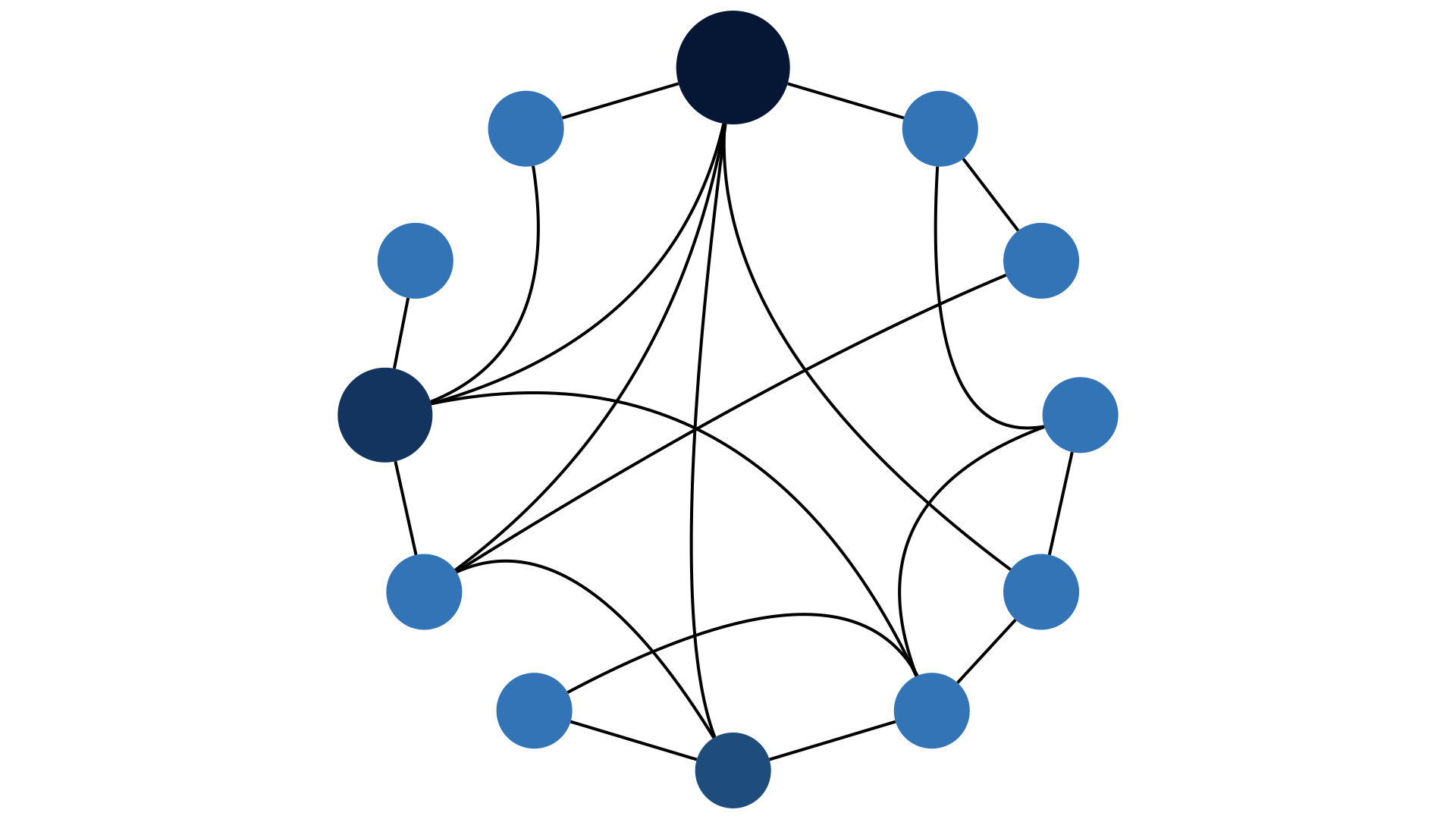
The discussion isolates the most expensive trap in modern business: Mistaking Relative “Wins” for Absolute Progress (Correlation ≠ Causation).
This is the Relative Risk Reduction (RRR) trap. Leadership, sold “solutions” that “improve a symptom by 20%” (Relative Win), ends up just masking the symptoms. The long shadows cast by the real causes—the invisible “emotional” frictions—remain absolute:
“Consistently atrocious” in-store service
An “expensive suitcase fail[ing] after one flight”
A “30-day refund delay”
The Organisational CT Scan locates the “Root Cause Contagions”. The Small-World Network graph maps how they flow into the Absolute Reality—the £14.26 million 2024 operating loss. These methods further reveal how these masked symptoms, amassed over 20 years, result in Fact 2: a consolidated net loss of £11.25 million.
This is the “holy grail”: It shows causation.
The workshop notes (The Alpha Key™ Report) serve as a blueprint. It traces a single “gut feeling” (like “Staff on their mobiles”) to its exact weighted financial impact: a £4.45 million brand loss—a powerful driver of the 2024 operating loss.
PSL’s 20-year accumulated loss is the Absolute financial price of operating on “correlation” (opinions, guesswork).
It’s the infamous invisible gorilla. Sustained inattentional blindness. It’s an innate human-born blind spot—and a costly vulnerability.
“Virtually anything that has an effect can be observed, and its impact understood, even if not with old rulers.”
It opens the dialogue: If the “solutions” are merely masks, which current projects need to be stopped? The resource savings alone could fund the Absolute Wins.
The antidote:
Don’t chase shadows. Find the breadcrumbs.
The report further outlines a path to salvage an additional £6.55 million, directly slashing the £14.26 million operating loss by over 75% to book a £22.32 million increase in group Enterprise Value.
It’s no longer theoretical. It’s verifiable alpha, commercially validated with a 10X ROI Guarantee.
The workshop ends.
Now, ask yourself: What would your 2-hour workshop reveal about your company?
Root Cause Contagion: How Small Failures Drive Systemic Decay Within Organisations
A €1.7B loss began with a single €0.02 failure. Follow the breadcrumbs to how this "Root Cause Contagion" impacts every group revenue, margins, and market cap in the billions. It reveals the core principle: organisations miss unseen value by mistaking massive financial symptoms for a single, tiny, broken customer promise.

Following the €0.02 breadcrumb impacting group revenue, margins, market cap and enterprise value by billions
In our pursuit of understanding the grand and complex systems that govern our lives—economies, corporations, societies—we are trained to look for grand and complex causes.
We seek the macro-event, the dramatic failure, the singular catastrophic decision that explains a collapse. We scrutinise the financial statements, executive strategies, and market trends, believing that a €1.7 billion loss must have an equally enormous and visible cause. We are looking for the earthquake.
And in doing so, we miss the truth. We dismiss the humble, everyday clues, such as the €0.20 tea light, which had a successful €0.02 operational efficiency makeover. One that caused a silent earthquake. This is just such a true story.
This is the philosophical decay at the heart of our system. The proposition that a "Root Cause Contagion" begins with such an infinitesimal failure isn't just a "diagnostic"—it's the unbelievable, horrifying truth. It is a deep, ethereal, and epistemological challenge. I know; I followed that trail past and deep into the shadows.
The organisations we build are not the monolithic, top-down empires we imagine. Instead, they are a living, breathing network. The real strength of a brand is not its logo or its assets, but how it is built to live in people's minds—a fortress of memory, emotion, and meaning cultivated over time.
This is the true "small-world" constellation of customer perceptions, trust, and feelings. It's a reality that cannot be defined or shown from a balance sheet; it is the millions of different versions of the same brand. Each version lives in the mind of an individual customer, and collectively, this is what defines every brand and organisation.
The Breadcrumb and the Shadow: An Epistemological Crisis
The fairy tale of Hansel and Gretel is a fitting analogy here. Each failure, no matter how small, leaves an “invisible piece of thread”: a breadcrumb. It's the toothpick lying on the carpet outside the CEO's office in Subir Chowdhury's book The Difference: When Good Enough Isn't Enough. Why did no one who that day walked into the CEO's office stop, pick it up and put it in a bin? That tells you everything you need to know about that company. This presents an epistemological problem: how did we learn not to see what is visible?
The €1.7 billion loss in turnover from the €0.02 cost-saving program was the long symptom shadow that was cast—not the problem; the problem is the terrifying, large-scale projection of a much smaller, more tangible reality. We mistake the shadow for the object itself. That is wrong. The diagnostician is the one who dares to turn away from the flickering financial reports and trace the “invisible thread” back to its source—unravelling the truth behind the root causes. It's that one person who actually notices the toothpick. Stops. And picks it up to dispose of it in a bin.
What is the effect of that one person picking up the toothpick? It is the physical cure for the “gut feeling” contagion.
This single act is, first and foremost, one of prevention. By removing the "breadcrumb", the “invisible thread” is cut. Future visitors are never exposed to this tiny "broken promise". Their “gut feeling” of distrust is never triggered. The contagion is neutralised at its source.
More profoundly, it is an act of cultural reversal. The real problem is the culture of indifference that allows the toothpick to remain. The person who stops and picks it up provides a visible antidote: a micro-act of ownership and care. They don't just prevent decay; they actively mend the relational fabric, creating a positive “gut feeling” that this is a place where details matter.
This act of following the thread is the key. The diagnostician, in effect, employs a phenomenological method. This is the formal term for what they are doing: rejecting the abstract symptom (the €1.7 billion loss) and seeking the concrete, lived experience (the tea light that, in failing to burn, betrays a customer's simple trust).
This method, in turn, reveals the underlying structure of the contagion, which operates as a "Small-World Network". This network provides the map to understand exactly how a €0.02 cost-cutting strategy...drives a €1.7 billion loss in revenue. It demonstrates that financial decay is not the problem; it is merely the evidence of the problem. The fault itself is the millions of broken promises that remain unseen and unaddressed. In terms of the humble tea light, it is the failure of the operational efficiency (resulting in reduced quality) that becomes the brand's failure of trust.
The Iceberg of Ignorance: A Fortress of Hubris
Why does this happen? Why is the breadcrumb trail missed? Why is there a breadcrumb trail in the first place?
Because the leadership mindset is wrong. But this is not a simple blind spot. It is an active, self-reinforcing fortress: a "Hubris-Shield" built from the very people and processes meant to ensure success. It is the CEO Bubble, which takes two forms.
"People telling you what they think you want to hear, and people being fearful to tell you things they believe you don’t want to hear.”
—Walter Bettinger, Chief Executive Officer | Charles Schwab (2017).
It is a system built on two foundations:
The Trusted "Experts": This is the human echo chamber. They are the "experts" who are "fixated on fixing the visible and what appeared to work in the past". Because they are trusted, their entire purpose becomes to "convince you they are right", reinforcing the CEO's existing worldview. They are masters at fixing the "intangible shadows", which feels like progress.
The Leader's Ego: The leader's self-belief is tied to abstractions—the financial reports, the market cap, the "successful" cost-cutting program, the awards. To admit the €0.02 tea light matters is to admit their entire model of the world is wrong, which feels like a personal, catastrophic failure.
This shield creates the true "Iceberg of Ignorance”. The leadership team doesn't just miss the breadcrumb; their entire support structure and sense of self are conspiring to make it invisible.
This is a failure of deep knowledge; "they never ask to understand the why". Why do the shadows exist in the first place? It is a fixed mindset that only seeks to "improve this quarter's valuation metrics" or some other arbitrary, irrelevant number.
The misunderstood real problem? It’s the unseen broken promises—the unintended failures of operational improvements and ill-conceived strategies—that are the root causes. A tea light, which leaves 70% of its wax behind... becomes a tiny visible monument to a failed paradox: a 'successful' cost-cutting operational 'efficiency' program. The organisation celebrates the €0.02 saved...The paradox? The customers' “gut feelings” start leaving “invisible threads”...trace directly to €1.7 billion in quantified revenue collapse.
The Hidden Realm: A Small-World Network
Here is the methodical, step-by-step path from the €0.02 cost saving to the €1.7 billion loss. It is this hidden realm that the "experts" cannot see.
That first "breadcrumb"—a single customer comment, “See this, I can't believe the tea light left all that wax behind. What a waste!”—is not an isolated event. It is a node in a small-world network. This isn't a metaphor; it's a structural reality, a model, defined by Watts and Strogatz. These networks...have two specific, quantifiable properties that serve as the source of the contagion.
1. High Clustering Coefficient (The Local Fire):
In network science, this means that two friends of one person are highly likely to be friends themselves. This is the mathematical basis for Strong Ties. When our customer with the failed tea light feels that “personal betrayal”, the sentiment doesn't just go to one friend. It instantly saturates her entire local cluster of family and friends—a dense, high-trust clique. This is the mechanism that rots the core, high-value customer base from within.
2. Low Average Path Length (The Global Shortcut):
This is the "six degrees of separation" phenomenon (book authored by Duncan J. Watts, “Six Degrees: The Science of a Connected Age”). In the small-world network, any two nodes are connected by a shockingly short chain of human connections. The path length L doesn't grow linearly, but logarithmically with the number of nodes N (L ∝ log N). This is the mathematical basis for Weak Ties, and it connects that one customer to virtually the entire world.
That single, local comment—“70% of the wax is left”—doesn't stay local. It hits a "hub"...and instantly jumps the fence, broadcasting the failure globally. The contagion scales exponentially faster than the organisation's size or ability to prevent it.
This "Small-World Network" charted graph isn't some academic theory. It is the quantifiable financial impact of every unseen, unresolved customer issue... It is the “invisible thread” left behind by a system...that it has forgotten how to create lasting customer emotions. And when operational value creation is no longer possible, destruction is the only remaining option.
The Two Paths of Contagion: A Social Philosopher's Graph of Trust
Now that we can see and model the structure of the customers' “gut feeling” network, we can understand the two paths of contagion it enables. This "contagion" of distrust isn't abstract. It is a visceral, emotional force. ...It operates on two distinct philosophical planes...
First is the path of "Strong Ties". These are the high-trust, intimate bonds of loyalty... This is the realm of the personal. When a long-standing, loyal customer experiences a failure...it is a direct attack on the memory, emotion, and meaning that was the brand living in their mind.
The reaction is not one of mere inconvenience. It is a feeling of personal betrayal. This is not a transaction; it is an emotional relationship—a fact often invisible to leadership lacking emotional intelligence. But that personal betrayal, the customer's “gut feeling,” is very quantifiable. The resulting contagion is potent and hot.
It spreads not as a “bad review” but as a warning to loved ones, a lament... This is the erosion of the core brand's values, an ethical breach that rots the system from within. ...It is the ethical dry rot that silently compromises the core structural beams...
Second is the path of "Weak Ties." These are the long-range, abstract "shortcuts"... This is the realm of the public. Here, the failure of the tea light is no longer a personal story but a broadcasted "fact". It is instantly abstracted from a single experience into a global "brand issue". Sound familiar?
This contagion is cold, fast, and viral. ...It touches virtually the entire global population of eight billion. For what? A €0.02 cost-saving strategy. When the verified and quantified unintended consequences are traced to a €1.7 billion revenue loss.
The Relational Organisation
The ultimate philosophical lesson of the "Root Cause Contagion" is a brutal, metaphysical one. It forces us to ask: What is an organisation?
It is not its assets. It is not its market cap. It's not its executive team or its logo. These are merely attributes.
An organisation is the way it lives in people's minds. It is its network. It is its customers' collective perception; it is the sum total of its strong and weak ties—a complex web of promises, memories, and emotions held together by the fragile, invisible, and essential thread of trust.
To lead this requires true social intelligence—the ability to see and value this human web.
We are not suffering from thousands of disconnected problems. We are suffering from the amplification of a few core customer disconnects—a few broken threads, processes, and betrayed promises. Systemic decay...is the progressive dissolution of these relational and emotional customer bonds.
But how does a leader, insulated by the Hubris-Shield, find the "invisible thread"? They must adopt the diagnostician's method. They must have the courage to bypass their own "experts" and seek the "concrete, lived experience" themselves. This requires a new kind of tool—not just a spreadsheet, but a method of seeing that acts as a diagnostic scan of the entire relational network. A method that seeks the faint human signal—the “I feel let down”—and translates that “gut feeling” into the one language the "experts" and their spreadsheets cannot ignore: its quantifiable, billion euro impact on enterprise value.
The path to healing the €1.7 billion loss is not through more abstraction. Its simplicity lies in finding the breadcrumbs and having the humility to quantify the actual value of the innocent €0.02 tea light optimisation strategy, and mend the first broken promises because of it.
It's how leaders, innovators, and investors—those who cultivate deep knowledge, emotional intelligence, and social intelligence—can achieve untouchable growth... Follow the breadcrumbs beyond the Streetlight Effect, and have the unpretentiousness to follow the €0.20 tea light's optimisation path to €1.7 billion in verifiable value creation, mending the millions of invisible broken promises along the way.