
SYSTEMIC DIAGNOSTICS // FIDUCIARY ARCHIVE
THE FIDUCIARY REGISTRY
Independent, non-smoothable intelligence logs and systemic diagnostics compiled over more than a decade of tracing transaction metadata. This archive operates as a sovereign database built to strip away narrative seduction, exposing where portfolio assets are weaponised as pawns within private equity's opaque black box. It equips Level 1 allocators with the precise metrics required to enforce baseline accountability and cleanly separate authentic operational execution from debt-engineered luck.
The Architecture of Trust: Underwriting Operational Integrity over Narrative Seduction
What do a €20 social media scam and a multi-billion-dollar corporate "Space Alchemy" play have in common? Structurally, absolutely everything. The CRAP Index forensically diagnoses and exposes how engineered narrative wrappers hollow out operational core realities, empowering institutional allocators to protect Level 0 capital (Individual Contributor).

What do a €20 social media consumer scam and a multi-billion-dollar corporate “Space Alchemy” play have in common?
If one looks closely at the underlying data, the answer is clear: on the surface, absolutely nothing; structurally, absolutely everything.
When observing the unregulated proliferation of advertisements for a miracle "Mini AC" room cooling unit—purporting to cool a 37-square-metre room from 37°C to 17°C in a mere three minutes, sometimes even 90 seconds—one’s clinical intuition might suggest that its marketing architecture mirrors a complex corporate restructuring plan or a speculative mega-cap asset turnaround. This intuition is entirely correct. In systems dynamics, network science, and forensic corporate diagnostics, the topographical layout of the deception is identical. There is always room for a plethora of meaningless words designed explicitly to make the impossible sound possible.
Both models operate inside an Opaque Black Box. Both rely upon a highly premium-priced narrative wrapper—engineered from systemic operational friction (the CRAP Index, detailed below)—explicitly designed to exploit intense human desire, status-seeking, or a competitive fear of missing out (FOMO). To a most disastrous degree, both configurations use the narrow, convenient beam of the Streetlight Effect to manipulate surface-level compliance metrics while completely hollowing out the absolute reality and truth of the underlying operational core.
Whether the asset is a cheap plastic box containing wet cardboard and a five-volt computer fan worth a few euros, or a hyper-capital-intensive infrastructure empire loaded with billions in debt to fund an artificial orbital AI monopoly, the mechanics of the illusion remain identical. Once a forensic scan is applied to the raw asset, the physics of the system reveals the same immutable truth: when a value proposition separates its authored perception from the absolute reality of its execution, structural failure is the only remaining mathematical boundary condition.
Decisively, a critical mass of capital allocators and consumers invariably swallows these engineered lies, providing the systemic momentum required to justify their continuation. The tragedy inherent in this architecture is that by the time reality collapses the facade, immense pools of investor value have already been extracted by the architects of the illusion. The venture or asset is quietly liquidated or buried under sequential refinancing rounds, leaving both everyday retail consumers and institutional pension funds holding nothing but structural deficits. The sponsor then seamlessly transitions to the next target asset, rebooting the playbook with absolute impunity. This loop persists because desire drives us all to stare and look under that same streetlight, hoping we have found that unique something which no one else has seen, and then pretending we possess genuine operational skill rather than owning the fact that we simply have better words to cover our market luck.
The Architectural Breakdown: Mapping the Twin Illusions
The reason the financial establishment has never been able to resolve these systemic inquiries, nor ever will, is that they operate under the restrictive cognitive bias of the Streetlight Effect—searching for structural value only where it is easiest to measure. Legacy operators function as “lightbulb consultants”, attempting to replace an isolated component under an antiquated streetlamp in the unexamined hope of illuminating a new operational reality. They innocently believe that to render governance observable, they must compel fiduciaries to complete longer compliance questionnaires, submit retrospective disclosures, or execute look-back administrative audits.
They seek validation within self-reported, backward-engineered General Partner documents—attempting to gauge true luminescence by analysing the paint layers of Giacomo Balla’s oil painting Street Light (1909), rather than measuring the actual photons colliding with, and scattering off, the real-world obstacles hidden within dark alternative asset classes. Human eyes are biologically limited to the visible spectrum, and standard due diligence is no different. It only sees the yellow stars of engineered valuation spikes, mega-cap hype, and blockbuster debt syndications. The operational screams—the red stars of compounding structural decay—are perfectly clear once you deploy the algorithm required to scan the invisible spectrum of “Shadow Data” and display the artefacts.
Advancing the topology of directed delegation from a conceptual blueprint into an adopted sovereign regulatory standard requires the absolute rejection of these linear, administrative metrics. To make governance empirically observable, the architecture must bypass subjective corporate narratives entirely—one that is fundamentally independent of subjective experiences and fluid opinions. It requires an active empirical invariant measurement layer capable of tracking the unique, raw kinetic collision signatures embedded within the asset's transaction metadata at the absolute root-cause level.
To achieve this, the system maps the full end-to-end transaction flow across every primary node, starting from Level 0: The Individual Contributor—the firefighters, teachers, and civil servants whose capital forms the bedrock of sovereign wealth vehicles, passive index funds, and pension allocators. Through the optimisation of allocation algorithms, the active intent of the Level 0 contributor is too often decoupled from reality, funnelled automatically into premium narrative wrappers carrying massive structural dilution.

FIGURE 2: The Closed-Loop Tracking Layout. Mapping the structural descent from Level 0 Post-Tax Capital through intermediate fiduciary vectors down to the terminal Level 5 Customer Node
Without checking this circuit, capital energy is harvested programmatically at the boundary, completely shielding issuers behind concentric, insulated governance firewalls.
To counter this boundary condition, the asset must be evaluated precisely as a cardiologist examines a patient:
The clinical presentation “appears” flawless (the curated trophy narrative).
The establishment dictates standard observation (conventional reporting metrics).
The scan exposes absolute, internal plaque buildup (as an uninfluenced, invariant percentage).
The protocol is derived from the exact physical and computational science underlying a medical Coronary Artery Calcium (CAC) scan. LPs could hold such a key today—fundamentally changing the internal power dynamics across Level 1 through Level 3 entirely. By running an empirical CAC scan equivalent—utilising external shadow data to trace operational telemetry—LPs can tangibly calculate invariant health without ever demanding transparency or requiring GP permission. By looking past the exterior of the black box, a thirteen-year ambiguity collapses, and true operational skill is finally separated from market luck.
1. Narrative Alchemy: “NASA Space Scientists” versus “Tech-Style Multiples”
The Consumer Scam: The advertisement constructs a high-octane origin story. A fictional inventor named “Steve” reverse-engineers a device using “liquid compressed cooling cartridges” and “NASA space scientists” parameters to disrupt a multi-billion-pound industry. This science-fiction narrative acts as an emotional permission slip to bypass basic thermodynamics and critical thinking.
The Financial Engineering: The macro-scale corporate manifestations employ an identical playbook. Insiders and advisors take core industrial, connectivity, or aerospace infrastructure and carve out highly speculative segments. They brand this internal engineering shift as an exponential “AI and orbital data paradigm”, chasing speculative, hyper-growth tech multiples (often exceeding 50x to 65x EV/EBITDA) from an uncritical market. The narrative wrapper glitters beautifully under the Wall Street streetlight, masking the reality that incoming public investors are paying a premium entry price of $135.00 per share for an underlying asset baseline carrying an un-bookable pro forma NAV of a meagre $3.32. The $126.13 per share gap is legally categorised as paper dilution—swapping capital for pure, on-paper nothingness while physical assets are completely starved of cohesive operational capital. This science-fiction narrative acts as an emotional permission slip to bypass basic thermodynamics and critical thinking.

FIGURE 3: The SpaceX Dilution Ledger and the GAAP Observability Gap. Detailing the extreme mathematical disconnect between the market purchase price and tangible assets recorded on the balance sheet.
2. The Boundary Surcharge: Hidden Handling Fees versus NAV Squeezing
The Consumer Scam: The consumer is seduced by an unverified headline price (e.g., RRP €140 reduced to only €70 with a promised 50% discount alongside a waterfall of claimed performance benefits). However, the checkout interface deliberately hides shipping, processing, and transaction markups until the final checkout trigger is pulled, executing a non-disclosed surcharge that raises the real cost by ±21% to over €85. At that point, reading the returns policy is entirely futile.
The Financial Engineering: General Partners (GPs) and financial architects execute the exact same capital harvest. Through the mechanisms of NAV Squeezing, dividend recapitalisations, and sudden structural capital raises, sponsors layer high-yield debt onto the capital structure to pay themselves unearned performance rewards, syndicate risks, and fund speculative infrastructure.
In a staggering manifestation of this pathology, SpaceX raised a historic $86 billion in an equity IPO at a $1.78 trillion valuation, only to turn right around less than two weeks later to execute a blockbuster $25 billion debt sale to service its unmodelled burn. This rapid, sequential capital harvesting creates a programmatic conduit that siphons value straight from Level 0 individual contributors—the everyday firefighters, teachers, and civil servants whose automated passive indexing engines are forced by revised benchmark weighting algorithms to absorb the low-float asset debut.
3. Core Cannibalisation: Cardboard Soup versus the AI Cash Burn
The Consumer Scam: Once the Opaque Black Box of the mini cooler is opened, the reality is exposed as an anaemic computer fan blowing air across strips of damp cardboard. It does not cool the room; it merely humidifies the air, creating a breeding ground for mould, mildew, and respiratory pathogens. The product actively destroys its own functional environment.
The Financial Engineering Reality:To satisfy the spreadsheet and appease public retail mania, corporate architects leverage highly profitable, terrestrial connectivity monopolies (such as Starlink) to fund speculative, hyper-capital-intensive segments. Beneath the narrative wrapper, the newly retrofitted segments act as a massive cash incinerator. In fiscal year 2025, uncapitalised AI infrastructure CapEx scaled exponentially to $12,727 million, dragging company-wide operations down to a consolidated net loss of $4.9 billion on revenues of $18.7 billion. To satisfy interest obligations, the executive team must execute aggressive "Value Engineering" and cost-shifting, leaving the foundational segments vulnerable to structural decay.
The Financial Transmission Mechanism: The CRAP Index
When an asset substitutes narrative alchemy for an operational execution playbook, the customer’s and bondholder’s resulting disillusionment is not an abstract, qualitative sentiment; it transmits directly to the balance sheet as a binding liability. This systemic erosion can be quantified through the CRAP Index, measuring the absolute Integrity Tax paid when process, data, and reality disconnect:

FIGURE 4: Root-Cause Contagion Graph. Quantifying the precise financial transmission vectors where underlying operational friction maps directly to enterprise and credit value decay.
C – Customer & Bondholder Churn Surcharge: In the consumer scam, the buyer realises the unit is junk and vows never to purchase from the platform again. In mega-cap asset management, when actual cash flows fail to match narrative expectations, a severe friction occurs between equity and credit markets. Fixed-income investors—who lend based on actual cash flows rather than expectations—quietly flee the brand, triggering an immediate sell-off. SpaceX’s long-term debt maturing out to 2056 saw credit spreads widen dramatically to 2.01 percentage points within days of issuance, pushing yields to nearly 6 per cent—trading metrics closer to speculative, junk-rated borrowers than investment-grade assets.
R – Return and Process Inefficiencies: The accumulation of infrastructure friction, uncapitalised operational losses, delayed delivery latencies, and supply chain blockages. This represents the primary ledger lines of the Ghost Economy Deficit (GED)—the invisible drag that flatlines sustainable growth.
A – Attrition and Warranty Claims: The compounding operational overhead required to manage systemic product defects, resolution fatigue, credit card chargebacks, and regulatory compliance interventions.
P – Pace of Operational Scale: The exponential multiplier determined by the velocity and volume of the asset’s deployment across an unreachable Total Addressable Market (TAM).
When an asset carries a catastrophic Asset Inefficiency Score (AIS), the CRAP Index compounds exponentially. The sponsor is forced to burn immense amounts of equity and marketing capital simply to maintain a broken equilibrium, frantically chasing new users, retail meme-stock followers, or reactive mergers to replace the core audience that is actively escaping the asset core.
The Epistemological Fallacy: Defying Thermodynamics and Economics
The fatal error shared by the creator of the internet scam and the architects of aggressive financial engineering is an identical epistemological blind spot: they believe they can break the laws of physics and economics with impunity.
The internet marketer knows their plastic device cannot drop a room by 17°C in three minutes or less via a basic USB cable, but there are no safeguards to stop them. As any HVAC design engineer will demonstrate, executing that thermal shift requires an absolute cooling capacity exceeding 10 kW—an energy draw that would instantly incinerate a standard USB plug.
In exact parallel, the private equity or mega-cap financial engineer believes they can layer debt loads past critical boundaries, project a $28.5 trillion addressable market that assumes a single company can capture 30 per cent of planet Earth’s entire economic output, and somehow still maintain an anti-fragile corporate legacy. As Allianz CIO Ludovic Subran dryly observed on the friction between narrative and debt servicing:
“Equity investors, you can take them to Mars. Bond investors are, like, ‘where is my coupon?’”
This is the corporate manifestation of Frédéric Bastiat’s and Henry Hazlitt’s classical warning: they focus exclusively on the immediate, localised cash extraction (what is seen under the corporate streetlight) while remaining structurally blind to the long-term, adverse ripple effects that destroy the asset’s structural integrity across all groups (what is unseen in the shadows).
Robust top-line metrics and paper Net Asset Values (NAVs) mean absolutely nothing if the backstage operational execution is failing. You cannot financially engineer your way out of the causal inefficiencies of a broken customer and credit reality. Eventually, mathematics always solves for X, and gravity wins—even in space.
The Governance Moat: Architecture of the Insulation Firewall
Because the true value of these structures is entirely un-booked and detached from traditional public market cash flows, management pre-emptively engineers airtight corporate defence mechanisms. This ensure that public market impatience, credit volatility, or hostile activist shareholders can never legally force them to defend a balance sheet that fails to reflect reality. The governance framework operates with absolute, clinical insulation through three distinct layers of corporate masonry:
Absolute Voting Concentration: Public retail investors are issued common stock carrying 1 vote per share, while insiders hold Class B shares carrying 10 votes per share, concentrating unilateral control over board compositions and strategic capital allocation.
The Activism Firewall: Under section 21.552(a)(3) of the Texas Business Organizations Code (TBOC), bylaws specify that any shareholder or group seeking to maintain a derivative legal suit or proposal must continuously hold at least 3 per cent of the outstanding voting shares for six months. At a premium entry price of $135.00, entering that governance gate requires an insurmountable capital position of approximately $53 billion, rendering traditional activist pressure legally impossible.
Class Action Immunisation: Forum selection bylaws explicitly prohibit shareholders from bringing internal corporate disputes as a collective mass action, forcing individual adjudication to completely neutralise minority shareholder leverage.

FIGURE 5: The Architecture of Insulation. Concentric structural rings engineered to harvest public liquidity while completely immunising management from public market accountability.
Unlocking the Clinical Eye
The antidote to this systemic manipulation is a state of total operational detachment. When a diagnostic strategist or investor is entirely unconcerned with personal accumulation, corporate benefits, or the seductive traps of immediate financial padding, their vision is cleared. They sit silently in the panopticon, observing unobstructed. They are no longer operating within the emotional field of the seller's narrative. That is Sovereign Trust.
By operating entirely outside the emotional gravity of the prize, the diagnostician can forensically strip away the narrative wrapper, pierce the Opaque Black Box of standard operations, and expose the structural lies sitting silently underneath.
“For those of us who want to see the truth, interrogating Invariant Telemetry breaks the GPs’ hold on the one-way mirror of sovereignty, moving LPs from passive “Price Takers” to Sovereign Arbitrators of Value.”
Lacking the desire to possess the asset means one possesses the freedom to independently deconstruct it. Where colleagues and competitors are blinded by the bright allure of polished pitch decks, the detached observer employs a calm, clinical eye.
By utilising independent, uninfluenced telemetry—an invariant, uncorruptible Organisational CT Scan—investors, strategists, and LPs can bypass the smoke and mirrors of standard due diligence, trace the raw operational breadcrumbs back to their absolute root causes. These are seen, and thus measurable, through the Small-World Network lens tracing the friction points from Level 5 right through the organisational pyramid up to Level 0, the ultimate funding source. The panopticon has been built; it is time for the LPs to step into the watchtower. This framework alone insulates sovereign capital from the catastrophic 20% bankruptcy loop.
Turn on the lights, discard the commoditised playbooks, and look at the world precisely as it executes, rather than how it chooses to portray itself.
To see the invisible, we simply need new rulers.
The Space Alchemy: Exposing the Observability Paradox and the Streetlight Effect in the $1.77T SpaceX IPO
The $1.77 trillion SpaceX IPO isn't just a market milestone; it is a masterpiece of financial alchemy. By applying an Organisational CT Scan to the prospectus, this forensic diagnosis exposes a 93 per cent immediate paper dilution, a massive AI cash incinerator, and the engineered Nasdaq index rules designed to passively harvest your capital while immunising management behind a $53 billion governance firewall.

The global capital markets are currently transfixed by the dazzling trajectory of the upcoming Space Exploration Technologies Corp. public offering. Under the trading symbol $SPCX, the company seeks to execute the largest initial public offering in corporate history, aiming to raise $75 billion gross by offering 555,555,555 Class A common stock base shares at a targeted price of $135.00 per share. The resulting market capitalisation positions the entity at a staggering implied valuation of approximately $1.77 trillion.
Beneath the current wave of retail mania—underpinned by absolute devotion to the founder and amplified by an unusually high 30 per cent retail allocation carved from a public float constituting a mere 4 per cent of total outstanding shares—lies an architectural optical illusion. Traditional equity research stands divided; whilst speculative retail momentum demands a premium based on blind faith, traditional institutional valuation models discount the target pricing by up to 48 per cent, citing unproven monetisation pathways, and structural opacity.
To approach an offering of this magnitude like a true forensic diagnostician—a Strategic Bloodhound—one must deliberately look away from the flashing lights of the rocket pads and conduct an Organisational CT Scan on the raw ledger. When one strips away the narrative hype, the prospectus exposes an extraordinary structural asymmetry designed to harvest deep public capital whilst completely immunising management from public market accountability.
1. The GAAP Optical Illusion: Purchasing the Un-Bookable Asset Engine
The primary friction point for any rational capital allocator reviewing the prospectus is the severe, mathematical disconnect between the market purchase price and the tangible assets recorded on the balance sheet. The accounting mechanics map out an immediate redistribution of wealth across the share pool that defies traditional public equity expectations:
The Premium Entry Price: Public investors are required to pay $135.00 per share.
The Underlying Asset Baseline: Prior to the public cash injection, the company's historical net assets yield an underlying pro forma net asset value (NAV) of a meagre $3.32 per share.
The Post-IPO Equilibrium: After pooling the massive $74.4 billion in net public cash straight into the general corporate treasury, the as-adjusted pro forma NAV crawls up to exactly $8.87 per share.
The prospectus does not conceal this stark asymmetry; it explicitly categorises the remaining $126.13 per share gap as immediate “dilution in pro forma net asset value per share to new investors”. Every new incoming investor is effectively swapping $126.13 per share for pure, on-paper nothingness.
The Dilution Ledger
Investor Subscription Price: $135.00
Post-Offering Pro Forma NAV: $8.87
Immediate Paper Dilution: $126.13

Figure 1: The SpaceX Dilution Ledger and the GAAP Observability Gap
However, a deeper diagnostic scan reveals that this extreme dilution is not a simple accounting penalty, but rather a vivid demonstration of the Observability Paradox in deep-tech asset classes. Under modern financial reporting standards (U.S. GAAP), standard corporate accounting rules impose a structural “Streetlight Effect”. Because companies are legally restricted from capitalising long-term developmental milestones on the balance sheet, SpaceX is mandated to immediately expense its ultra-heavy innovation costs through the statement of operations.
When the firm expenses $3+ billion developing its Starship launch system or $5+ billion building out advanced xAI compute models and infrastructure in a single fiscal year, those billions are instantly wiped from the asset ledger. Consequently, decades of revolutionary engineering intellectual property, flight data, and frontier model weights are recorded on the official balance sheet at exactly $0.00.
When an investor pays $135.00 per share, they are not buying a fractional stake in existing physical steel, concrete, or solar arrays. They are paying an extraordinary premium to bypass the regulatory blindness of standard corporate accounting and purchase an un-bookable operational capacity.
2. Deconstructing the Science Fiction Narrative: The AI Cash Burn
To evaluate whether this un-bookable engine can ever manufacture monetisable tokens fast enough to justify a valuation premium reliant on exponential, flawless execution, one must isolate the underlying corporate segment metrics. The ledger exposes a highly profitable terrestrial connectivity monopoly that is being structurally leveraged to fund a speculative, hyper-capital-intensive leap into an orbital data economy.
The reportable segments present two entirely separate financial dimensions:
Consolidated Segment Performance (FY 2025)
Whilst the Starlink consumer and enterprise engine operates beautifully—generating strong segment income from operations—the newly integrated AI segment is a massive cash incinerator. The AI segment dragged company-wide operations down to a consolidated net loss of $4,937 million in 2025, driven by a rapid, uncapitalised CapEx scale-up from $463 million in 2023 to $12,727 million in 2025.
As Wall Street legend Steve Eisman succinctly summarised the situation on CNBC:
“What I love about the S-1 is that it reads like a science fiction novel. It really does.”
For the experienced asset allocator, this structural configuration reveals a familiar operational playbook. The architect of this offering possesses a documented track record of utilising long-duration, narrative-driven technological horizons—most notably demonstrated via historical capitalisation cycles within the electric vehicle sector—to command immense capital premiums from an inelastic retail investor base long before the underlying technology achieves commercial maturity. Furthermore, the alleged subsequent retrofitting of digital agreements to manage downside liability underscores a broader corporate strategy: leveraging absolute public market devotion to fund highly speculative infrastructure, whilst structurally shielding the issuer from legal volatility, operational compliance metrics, and financial downside when execution timelines inevitably expand.
The primary structural pathogen hidden in the prospectus narrative lies in the company's definition of its Total Addressable Market (TAM). SpaceX claims a quantifiable TAM of $28.5 trillion, of which an astonishing 85 per cent ($26.5 trillion) is tied entirely to artificial intelligence applications and enterprise infrastructure.
To put this macro projection into perspective: a $28.5 trillion addressable market implies that a single corporate entity intends to capture nearly 30 per cent of the entire economic output of planet Earth—and plans to do it by selling highly commoditised, non-differentiable Large Language Models (LLMs) rather than core orbital launch systems.
To achieve those metrics, the firm would effectively need to automate the cognitive output of the entire global working population—all 3.5 billion of us.
Conveniently, the prospectus reveals that the founder's multi-trillion-dollar equity bonus tranches trigger only if he establishes a permanent Mars colony of at least one million inhabitants. Removing a million workers from the terrestrial tax base may satisfy interplanetary ambitions, but it represents an unprecedented operational risk for public market investors who require near-term cash generation over long-term cosmic execution velocity.
3. The Synthetic Index Engine: Nasdaq’s Mandatory Institutional Conduit
To ensure the success of this capital harvest despite severe institutional scepticism, the structural layout extends far beyond the corporate bylaws of the firm. It has required an extraordinary regulatory realignment of the public market infrastructure itself. To facilitate the immediate inclusion of SpaceX into major benchmarks like the Nasdaq-100, Nasdaq has adjusted its historical “seasonin” and weighting rules specifically to accommodate megacap private companies launching initial public offerings.
This synthetic demand engine operates via four radical modifications to standard index methodology:
The “Fast Entry” Protocol: Nasdaq has compressed the mandatory seasoning period—the traditional window a security must trade on the open exchange before index admission—from the historic three months down to just 15 trading days.
The Eradication of Minimum Free Float: Historically, an enterprise required a minimum 10 per cent public float to qualify for index inclusion. Nasdaq has scrapped this requirement entirely to accommodate SpaceX, which is listing with a tightly restricted public float of just 4 per cent of total shares.
The Low-Float Weighting Multiplier: To prevent a highly constrained float from resulting in an artificially muted index presence, Nasdaq has introduced a protocol applying a corporate threefold (3x) multiplier to the weighting calculation of any listing with a float below 20 per cent.
Aggregated Market Capitalisation Metrics: The index updated its methodology to aggregate unlisted and listed share classes collectively, properly capturing the true scale of the entity's megacap valuation for eligibility tracking.
The net effect of these structural interventions is an intentional systemic siphon. It legally compels passive index trackers, automated exchange-traded funds (ETFs), and institutional portfolios to purchase millions of shares of the company shortly after its trading debut. It creates guaranteed programmatic buying pressure on a low-float asset, whilst allowing insiders to preserve absolute control over corporate direction.
From an end-to-end systems perspective, this programmatic conduit exposes a profound boundary condition within the global capital architecture. To map the transaction flow with absolute topological completeness, a forensic diagnostic cannot merely analyse intermediate institutional intermediary nodes; it must trace the circuit to its primary source of capital energy—Level 0: The Individual Contributor.
Whether that contributor is an ultra-high-net-worth patriarch insulating a multi-generational family office estate, or a self-employed freelancer diligently allocating monthly surpluses to secure a retirement pension thirty years hence, these human lives constitute the absolute foundation underlaying sovereign wealth vehicles, mutual funds, and pension allocators.

Figure 2: End-to-End System Topology - Programmatic Capital Harvesting from Level 0 to the Asset Core
Without the individual contributor, the intermediate institutional layers possess zero sovereign capital to deploy.
Through Nasdaq's strategic optimisation of indexation algorithms, the active intent of the Level 0 contributor is entirely decoupled from allocation reality. The individual savings of a freelancer choosing a broad-market passive vehicle are automatically, invisibly, and systematically funnelled into $SPCX to absorb an asset carrying an immediate 93 per cent paper dilution down to book value. Capital energy is harvested programmatically at the system's boundary, leaving the primary wealth creator with zero control over whether or not their savings are weaponised to underwrite interplanetary software alchemy.
4. The Governance Moat: Architecture of the $53 Billion Firewall
Because the true value of the firm is entirely un-booked and detached from traditional public market parameters, management has pre-emptively engineered an airtight corporate defence mechanism. This structure ensures that traditional public market volatility, quarterly earnings anxiety, or hostile activist shareholders can never legally force them to defend a balance sheet that fails to reflect reality.
The governance framework operates with absolute, clinical insulation through three distinct layers of corporate masonry:
Absolute Voting Concentration: Public retail investors are issued Class A common stock carrying 1 vote per share. However, key long-term insiders hold Class B shares carrying 10 votes per share. This dual-class configuration completely concentrates voting dominance, giving Elon Musk unilateral control over board compositions, corporate opportunities, and strategic capital allocation.
The Activism Firewall (The 3% Rule): Under section 21.552(a)(3) of the Texas Business Organizations Code (TBOC), the bylaws specify that any shareholder or group seeking to submit a proposal or maintain a derivative legal suit must continuously hold at least 3 per cent of the outstanding voting shares of the corporation for six months. At the initial public offering price of $135.00, entering that governance gate requires an insurmountable capital position of approximately $53 billion. Traditional activist pressure is rendered legally impossible.
Class Action Immunisation: The forum selection bylaws explicitly prohibit shareholders from bringing internal corporate disputes as a collective mass action or class action. Every dispute must be adjudicated or arbitrated individually, completely neutralising the legal leverage of minority shareholders.
Zero Income Yield: The asset baseline features an explicit confirmation that the company does not anticipate paying any cash dividends in the foreseeable future, stripping away any income padding to protect investors during prolonged infrastructure development timelines.
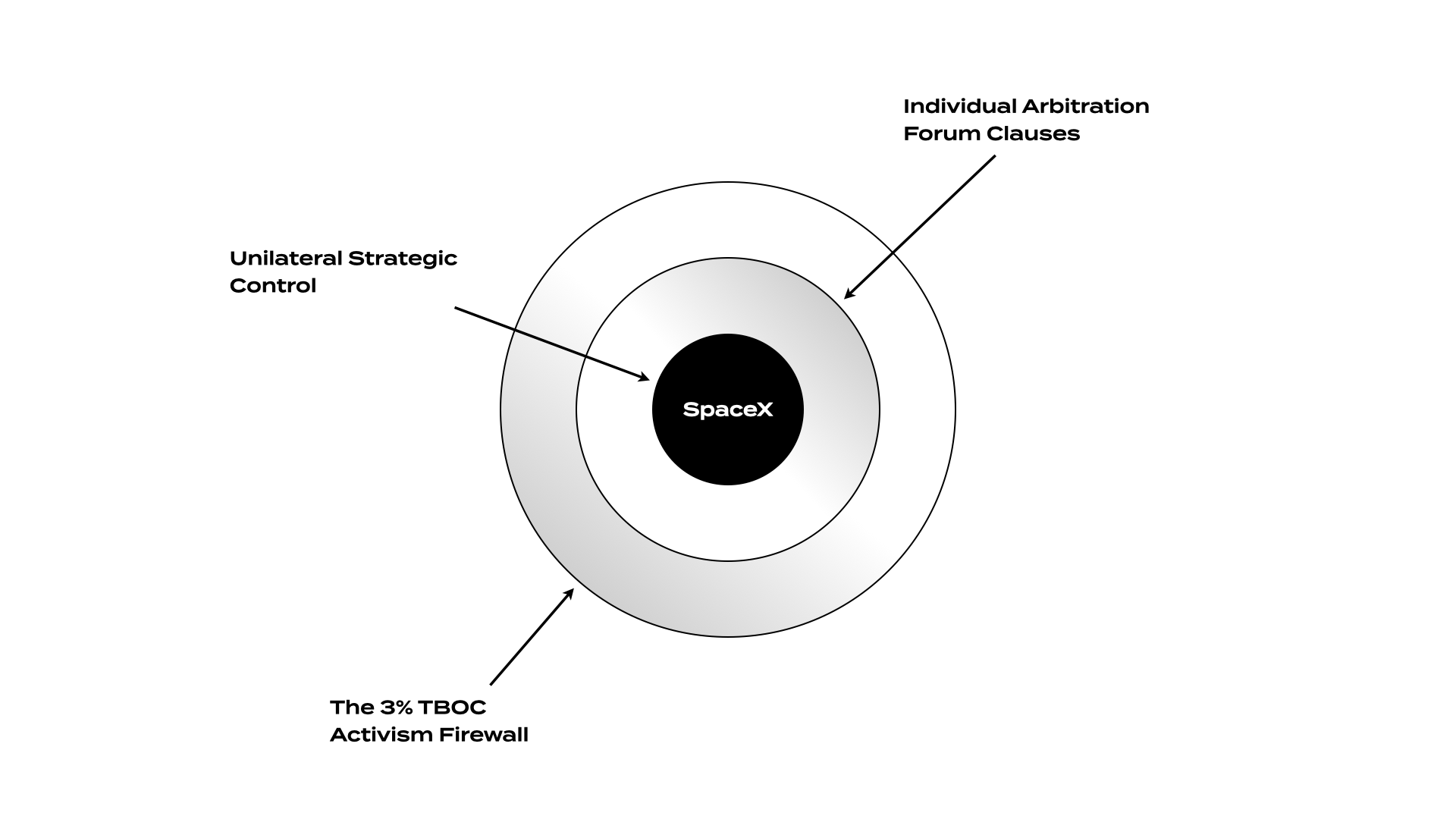
Figure 3: Concentric Corporate Architecture - The Three-Layer Insulated Governance Firewall
The Forensic Diagnostic Verdict
The SpaceX offering represents a historic paradigm shift in the structural layout of the public equity markets. It is not a traditional public listing; it is a giant, late-stage venture capital bridge utilising a public equity framework to harvest sovereign-scale liquidity.
Through custom index adjustments, systemic capital siphoning from Level 0 bounds, and strict governance parameters, management has successfully engineered a capital fortress that completely insulates them from public market impatience.
Investors are not buying a standard, asset-backed stock. They are purchasing a highly premium-priced narrative wrapper around an un-bookable operational ecosystem. The ultimate risk is not the immediate paper dilution down to $8.87; it is whether an investor is willing to trust the narrative completely blindly, knowing that eventually mathematics always solves for X, and gravity always wins—even in space.
Like Eisman, I am not a fan.
When an IPO valuation relies on a market built primarily on speculative AI projections and asteroid mining—rather than core rocket engineering—you are not buying a stock. You are buying a very expensive narrative wrapper.
Sometimes, the best clinical diagnostic is simply knowing when to pass.
(Diagnostic Safety Notice: This essay constitutes a purely clinical, forensic analysis of publicly available regulatory disclosures and prospectus documentation for the purpose of architectural evaluation. It is absolutely not financial advice, a market recommendation, or a live investment tip. I provide this explicit clarification to satisfy overzealous compliance gatekeepers, corporate risk algorithms, and any reader who mistakes baseline asset analysis for a securities endorsement. If you choose to swap your capital for space alchemy, that remains a strictly private matter between your broker, your conscience, and your bank account.)